
 Daniel Wolfram
This is a larger part of a potential wartime strategy that mirrors those of Denmark’s neighboring countries.


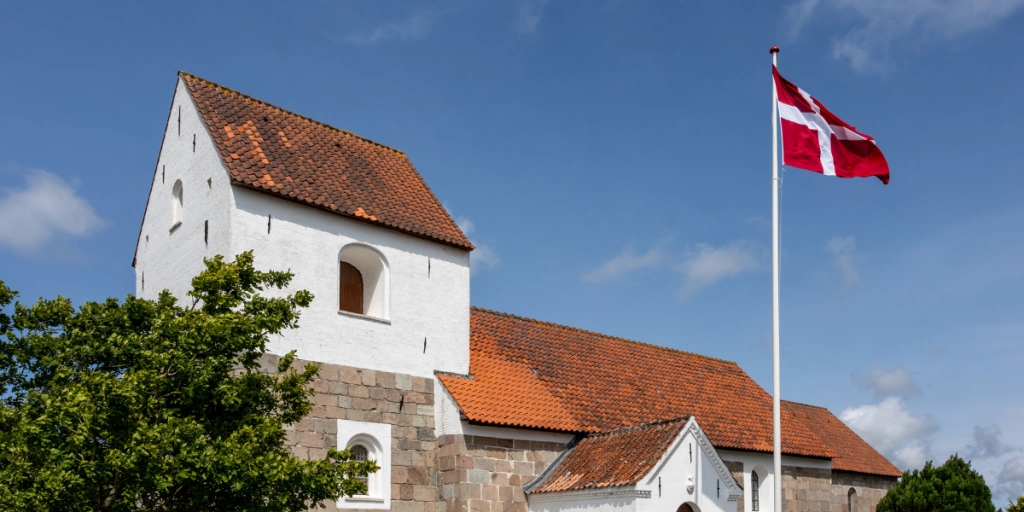
Denmark is expanding its wartime readiness by training civilian parish priests to conduct mass military funerals.
Authorities are planning for potential scenarios where 10 to 20 Danish soldiers could be killed on the worst days of a major war in Europe, according to Danish broadcaster TV 2.
Preparing for the worst
The initiative comes as Danish defence officials observe increasing hostility from Russia towards Baltic NATO countries where Danish troops are currently stationed.
Thomas H. Beck, the head of Denmark’s military chaplains, launched the programme because local military staff would instantly be overwhelmed.


“In the event of a major war, I can easily imagine that we will have 10 to 20 casualties on the worst possible days. It is important that we are prepared to handle that situation,” Beck told TV 2.
He added: “The military chaplains will not be able to undertake this task alone.”
Lessons from Ukraine
Denmark currently employs roughly 95 specialised military chaplains. An estimated 2,000 civilian parish priests work throughout the country.
Starting in January, military chaplains will begin teaching these local clergy members how to bury fallen soldiers, deliver death notifications to families, and run official services.
Trauma on this scale requires preparation. The course, named “People’s Church and Defence,” is backed by 1.8 million Danish kroner from the Ministry of Defence. Priests will learn traditional protocols, including the correct handling of national flags, military headgear, and medals of honour.
Rare transparency
“By learning from the experience of the war in Ukraine, we may face much higher casualties in the future. And then there will be a need for the country’s other priests to also be able to receive fallen soldiers and conduct a military funeral,” Beck added.
These figures remain estimates rather than official forecasts. Even so, public discussions about potential wartime losses remain rare in Denmark, where military planning is usually kept strictly private to not unnecessarily frighten the public.
However, Beck is not afraid that Danes will be startled by it, saying that the public lives in a well-informed society.
Not everyone is on board
Far from all of the 2,000 parish priests in the Danish national church are excited about the prospect of this idea and exercise.
“I have some reservations about using the church to honour the Danish Defence, and I will never say that he or she died for their country,” says Peter Friis, who is part of a church initiative to create peace through Christianity.
“I don’t think the church should encourage young people to go to war, and I don’t believe Christianity should be harnessed to a war machine,” concludes Friis.



