
 Asger Risom
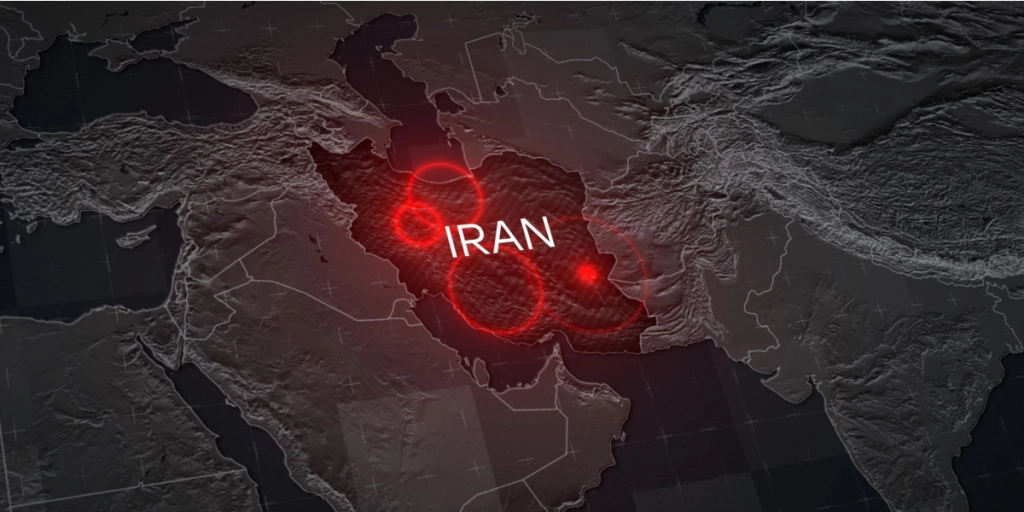
Iran has proven more capable of disrupting its adversaries than expected in the first week of the conflict, while U.S. allies in the Gulf warn that the war could trigger severe economic consequences.

Seven days into the escalating conflict with Iran, tensions are rising not only on the battlefield but also among the United States’ regional allies, many of whom are growing increasingly uneasy about the economic and security fallout.
Recent developments suggest Iran has been more capable of disrupting its adversaries than many analysts initially expected, while pressure is mounting on Washington from both political critics and Gulf partners.
Escalation across the region
Over the past 24 hours, fighting has intensified across several fronts.
Israel continued airstrikes in Tehran and carried out new attacks against Hezbollah positions in Beirut. Iran responded with additional missile launches targeting Israel.


Elsewhere, Qatar said it had intercepted a drone aimed at the largest U.S. military base in the Middle East. In the United Kingdom, authorities arrested four suspected Iranian operatives accused of conducting surveillance on the Jewish community.
The conflict is also spilling into the digital sphere. Iran has reportedly begun targeting hyperscale data centers in the region operated by companies such as Amazon and Microsoft.
“Iranians view data centers as part of the conflict,” Matt Pearl of the Center for Strategic and International Studies told the Financial Times.
Disruption spreading through the global economy
The ripple effects are already visible in global markets.
More than 23,000 flights worldwide have been cancelled since Iran launched its first retaliatory strike, according to earlier reporting by Fortune.
Energy markets have also reacted sharply. Oil prices climbed again after an Iranian missile struck Bahrain’s only oil refinery, raising new concerns about the vulnerability of Gulf energy infrastructure.
The attack suggested Iran may now be willing — and able — to directly target major energy assets belonging to its regional neighbors.
Allies warn of economic fallout
Some U.S. allies in the Gulf are beginning to voice open frustration with the conflict.
Qatar’s energy minister warned that the war could severely disrupt global energy supplies if it continues.
According to Saad al-Kaabi, a prolonged conflict could push oil prices as high as $150 per barrel if Gulf exporters are forced to halt shipments.
He suggested that many energy exporters in the region could soon declare force majeure — a legal measure allowing companies to suspend contracts due to extraordinary circumstances.
Frustration grows in the Gulf
Business leaders in the region have also begun publicly criticizing the conflict.
Dubai billionaire and hotel magnate Khalaf Al Habtoor accused Washington of dragging Gulf countries into a dangerous confrontation they did not choose.
“Who gave you the authority to drag our region into a war with Iran?” he wrote in a post on X. “You have placed the countries of the Gulf Cooperation Council and the Arab countries at the heart of a danger they did not choose.”
Iran’s strategy: chaos
Some analysts now believe Tehran may be pursuing a deliberate strategy of widening the conflict.
Economist Ed Yardeni warned that Iran appears to have prepared for the war by adopting a “chaos strategy,” launching attacks not only on Israeli and U.S. targets but also on neighboring countries.
The goal, he said, may be to create enough regional disruption — including threats to the Strait of Hormuz — to pressure adversaries into negotiating a ceasefire that allows the Iranian government to remain in power.
Political pressure rises in Washington
Back in the United States, criticism of the war is beginning to grow.
Some Republican voices have questioned the decision to launch another military campaign after earlier promises to avoid new conflicts abroad.
The debate has also spilled into media and political circles, where even prominent conservative commentators have begun distancing themselves from the administration’s strategy.
As the war enters its second week, the combination of military escalation, economic disruption and growing allied frustration suggests the conflict may prove more complicated — and potentially longer — than many policymakers initially expected.
Source: Fortune



