
 Jens Asbjørn Bøgen


According to internal figures cited by Kyiv, Russia’s economy ministry has scrapped its forecast of modest industrial growth and now expects an overall decline.

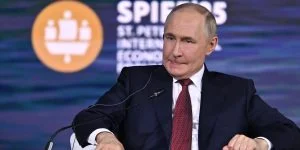
For years international observers and Western politicians have talked about the importance of targeting Russia’s economy with sanctions in order to cut off the cash flow for the war in Ukraine.
However, even though the war in Ukraine is nearing its fifth anniversary, the Russian economy has not yet collapsed, and there are discussions about how the Russian economy is actually doing after becoming increasingly isolated on the international market.
But new forecasts from the Russian economy ministry seem to suggest that the Russian industrial output is now on track to drop for the first time since the war began.
Factories hit the brakes
According to findings released on November 2 by Ukraine’s foreign intelligence service, Moscow’s economy ministry expects industrial output to drop by 0.2 percent this year.


According to the report from the intelligence service, which has not been independently verified, the new official projection scraps an earlier forecast of modest growth.
This slide did not happen overnight. Factory output flatlined through the first eight months of the year before slipping 0.8 percent in August. Wild currency swings, high inflation, and steep borrowing costs are choking off consumer spending and making bank credit nearly impossible to secure.
Sectors tied to ordinary consumers are bearing the brunt of the painful retreat. Across the country, freight railcar production plunged by 30 percent, elevator assembly dropped by a fifth, and metal and chemical output slid backward.
Even state arms manufacturers are slowing down, forced into unexpected cuts as government defense orders collide with broader financial woes.
Pressure across regions
The industrial chill is rattling local governments across the federation. Ukrainian intelligence reports that 65 Russian regions now rely on central subsidies just to cover their basic expenses, leaving only 24 territories able to balance their own budgets. That financial dependence is eating directly into household purchasing power.
Russia’s vital energy sector is stumbling too. For three straight months, output of refined petroleum products has steadily dropped. Ukrainian intelligence officials warned that crude extraction could tumble to a 17-year low before the close of 2026 as processing activity grinds down.
Meanwhile, physical strikes from across the border are deepening the industrial pain. Kyiv is not letting up. Ukraine’s defense ministry confirmed that its forces struck at least 30 strategic facilities during October, battering seven defense and aerospace plants, three military airfields, radar arrays, and ammunition depots.



