
 Jens Asbjørn Bøgen

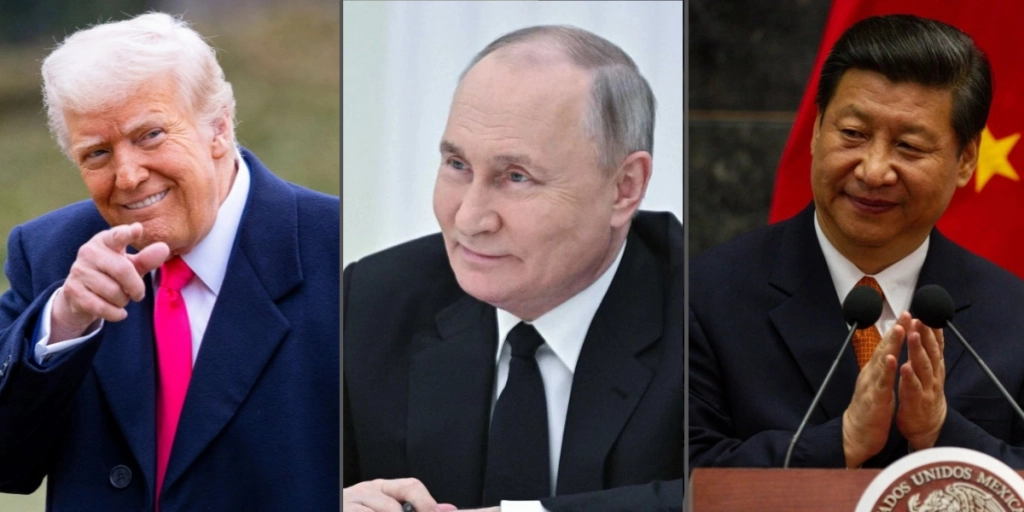
According to the Kremlin, part of the trilateral meeting is expected to be open to the press.


Russian President Vladimir Putin has expressed strong optimism about the value of an upcoming three-way meeting with U.S. President Donald Trump and Chinese President Xi Jinping, slated to take place on the margins of the Asia-Pacific Economic Cooperation (APEC) summit in Shenzhen.
Emphasizing the necessity of high-level diplomacy, Putin pointed to APEC as an effective model for bringing major powers to the negotiating table to bolster sustainable global development.
In remarks carried by the Russian news agency TASS, Putin said that such forums allow leaders to work through political, economic, and security friction by finding common ground and balancing competing national interests.
“APEC offers ample opportunities for constructive dialogue at all levels, especially among the leaders of major economies,” Putin said, adding that those dynamics underpin the “considerable potential benefits” of the high-stakes trilateral talks.


Lavrov: Far-reaching interests for the globe
Russian Foreign Minister Sergey Lavrov echoed Putin’s assessment, arguing that direct engagement among the three countries is inherently worthwhile.
“I think such a meeting is beneficial no matter how you look at it, because these are three nuclear powers, and two of the world’s largest economies which have far-reaching interests across the globe,” Lavrov said on Nov. 17, according to TASS.
According to both him and Kremlin spokesman Dmitry Peskov, the formal agenda for the Shenzhen gathering has already been finalized, though the schedule leaves room for candid, unscripted conversation.
While Lavrov declined to divulge specific talking points or weigh in on public comments from Washington and Beijing—citing Moscow’s diplomatic protocol—he suggested the broad themes of the summit are self-evident and will allow for a “free exchange of views.”
Peskov: Part of meeting open to journalists
Speaking to the Russian broadcast program Vesti, Peskov said Moscow hopes the leaders’ opening remarks will be accessible to the press, confirming that this “is the plan for now.”
Noting that Russian and American delegations are attending as guests of the Chinese hosts, he emphasized that Beijing will ultimately decide on media access.
Looking beyond the Shenzhen summit, Lavrov stopped short of predicting whether three-way meetings between Moscow, Washington, and Beijing will become a regular diplomatic fixture.
Still, he maintained that if Putin, Trump, and Xi find their initial session productive, arranging follow-up talks in the future would pose few logistical hurdles.
Nerves in Ukraine
There are conflicting reports on what the three leaders will discuss during the trilateral meeting, with some sources suggesting that the war in Ukraine may be part of the talks.
Ukrainian officials have strongly opposed the trilateral meeting, fearing exclusion from decision-making over the country’s own sovereignty.
Ukrainian President Volodymyr Zelensky has repeatedly warned that the trilateral summit could become a “Yalta 2.0,” referring to the 1945 Yalta Agreement, under which the Soviet Union and the Allies divided Germany and its capital into four military occupation zones.



