Kathrine Frich

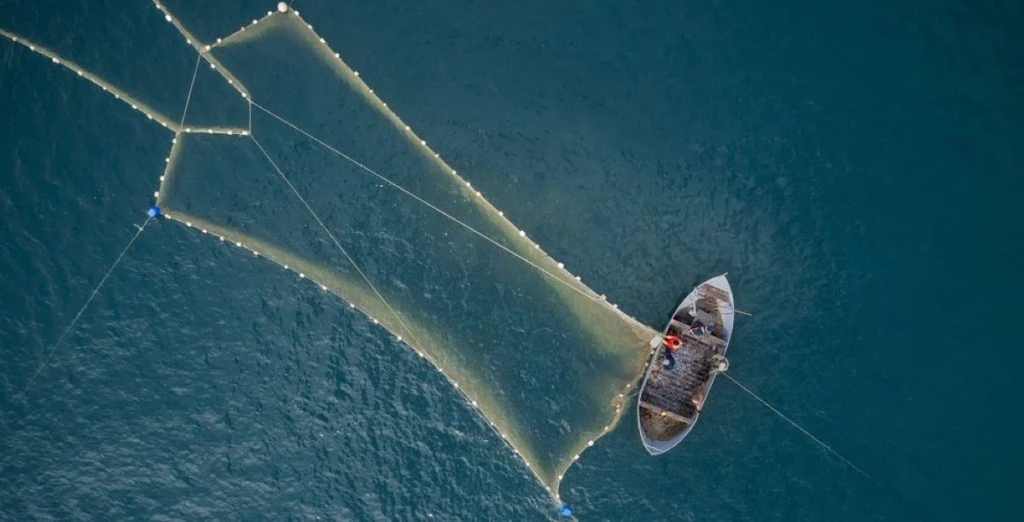
Military officials are not buying the cover story.


We rarely think about how a text message or bank payment crosses the ocean in seconds.
Millions of people rely on that invisible network every single day, yet a quiet threat is now lurking just above the seabed. And it is making security chiefs very nervous.
No fish on board
Russian President Vladimir Putin is suspected of using civilian fishing boats to spy on the UK’s vital undersea network, according to the Daily Express and The Telegraph.
Over four and a half years, tracking data analysed by The Telegraph revealed more than 500 suspicious incidents. Seventeen specific Russian trawlers repeatedly slowed down or loitered right over the data cables connecting Britain to Europe and the US.


Military officials are not buying the cover story. A NATO source told The Telegraph: “We’re absolutely aware of what Russian civilian fishing ships are up to and where…Some of these ships have never seen a single fish on their deck.”
Instead of nets, the boats could carry gear for secret underwater operations, a serving naval officer warned the newspaper. By lowering a remotely operated underwater vehicle fitted with sonar, a crew can scan the ocean floor in extreme detail.
They told The Telegraph: “If you put a sonar-equipped ROV 100 metres above a feature of interest, you can map it with millimetre precision.”
Why the cables matter
Those lines on the seabed keep modern Britain running. As reported by the Daily Express, the cables power hospitals, mobile phone networks, transport systems, and banking. Roughly £65 billion of UK economic activity relies on the subsea links between Britain and the US alone.
Cutting them during a war would cripple daily life almost overnight. According to the Daily Express, the head of the Royal Navy, Gen Sir Gwyn Jenkins, has already warned that Russia could strike these cables from “day one” if a conflict with NATO breaks out.
In response, the UK government is drawing up stricter laws to guard its infrastructure. Under plans reported by the Daily Express, deliberately damaging an undersea cable could soon carry a 14-year prison sentence, and ministers are even weighing life imprisonment as the maximum penalty.
The news arrives just days after the government launched its “Be Ready” campaign, which asks British households to stock up on three days of essential supplies in case an emergency knocks out vital services.