
 Lauge Risom Koch


Russia’s concentration of short-range air defenses around Moscow and the Valdai residence leaves critical oil refineries exposed to Ukrainian drone strikes.

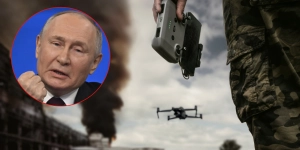
Russian military planners are concentrating limited air-defense systems around Moscow and President Vladimir Putin’s Valdai residence, creating defense bottlenecks that leave major oil refineries vulnerable to Ukrainian drone strikes. According to United24 Media, open-source intelligence researcher Jembob reported on November 8 that Russia has constructed more than 60 short-range air-defense towers in these two priority areas since March 2026. The researcher currently tracks approximately 181 such towers and 250 associated launchers deployed across the country.
Click to display external content from twitter,
– You can always enable and disable third-party content.

You agree to display external third-party content. Personal data may be sent to the provider of the content and other third-party services.
The defensive buildup around the Valdai estate presents significant logistical challenges due to its geographic isolation. Unlike urban centers like Moscow where munitions can be replenished rapidly from established military depots, remote positions require substantial ammunition reserves to be stockpiled on-site in advance. This logistical requirement effectively isolates interceptor missiles that could otherwise be deployed to protect other strategic industrial sites.
The rapid expansion of defensive infrastructure around political centers highlights the constraints on Russia’s surface-to-air missile inventory. “The mere fact that over 60 SHORAD towers have already been built in Moscow and Valdai since March makes bottlenecks quite plausible,” Jembob wrote. Observations show that at least five constructed air-defense towers, including positions near Vladimir and east of Smolensk, have remained completely empty for months.


Refinery vulnerabilities and deployment patterns
While new air-defense hardware flows toward Moscow, Valdai, and three specific refineries in northwestern Russia, industrial facilities in the country’s south and east remain heavily exposed. Open-source tracking indicates that the last major wave of protective earthworks at refineries in Samara, Tolyatti, and Syzran occurred between September 2025 and February 2026. Since that period, there has been little visual evidence of additional short-range air-defense deployments at those specific sites.
Click to display external content from twitter,
– You can always enable and disable third-party content.
You agree to display external third-party content. Personal data may be sent to the provider of the content and other third-party services.
The shortage of available systems forces the Russian military to stretch its existing Pantsir and Tor batteries over wider geographical areas. In Saratov, video evidence spanning a month suggests a single Pantsir system positioned near the Engels strategic bomber base is attempting to cover multiple strategic targets. The footage shows the system launching missiles across the Volga River toward targets over the nearby Saratov oil refinery.
This deployment pattern suggests that the Engels airbase and the Saratov refinery are sharing a single defensive layer rather than operating dedicated individual air-defense umbrellas. Engels hosts one of Russia’s most critical strategic bomber fleets, making it a high-priority target for Ukrainian strikes.
Ammunition depletion and improvised defenses
The localized shortages are driven not only by hardware manufacturing limits but by the continuous consumption of interceptor ammunition. Repeated Ukrainian drone strikes steadily deplete Russia’s existing stockpiles of missiles and autocannon rounds. Air-defense units stationed along the Sochi-to-Kerch corridor, St. Petersburg, and various industrial regions are forced to expend munitions regularly during localized attacks.
The sheer volume of incoming unmanned aerial vehicles requires constant engagement, degrading the readiness of conventional defense networks. Many of these interceptions occur away from populated areas and never become publicly visible, yet they still drain the overall logistical supply chain. The high expenditure rate makes it difficult for Russian logistics to maintain adequate ammunition reserves across all deployed air-defense batteries.
To compensate for the deficit in conventional surface-to-air missile systems, Russian forces have increasingly adopted unconventional defensive measures. Recent reports indicate the military has begun utilizing truck-mounted aerial lifts as improvised mobile air-defense positions around the capital. These modified civilian vehicles elevate troops armed with man-portable air-defense systems (MANPADS) high above the ground to establish clear lines of sight against incoming low-altitude Ukrainian drones.



