
 Jens Asbjørn Bøgen
Germany recently shut down the Russian House in Berlin, and now Ukraine’s Foreign Minister wants the rest of the world to do the same.

Countries around the world have long welcomed foreign cultural hubs to host language classes, film screenings, and art exhibits.
Yet behind the friendly exhibitions and community events, some government officials believe a far darker strategy is at play.
And now Ukraine is urging Western governments to shut down Russian House Centers altogether, because of the potential security risk they pose.
Shadowy networks
German authorities recently shuttered a prominent Russian cultural center in Berlin on September 18, ending what Ukrainian officials called years of hostile influence.


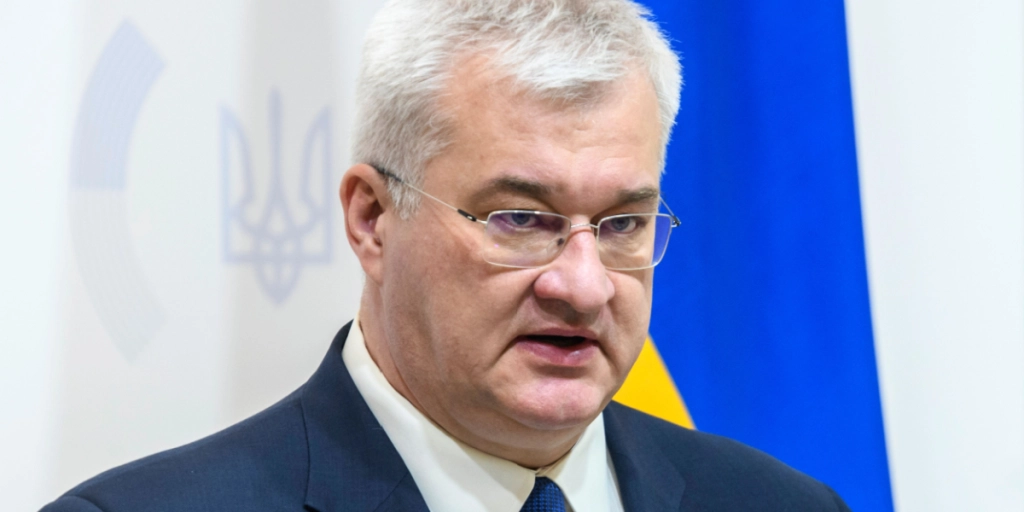
Shortly after the closure, Ukrainian Foreign Minister Andrii Sybiha warned in a September 19 post on X that similar hubs continue operating across at least seven European nations.
He pointed to Rossotrudnichestvo and the so-called Russkiy Dom, or Russian House, as instruments of disinformation, destabilization, and espionage.
“Our shared European home is not the place for ‘Russian houses’ promoting war propaganda,” Sybiha wrote on X, while praising European leaders who have already acted against the network.
According to Sybiha, the Russian House Centers are actually promoting war propaganda and working in the shadows to sow division in Europe.
He did not provide any proof for his claims.
Click to display external content from t.co,
- You can always enable and disable third-party content.

You agree to display external third-party content. Personal data may be sent to the provider of the content and other third-party services.
Putin’s time under cover
Russia has long used intelligence officers in foreign countries under the guise of a diplomatic mission.
Vladimir Putin himself was stationed in Dresden in the former East Germany from 1985 to 1990, officially as a translator and consular officer – but this was a cover story.
He was actually an intelligence officer for the KGB and helped the East German secret police (the Stasi) by gathering intelligence, coordinating surveillance, and recruiting sources.
Global pushback
Beyond European borders, the network maintains an even broader presence in South America, Africa, and Asia, according to Sybiha.
He claims that the hubs are woven into Russia’s diplomatic infrastructure in several countries, and that Moscow uses the network to wage a global battle for public opinion.
To counter this effort, Kyiv has formally requested that governments worldwide classify the network as a national security threat, presenting arguments to restrict or close them entirely.
The recent shuttering in Berlin marks the latest hit to Moscow’s international outreach efforts. At least 13 Russian Houses have closed globally since 2022, down from roughly 15 centers running across the European Union before the war.
Falling like dominoes
European nations began severing ties years ago. Slovenia led the effort by expelling its local branch in April 2022, and Romania followed suit by closing its Bucharest center in February 2023.
Other governments quickly joined the wave. Later that same year, branches in Slovakia, Croatia, North Macedonia, and Montenegro were all shuttered.
More recently, Moldova shut down its local site on July 4, 2026. Officials there cited subversive activity conducted under the guise of culture.



