
 Jens Asbjørn Bøgen

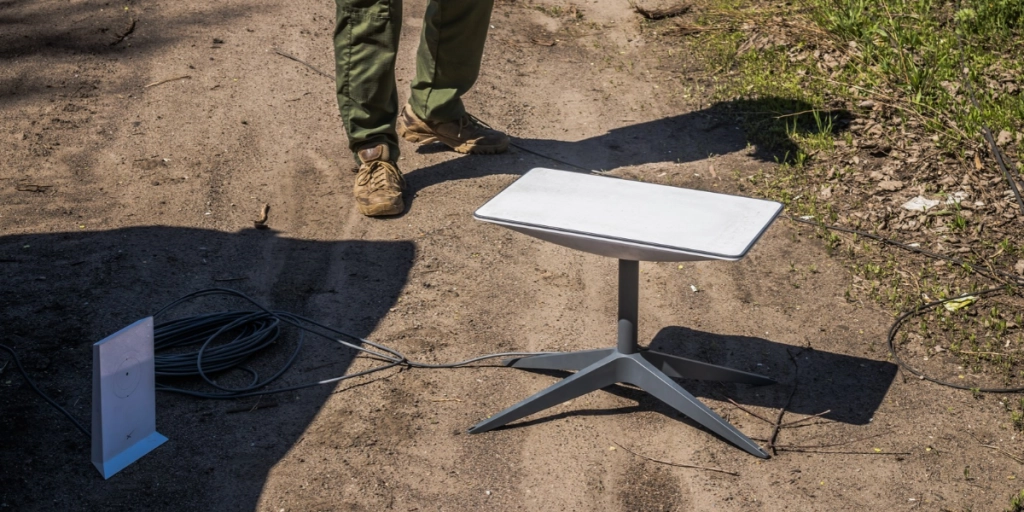
Zelensky said last week, that ‘it is important to be on the right side of history’, urging the US and Elon Musk to lift the speed restrictions.


Ukraine’s military relies on Starshield, the SpaceX-run military variant of Starlink, for frontline communications and for the drone interceptors it fires at incoming Russian Shaheds.
For the better part of a week, those interceptors have been losing their link mid-flight. The explanation Kyiv has now been given is the most low-key one yet.
SpaceX has told Ukraine the ongoing restrictions are “a technical issue,” the country’s chargé d’affaires in Washington, Denys Sienik, told PBS correspondent Nick Schifrin, as reported by RBC-Ukraine.
SpaceX gave no further detail on what the fault is.


Earlier the same week, SpaceX pushed back in flatter terms, “This is false. There has been no change.”, in a statement to Axios.
President Volodymyr Zelensky rejects both framings. He said on November 12 that frontline units were recording “widespread disruptions” in Starshield’s operation along the entire front line and in Russian-occupied territory, and that a military review had concluded the pattern was systemic rather than random.
Interceptors that cannot catch up
The practical effect, according to the Ukrainian side, is a cap at around 161 kilometers per hour (100 mph) on devices using the network. That is slower than Russia’s jet-powered Shahed variants.
“Our interceptor drones lose connection with their operators at a speed of 161 kilometers per hour and simply cannot catch up with Russian jet-powered ‘shaheds,'” Zelensky said on November 15, calling on the United States and Elon Musk to lift the limits and “be on the right side of history.”
A Ukrainian official told Axios the degradation escalated quickly: 10 percent of missions failing on day one, 50 percent on day two, and all of them on day three.
Senators want to know who ordered it
Pressure in Washington is building. Senator Jeanne Shaheen (D-N.H.), ranking Democrat on the Senate Foreign Relations Committee, and Senator Thom Tillis (R-N.C.) issued a joint statement on November 12 calling the renewed slowdown “outrageous” and demanding the Pentagon and SpaceX preserve all records and contracts, as reported by Kyiv Post.
“Congress must determine who ordered or approved these disruptions and hold those responsible accountable,” the senators wrote.
The bipartisan Congressional Ukraine Caucus, which counts 105 House members, has made a parallel demand on the Trump administration and SpaceX. Shaheen and Senator Chris Coons have given Musk until November 30 to confirm in writing that all relevant SpaceX documents have been preserved.
A familiar argument about who is in charge
The current dispute echoes an earlier outage in mid-October, when Starshield first stopped working for drones exceeding roughly 160 kilometers per hour before service was restored on October 24.
That episode unfolded during a sharp row between Zelensky and President Donald Trump over a US-Russia diesel agreement that eased sanctions on Russian exports.
Musk has previously denied responsibility for any such limits. Starshield terminals, he wrote on X on October 14, are “owned and controlled by the US government,” and “any limits on speed or usage are decided by the US military and ultimately POTUS.”
Trump has denied ordering the October slowdown, and Secretary of State Marco Rubio said the administration had no foreknowledge of it. The Pentagon’s inspector general has declined a bipartisan request to open an investigation.
For now, the frontline cap remains in place, and Musk’s November 30 deadline to preserve documents is the next hard date on the calendar.



