
 Jens Asbjørn Bøgen


The Polish Foreign Minister told reporters that it raises the question of who Trump is more friends with: Putin or Tusk.

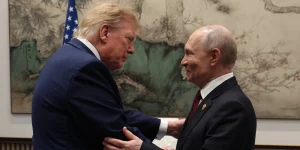
U.S. President Donald Trump met Russian President Vladimir Putin and Chinese leader Xi Jinping in Shenzhen, China, on Thursday, November 19, but even though the trilateral meeting drew the most focus, other meetings deserve attention as well.
In addition to the trilateral meeting, Donald Trump and Vladimir Putin also held separate talks without Xi, as they gathered during the Asia-Pacific Economic Cooperation summit.
As Trump walked into the room, cameras caught a remarkably warm welcome. “Who is he? He’s my friend,” Trump said upon greeting Putin, per Onet.
He added that he expected “many great things” from their long relationship.


Trump and Putin reportedly discussed bilateral ties and the war in Ukraine, but no joint statement was issued afterward.
Warsaw pushes back
In Poland, those friendly remarks did not go down well. Prime Minister Donald Tusk wasted little time responding on the social media platform X.
“God, protect us from such friends,” Tusk wrote in a sharp jab at Trump’s optimism.
Click to display external content from x,
- You can always enable and disable third-party content.

You agree to display external third-party content. Personal data may be sent to the provider of the content and other third-party services.
Polish Foreign Minister Radosław Sikorski voiced similar doubts before boarding a flight to Budapest. Speaking at a press briefing, he questioned what Washington’s warm tone toward Moscow could mean for loyal allies like Poland.
“The question arises: who is he more friends with, Putin or our president? And what would he do if push came to shove? Which friend would he choose?” Sikorski asked reporters, per Onet.
Echoes of Yalta
The trilateral summit in Shenzhen also sparked talk of a “new Yalta” among political observers.
That phrase refers to the 1945 conference where the U.S., Britain, and the Soviet Union carved up spheres of influence after World War II.
For Eastern Europe, that deal meant decades under Moscow’s thumb.
Sikorski rejected any suggestion that major powers could once again decide the region’s fate behind closed doors. According to Onet, he argued that such comparisons only feed the Kremlin’s wishful thinking.
“Yalta was a moment when Moscow controlled Central and Eastern Europe. Today, thank God, we are sovereign, and they can decide various things there. Ukraine will continue to defend itself, and we will support it,” Sikorski said, according to Onet.



