
 Camilla Jessen
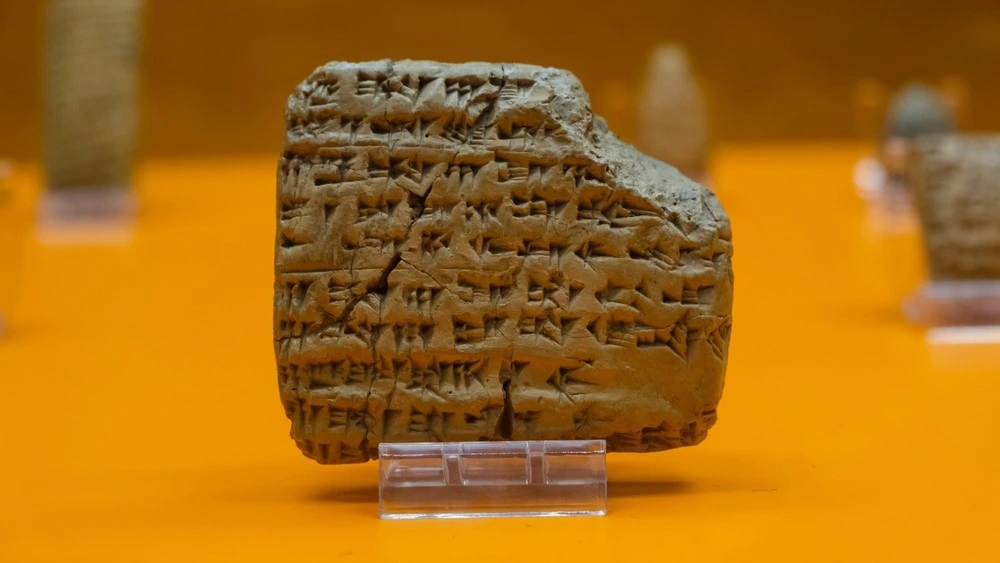
Scholars clash over ‘giants’ mentioned in ancient papyrus.


An ancient Egyptian manuscript housed in the British Museum has reignited debate among biblical scholars and archaeologists over whether legends of ancient giants were rooted in historical encounters rather than myth.
Some researchers believe the text may describe unusually tall people who once lived in the Near East.
Mysterious figures
The discussion focuses on the Nephilim, shadowy figures briefly mentioned in the Book of Genesis before the story of Noah’s Flood.
Biblical texts describe them as “heroes of old” and “men of renown,” often interpreted in later traditions as giants or mighty beings.


Although the Bible offers little detail, Jewish and Christian writings over centuries have expanded on the idea, portraying the Nephilim as a lost race from humanity’s distant past.
Egyptian scroll
Researchers point to Papyrus Anastasi I, an Egyptian text dated to the New Kingdom period and kept in the British Museum.
According to the Associates for Biblical Research, the scroll describes encounters with people of extraordinary height during a journey through a narrow mountain pass.
The author, identified as Hori, writes of hostile figures “of four cubits or of five cubits, from head to foot,” hiding along the route. Depending on the cubit used, that would suggest individuals measuring well over six feet tall, and possibly approaching eight feet.
Some scholars argue that this description aligns with Old Testament accounts of towering warriors such as Goliath.
Possible connections
A number of researchers have drawn links between the papyrus and references in Hebrew texts to Og, described as the last king of the Rephaim, another group associated with giants.
Christopher Eames of the Armstrong Institute of Biblical Archaeology said that names appearing in other ancient inscriptions, including Ashtaroth and Edrei, resemble cities Og was said to rule.
“The combination of names Rapia, Ashtaroth and Edrei is a remarkable link to the biblical account of Og and the Rephaim,” he said.
Eames added that some scholars believe “Og” may have been a royal title rather than a personal name.
Not all experts are convinced. Critics argue that the papyrus likely describes military threats or exaggerations common in ancient travel texts, rather than literal supernatural beings.
Other scholars note that soldiers or nomadic groups who were taller than average could easily have been portrayed as giants by frightened travelers.
Sources: British Museum, Associates for Biblical Research, Armstrong Institute of Biblical Archaeology



