
 Jens Asbjørn Bøgen
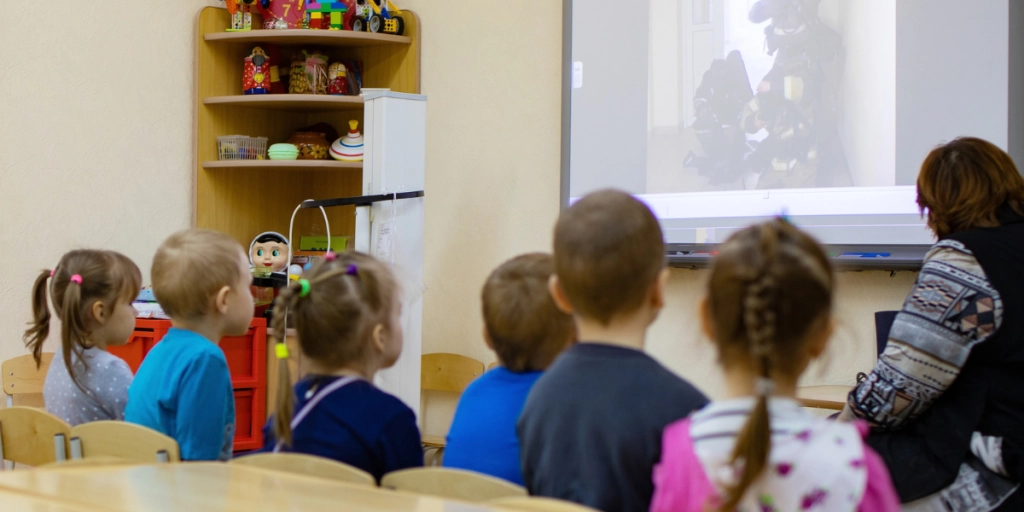
The minister said that a kindergarten “should remain a space for upbringing, not just preparation for school.”

In Russia, the education minister has just put it at the center of the government’s cultural project. Speaking to state news agency RIA Novosti, Sergey Kravtsov said the country’s kindergartens should shift their focus away from teaching children to read and count, and toward what he called moral and cultural upbringing.
The ministry is preparing an update to Russia’s federal state educational standard, known as the FGOS, and to the federal preschool program.
Kravtsov framed the change as a way to strengthen the tie between kindergartens and families.
“Introduction to native culture, literature, customs and moral values is more important than memorizing letters and numbers in kindergarten,” he said, in remarks first reported on September 27.


A kindergarten, he added, “should remain a space for upbringing, not just preparation for school.” The minister called the shift “the main condition for protecting the future of our children.”
Part of a wider “Year of Preschool”
The Russian government has declared 2026 the Year of Preschool Education, and the standards revision is being rolled out alongside a set of new programs for the youngest age groups.
One of them, called “Kind Games,” launched on September 1 in kindergartens across Russia after a pilot in 19 regions. Deputy Education Minister Olga Kolodarova has described the program as activity centered on “spiritual and moral values.”
The curriculum for children aged 3 to 5 is organized around six themes, including “Peoples of Russia” and “A Corner of Russia is My Native Land.” Materials teach children about “protecting our motherland” using maps that show occupied Ukrainian territories as part of the country.
From high school to the sandpit
The preschool push echoes an older initiative aimed at older children. Since 2022, Russian schools have opened each week with “Conversations About Important Things,” a lesson series introduced after the full-scale invasion of Ukraine and widely described by teachers and rights groups as political instruction rather than civics.
Independent outlet Zona.Media noted that Kravtsov did not disclose a timeline for when the revised preschool standard would take effect, or how much of the current academic content on early literacy and numeracy would be dropped in favor of the new focus on “moral guideposts.”
The ministry has not published the draft standard.



