
 Lauge Risom Koch


Japan issues a formal diplomatic protest after Russia places four Japan Tobacco manufacturing facilities under temporary state management.
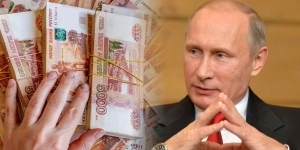

Japan has formally protested Russia’s decision to seize control of assets belonging to a Japan Tobacco subsidiary and demanded an immediate reversal of the executive order. According to United24 Media, Russian leader Vladimir Putin signed a decree placing four JT International manufacturing facilities under the temporary management of a domestic firm. The targeted production plants are located in St. Petersburg, the Leningrad region, Rostov-on-Don, and the Lipetsk region.
Japanese Chief Cabinet Secretary Minoru Kihara confirmed that Tokyo lodged formal diplomatic objections directly with Moscow to protect corporate interests. Japanese officials visiting Russia formally requested that the order be rescinded to safeguard the legal rights of Japanese citizens and enterprises operating abroad. Meanwhile, Japan’s Foreign Ministry summoned Russian Ambassador Nikolay Nozdrev in Tokyo to voice direct opposition to the state takeover.
The corporate expropriation unfolds amid worsening diplomatic friction between Tokyo and Moscow following Russia’s full-scale invasion of Ukraine. Tensions escalated recently after Putin made a controversial visit to Etorofu Island, a Russian-held territory claimed by Japan. Bilateral ties deteriorated further when the Russian Federal Security Service detained a Japanese newspaper journalist in Sakhalin on espionage allegations.
Escalating corporate expropriations across Western firms
The seizure of the tobacco plants continues a systemic Kremlin campaign targeting international businesses from countries designated as unfriendly. Moscow established the legal framework in April 2023, allowing the state to impose temporary administration on assets owned by companies from sanctioning nations. While several foreign companies initially attempted to maintain operations under strict regulations, many entities have seen their investments confiscated or sold at steep discounts.


The measure follows the major seizure of European corporate holdings orchestrated by Russian authorities earlier in the autumn. According to a previous report by United24 Media, Russia placed the local businesses of Swiss food giant Nestlé and French supermarket chain Auchan under temporary management on September 17. Kremlin spokesman Dmitry Peskov explicitly connected those takeovers to European military aid for Ukraine, labeling the home nations as active adversaries.
Russian authorities transferred the stakes of both European enterprises to AO L.E.V. Menedzhment, a firm established in Moscow with only $177 in charter capital and a single employee. The decree disrupted substantial commercial investments, including Nestlé’s network of six manufacturing plants and Auchan’s 230 retail stores. Both corporations announced immediate administrative reviews, pledging to take necessary measures to protect enterprise rights and local staff.
The broader exodus and legal traps for foreign investors
The Kremlin’s aggressive seizure of corporate assets has affected numerous prominent European companies that delayed a complete departure from the market. Russian authorities previously took control of domestic subsidiaries belonging to Danish brewer Carlsberg, French dairy producer Danone, and Dutch paint manufacturer Akzo Nobel. Similar administrative takeovers stripped control from Danish insulation producer Rockwool and Polish-American packaging firm CanPack.
Foreign enterprises attempting to exit the Russian market face stringent regulatory barriers and punitive financial penalties imposed by the Kremlin. British consumer goods group Reckitt recently accepted a post-tax loss of approximately $232 million to offload its local operations under state-enforced exit rules. Furthermore, legislation enacted in August empowers Russian courts to block departing international investors from ever repurchasing their former assets.
These predatory regulatory practices have drastically accelerated the corporate withdrawal from the Russian Federation over the past four years. Official estimates indicate that roughly 62% of Western firms holding major Russian assets have completely exited the jurisdiction since 2022. The latest actions against Japan Tobacco demonstrate that foreign companies remaining in Russia face an increasing risk of outright expropriation.



