
 Kathrine Frich
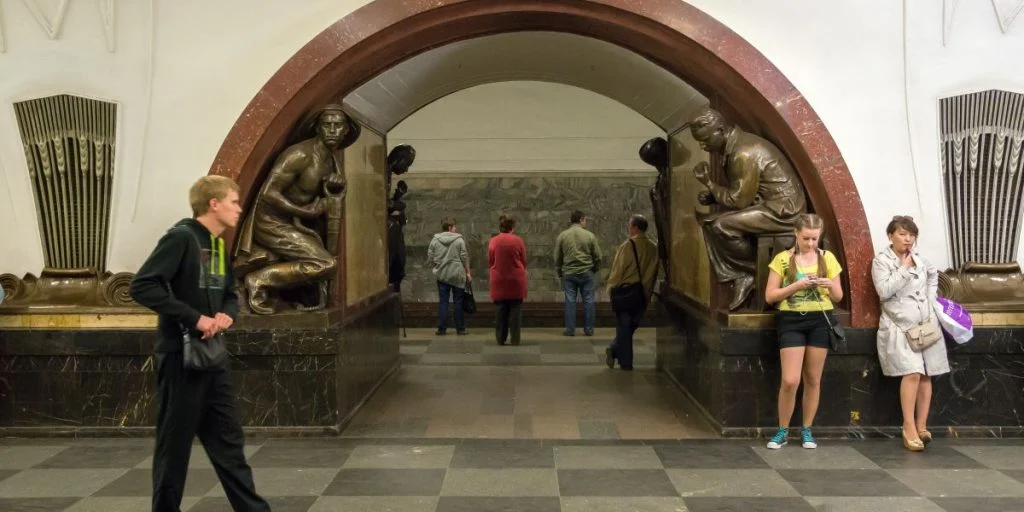
Daily travel in Moscow is increasingly shaped by security controls that go beyond tickets and turnstiles.


For millions of commuters, routine journeys are now intersecting with new forms of state oversight.
Russian authorities are no longer downplaying the scale of these measures, openly acknowledging changes that affect passengers directly.
Unexpected checks
Moscow Metro passengers should be prepared for random inspections of their mobile phones.
The Polish Press Agency (PAP) reported that the metro’s press service confirmed the introduction of what it described as new security measures.


According to the statement, passengers may face “unexpected checks” of their smartphones while travelling on the underground network.
The announcement marks a further expansion of controls in the Russian capital’s public transport system.
Existing controls
Russian media, citing the metro’s press service, noted that travellers were already subject to multiple layers of monitoring.
These include metal detector gates at station entrances and a facial monitoring system.
The metro said the latest step builds on those arrangements rather than replacing them.
“The new measures regarding the control of mobile phones, established by the regulation (…), may be applied if necessary as a supplement to the already existing security measures (…),” the press service said in a statement issued on Monday.
Officials have not provided details on how often such checks will occur or what information may be examined.
Beyond Moscow
Similar rules have already been introduced in the St. Petersburg metro, suggesting that the approach is being rolled out beyond the capital.
PAP reported that critics see the move as part of a broader system of total citizen surveillance.
This includes routine patrols by police and other security services, widespread use of cameras with facial recognition, and additional forms of monitoring in public spaces.
Together, these measures point to a tightening grip on everyday life in major Russian cities.
Mixed reactions
Some surveillance-related solutions have found limited public acceptance. One example cited by PAP is a video monitoring system linked to fare payment.
In this system, facial recognition is connected directly to a passenger’s bank account, allowing payment without physical tickets or cards.
Similar technology is already in use in cities such as Almaty, Kazakhstan.
Despite this, concerns persist among observers about the cumulative impact of such tools on privacy.
The Moscow metro is one of the busiest transport networks in the world, serving around 8 million passengers each day across 15 lines and more than 270 stations.
Sources: Polish Press Agency (PAP), Wirtualna Polska



