
 Jens Asbjørn Bøgen

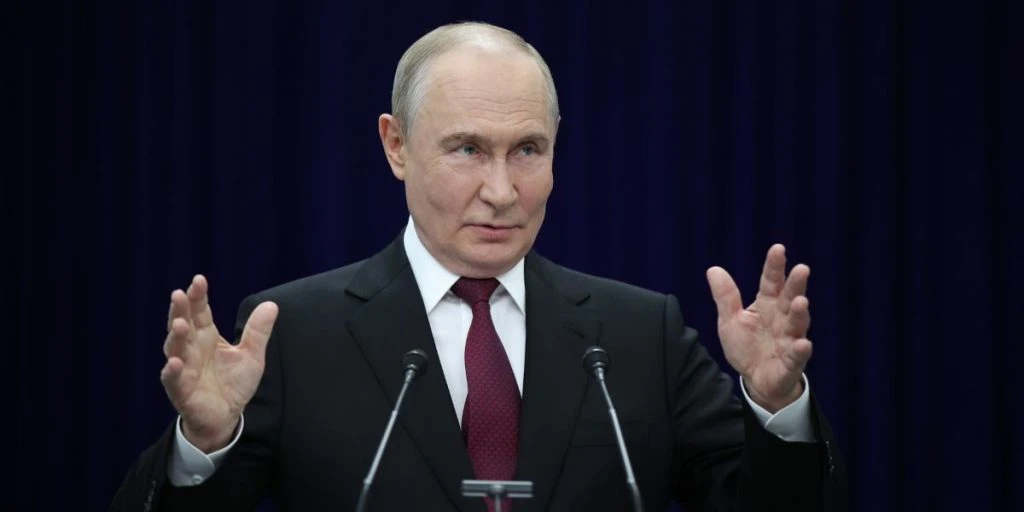
The talks in Abu Dhabi did not provide any agreement on territory.

Two days of US-mediated Gulf talks were meant to narrow the gap on a ceasefire.
The sessions in Abu Dhabi, held on November 10 and 11, closed with no breakthrough on stopping the fighting.
The one tangible result was an agreement on a large prisoner exchange, with Russian chief negotiator Vladimir Medinsky and his Ukrainian counterpart Rustem Umerov saying the details would be announced shortly.
Inside the room, according to Ukrainian sources briefed on the second day and cited by RBC-Ukraine, Russia’s delegation refused to engage on the agenda Washington came to discuss.


Moscow would not take up territorial questions, the terms of a ceasefire, energy or Black Sea security.
Instead, the Russian side steered the talks toward what one source called “strategic questions of Europe’s future security architecture,” pushing for a return to the proposals Moscow put on the table in December 2021.
A revival of the 2021 ultimatum
Those 2021 proposals, as RBC-Ukraine recapped them, called for curbs on NATO enlargement, limits on allied troop deployments in NATO members that joined after 1997, and restrictions on military ties with post-Soviet states outside the alliance, Ukraine included.
One Ukrainian source told the outlet the move was an attempt by Moscow “to transfer negotiations into the logic of great power agreements on dividing spheres of influence,” treating the war itself as a tactical side issue.
The formal session ran about two hours, with roughly three further hours of consultations in various formats. Sources reported “certain movement” but no breakthroughs for Ukraine.
Washington asks Moscow to put it in writing
The US delegation, led by President Donald Trump’s envoys Steve Witkoff and Jared Kushner alongside the commander of US European Command, Gen. Alexus Grynkewich, has now flipped the Russian pitch into a homework assignment.
Axios reported that American negotiators asked Russia to draft a new European security agreement and to spell out the “symmetrical steps” Moscow would take to lower tensions with European states.
Witkoff and Kushner also told the Russians that any serious conversation about European security would require bringing European governments to the table, a point Washington has reiterated to allies. European diplomats told Axios the broader Russia-Europe framework still faces significant resistance.
Medinsky appeared to reject that opening in public comments carried by The Moscow Times, questioning what standing European officials would have at the talks and arguing their “conscience” must awaken over arms sent to Ukraine.
Witkoff and Kushner are due in Moscow on Thursday to put the US proposal directly to Vladimir Putin and to press the case that European participation must come with it. After the stop in Moscow, Kushner and Witkoff is scheduled to travel to Dublin to meet Ukrainian President Volodomyr Zelensky.



