Asger Risom

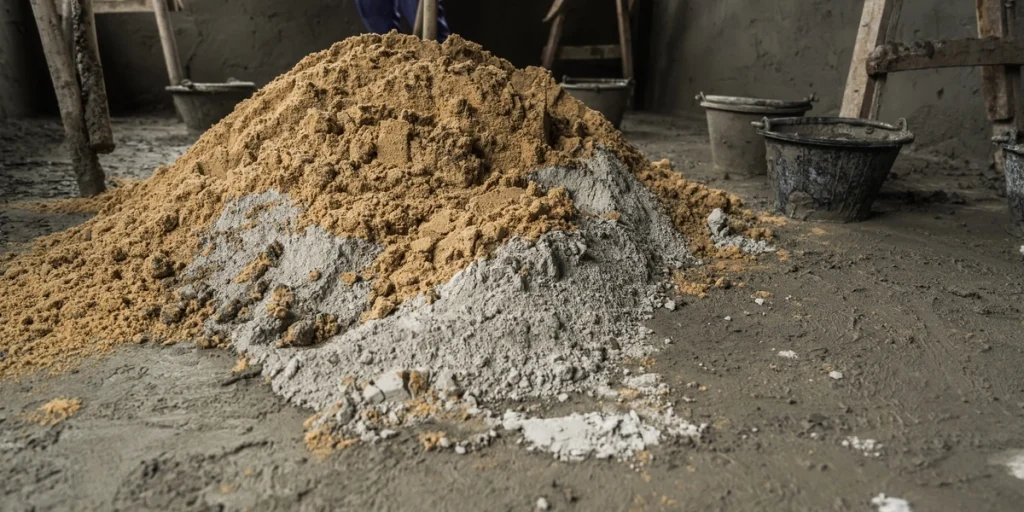
It sounds impossible, but the world is facing a severe shortage of construction-grade sand. While desert sand is too smooth and round to bind into concrete, the jagged, water-shaped sand found in rivers and coastlines is being mined five times faster than nature can replenish it. Driven by rapid global urbanization, this unsustainable demand is ravaging marine ecosystems and forcing material scientists to desperately search for alternative building foundations.


It sounds like a ridiculous punchline to an environmental joke. How could a planet covered in massive deserts and sprawling coastlines possibly run out of sand? But the global supply of this seemingly infinite resource is actually collapsing, and it threatens the entire foundation of modern infrastructure.
Sand is the unsung backbone of the modern world. It is the primary ingredient in the concrete that builds our cities, the asphalt that paves our highways, and the silicon glass that makes up the screen you are looking at right now. We use more sand than any other natural resource on Earth, second only to water.
The problem is not that we are running out of sand in general. The problem is that we are completely outstripping our supply of the highly specific type of sand required to build civilization.
Why desert sand is completely useless
If you look at the Sahara or the Arabian Desert, you see billions of tons of sand just sitting there. But if you try to mix that sand into cement to build a skyscraper, the entire building will collapse.


Desert sand is shaped by the wind. Over thousands of years, the grains violently crash into each other, grinding down their edges until they are perfectly smooth and round like microscopic marbles. Because they are so perfectly spherical, they cannot lock together to form a solid structural bond.
To make concrete, you need sand shaped by water. The grains found at the bottom of rivers, lakes, and coastlines are jagged and angular. When you mix them with water and cement, those rough edges tightly interlock like puzzle pieces, giving concrete its legendary strength. That is why Dubai, a city entirely surrounded by a massive desert, actually has to import construction-grade sand all the way from Australia to build its towers.
A mathematical impossibility
Nature takes thousands of years to grind mountain rocks into the angular sand we need. We are currently mining it at a rate that is mathematically impossible to sustain.
According to a recent environmental analysis detailed by Down To Earth tracking data from the UN Environment Programme, global sand demand has surged fivefold over the last five decades. We are now dredging roughly 50 billion tons of sand and gravel out of the Earth every single year. We are pulling it out of the ground significantly faster than the planet’s rivers can physically replenish it.
This massive surge in demand is driven by rapid urbanization. As developing nations rapidly expand their infrastructure to support growing populations, the appetite for concrete is skyrocketing. We are essentially treating a finite geological resource as if it were a renewable one.
The ecological cost of dredging
Because we cannot just scoop up a desert, the global sand mining industry relies heavily on dredging riverbeds and stripping coastlines. This process physically rips up the foundational habitats for marine life, triggers massive coastal erosion, and permanently alters the flow of freshwater rivers.
As the supply dwindles, the ecological and economic costs will only get worse. Urban planners and material scientists are now desperately trying to develop alternative building materials, looking into everything from recycled plastic to crushed volcanic rock, just to ease the burden on our rivers.
We built the entire modern world on a foundation of sand, assuming we would never hit the bottom of the pile. Now, the construction industry is finally waking up to the reality that you cannot just build indefinitely without eventually running out of raw materials.