Asger Risom

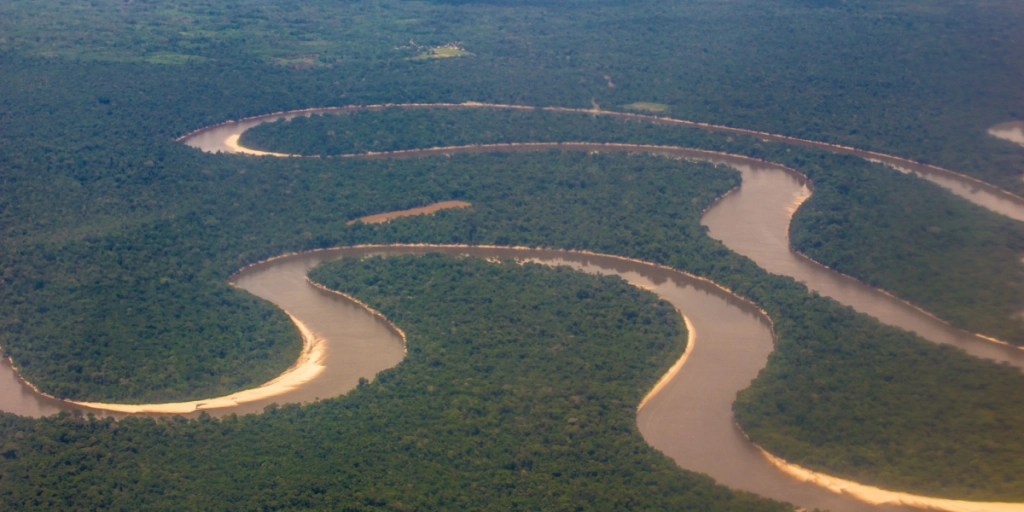
By using advanced LiDAR lasers to digitally strip away the jungle canopy, archaeologists recently uncovered a sprawling, 2,500-year-old interconnected metropolis in Ecuador’s Upano Valley.


For centuries, historians assumed the Amazon rainforest was too dense and harsh to support massive ancient cities. The prevailing theory was that only small, nomadic hunter-gatherer tribes could survive in that kind of environment. That assumption completely erased the existence of a highly developed civilization.
A team of archaeologists recently proved that the jungle is actually sitting on top of a sprawling, 2,500-year-old urban metropolis. They did not do this by hacking through the brush with machetes for decades. Instead, they took to the sky with advanced lasers to digitally strip away the tree canopy.
As detailed in the journal Science, researchers uncovered a dense network of interconnected settlements in Ecuador’s Upano Valley. This discovery fundamentally rewrites our understanding of human history in South America. It turns out the Amazon was once as densely populated and engineered as ancient Egypt or Mayan Mexico.
How to digitally erase a jungle
Finding ancient ruins in the Amazon is incredibly difficult because the jungle reclaims human structures almost immediately. You can be standing directly on top of a massive, 2,000-year-old pyramid and mistake it for a natural hill covered in vines. To solve this visibility problem, researchers use a technology called LiDAR, which stands for Light Detection and Ranging.


Archaeologists strap a LiDAR scanner to the bottom of a helicopter and fly back and forth over the canopy. The machine fires millions of laser pulses toward the ground every single second. While most of the lasers hit leaves and branches, a tiny fraction slips through the foliage and bounces off the solid earth below.
By measuring exactly how long it takes for those specific lasers to bounce back, computers can generate a pristine topographical map. It essentially allows scientists to digitally delete the entire rainforest with the click of a button. Once the trees are removed from the data, the geometric shapes of ancient human engineering become incredibly obvious.
A metropolis built from mud
When the research team processed the LiDAR data from the Upano Valley, they did not just find a few scattered huts. They uncovered a sophisticated network of five large cities and ten smaller settlements spanning 300 square kilometers. The area was densely packed with massive rectangular platforms, ceremonial plazas, and complex residential neighborhoods.
Because the Amazon lacks the heavy stone used to build the Egyptian pyramids, these cities were constructed entirely from earth and mud. The ancient engineers carved out hillside terraces for farming and dug elaborate canals to manage the intense tropical rainfall. The sheer scale of the earthworks required an incredibly organized society and a massive labor force.
What shocked researchers the most was the extensive highway system connecting all these different settlements. They found wide, perfectly straight roads carved deep into the soil that stretch for miles across the valley. It was a thriving, interconnected metropolitan region that flourished for a thousand years before being mysteriously abandoned.
Rewriting environmental history
This discovery completely destroys the old colonial idea that the Amazon was an untouched wilderness before European contact. Indigenous peoples were actively manipulating and managing this landscape on a massive scale for millennia. They successfully engineered a thriving urban environment without completely destroying the ecological balance of the rainforest.
Modern urban planners are now looking closely at how these ancient cities managed their water systems and agricultural terraces. The Upano Valley civilization figured out how to support a massive population in one of the most challenging climates on the planet. Their ancient survival strategies might actually hold valuable lessons for our current climate crisis.
The most exciting part of this technological breakthrough is that we have barely scratched the surface. Archaeologists estimate that there are likely thousands of other monumental sites still waiting to be discovered under the trees. The Amazon is not just a critical natural resource, it is one of the most important archaeological sites on Earth.