
 Nicolai Haugsted

The US president is sues because of sanctions.
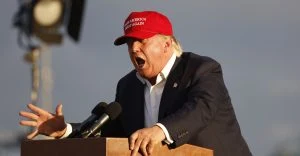

A legal dispute between the International Criminal Court and the Trump administration has entered a new chapter after three ICC judges filed a lawsuit against the U.S. president, arguing that sanctions imposed on them crossed legal boundaries and have severely disrupted their personal and professional lives.
Filed in federal court in Manhattan on Wednesday, the lawsuit challenges sanctions introduced by the Trump administration last year against several ICC officials, marking an unprecedented attempt by sitting judges at the Hague-based court to fight back through the U.S. legal system.
Judges challenge sanctions in U.S. court
Canadian judge Kimberly Prost, Uganda’s Solomy Balungi Bossa and Benin’s Reine Adelaide Sophie Alapini-Gansou are asking the court to strike down the sanctions, arguing they exceed the authority granted under U.S. law.
According to Reuters via. the lawsuit, the measures were never justified by a legitimate national emergency and instead were intended to pressure judges over rulings involving Israel and the United States.


“The sanctions regime … is designed to exert extra-judicial pressure on these judges and their colleagues on the ICC bench by targeting their financial and other personal interests, with the objective of punishing them for prior judicial decisions and coercing them into prioritizing their private interests over deciding cases on the basis of the law and facts,” the complaint states.
Fallout from ICC investigations
Relations between Washington and the ICC have been strained for years, particularly during Donald Trump’s two terms in office.
Last year, the administration imposed sanctions after the ICC issued an arrest warrant for Israeli Prime Minister Benjamin Netanyahu and following the court’s earlier decision to investigate alleged war crimes involving U.S. forces in Afghanistan.
Although the ICC prosecutes genocide, war crimes and crimes against humanity, the United States is among several countries — alongside Russia, China and Israel — that do not recognize the court’s jurisdiction.
Judges describe sanctions as “financial death penalty”
According to the filing, the restrictions have affected nearly every aspect of the judges’ daily lives.
“Being subjected to such sanctions under IEEPA is tantamount to the financial death penalty,” the lawsuit says.
Court documents claim the sanctions have prevented the judges from using credit cards, accessing banking services, booking travel, purchasing health insurance in some cases, and even using widely available online platforms such as Amazon and Google.
The judges further argue that the restrictions interfere with the court’s work by preventing parties from submitting evidence or legal arguments in proceedings before them.
Neither the White House nor the U.S. State and Treasury departments immediately responded to requests for comment following the filing.
The case is expected to test the legal limits of the International Emergency Economic Powers Act, the law cited by the Trump administration when imposing the sanctions.



