
 Kenneth Glad
Military planning across Europe is being reshaped by new threats and battlefield lessons. Governments are weighing how quickly they can adapt while keeping spending under control.


The Dutch Ministry of Defence has set out a strategy that would push drones, cyber capabilities and artificial intelligence deeper into the country’s armed forces, according to NU.nl.
The plan marks a departure from routine military expansion and presents the coming years as a period of structural change.
In the annual defence policy document, the ministry says the armed forces must become “fundamentally different from before.”
It also calls for a “shift in thinking and acting,” reflecting the view that older defence models no longer match the risks facing Europe.


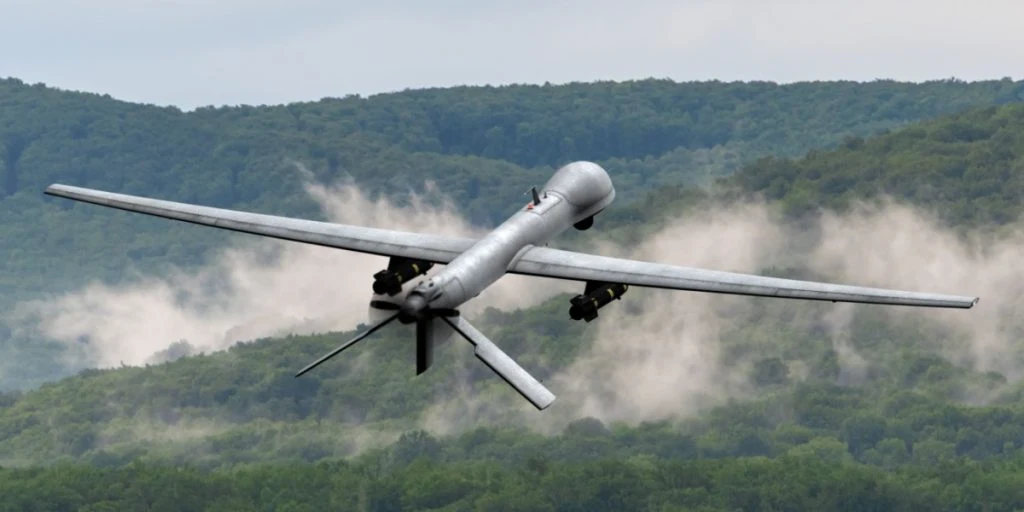
Ukraine is the clearest example behind that conclusion. Dutch defence officials point to the scale of drone use in the war, where unmanned systems are used to locate targets, strike positions and shape battlefield decisions. The ministry’s new principle is: “Unmanned where possible, manned where necessary.”
Within five years, the Netherlands wants “more than half of operational outcomes” to be achieved through unmanned systems.
Russia is treated as a long-term danger
The strategy also draws on Dutch intelligence assessments about Russia. According to the Defence Ministry, writes NU.nl, Moscow is preparing for a prolonged confrontation with Europe.
In the most serious scenario, Russia could launch a “limited military operation” against a NATO member state after the war in Ukraine ends. The warning does not describe such an attack as certain, but places it among the risks Dutch planners believe must shape future defence decisions.
Other European officials have raised similar concerns. Polish Foreign Minister Radosław Sikorski has warned that Russia could stage a false flag incident to justify action against a NATO country.
Latvian intelligence has also warned about possible provocations against the Baltic states or Poland, including drone attacks and hybrid activity.
The Dutch strategy also refers to broader uncertainty, including China’s more assertive posture and doubts over whether the United States will always guarantee European security as it has in past decades. That has strengthened calls for the Netherlands and Europe to become less dependent on Washington.
Faster buying brings harder questions
The Dutch cabinet plans, according to Ukrainska Pravda, to add €20 billion to defence spending in phases by 2035. That would allow the Netherlands to meet NATO’s target of spending 3.5 percent of GDP on defence.
Officials have not yet detailed how much of the extra money will go to drone production, drone development or related technology. Those choices are expected to be handled through budget negotiations, with parliament still required to approve the spending.
The strategy gives priority to equipment that can be delivered quickly and has immediate battlefield value. That means the Netherlands may sometimes choose available systems over more advanced options that take longer to procure.
That approach carries political and financial risks. Recently, the Netherlands Court of Audit criticised Defence after finding that it was not always clear how billions in military funds were being spent. In some cases, the pressure to move quickly came before careful oversight.
The Dutch plan therefore combines urgency with scrutiny. Defence leaders want to adapt faster to a changed security environment, but they will have to show that larger budgets and quicker purchases can still be managed responsibly.
Sources: NU.nl, Ukrainska Pravda



