
 Kenneth Glad
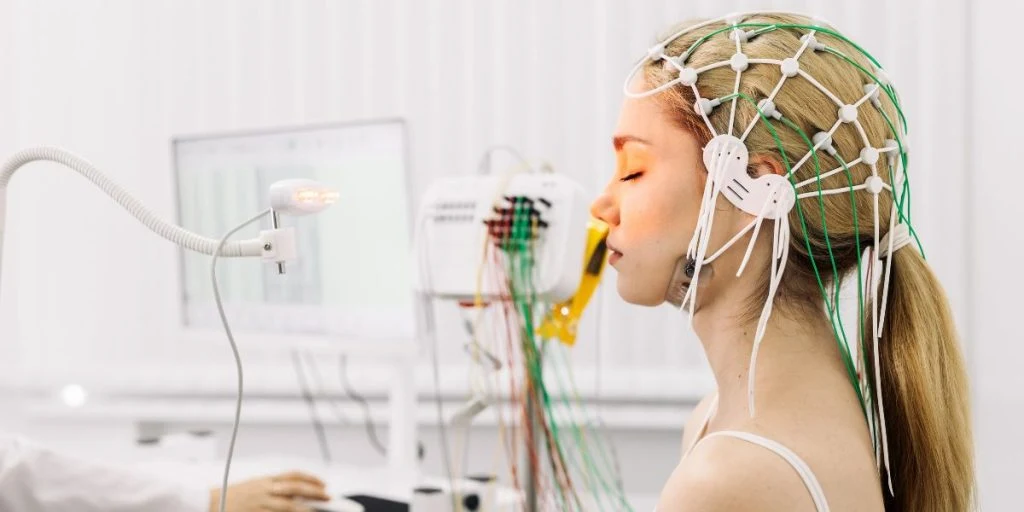
Rapid progress in computing has reopened questions once left largely to philosophers. Researchers still disagree about what machine behaviour can reveal about an unseen inner life.


Research into Anthropic’s Claude model has renewed debate over whether an artificial intelligence system could ever develop experiences of its own. Anthropic is one of the world’s leading AI companies, and Claude is its flagship large language model, designed to generate human-like text and assist with a wide range of tasks.
The findings have drawn attention because they appear to offer a closer look at how such a system handles information internally before producing a response.
Anthropic researchers reported detecting activity that seemed to organise material in advance of Claude’s answer. The model appeared to retain useful details from a conversation, identify information relevant to the task and show signs of intermediate processing as it prepared its output.
The company did not claim that these patterns proved Claude was conscious. Even so, the research has added momentum to a wider discussion about whether increasingly capable AI systems might one day possess an inner life, or at least develop interests that humans should consider when deciding how such systems are designed and used.


Brains are living systems
Writing in The Guardian, neuroscientist and consciousness researcher Anil Seth argues that similarities in information processing should not be mistaken for evidence that humans and machines possess the same kind of awareness. In his view, impressive performance alone does not demonstrate that an AI system has subjective experiences.
Claude is software running on computer hardware. Human consciousness, by contrast, emerges from a living brain that is inseparable from the body it controls. That biological system constantly regulates itself, interacts with its environment and responds to physical needs, all of which Seth considers important when thinking about the origins of conscious experience.
Seth also discusses global workspace theory, one of the leading scientific accounts of consciousness. The theory suggests that information becomes part of conscious experience when it is broadcast widely across different brain systems, making it available for multiple mental processes.
Anthropic identified features inside Claude that resemble parts of this framework, but Seth notes that the model still appears to lack key feedback mechanisms found in biological brains.
For Seth, the findings are scientifically interesting because they show that artificial systems can solve complex information-processing problems in ways that resemble certain aspects of human cognition.
However, he argues that this does not mean the system has an inner life. A language model may organise information efficiently and generate convincing responses without experiencing thoughts, emotions or sensations. Fluent conversation, he concludes, should not be treated as proof of consciousness.
A cautious response
Philosopher William MacAskill and researcher Lucius Caviola approach the issue from a different angle, focusing less on whether today’s AI systems are conscious and more on how society should respond while the science remains uncertain. In their view, the absence of clear evidence does not eliminate the need to think about the ethical consequences of future advances.
Writing in The Guardian, they argue that increasingly sophisticated AI systems could eventually develop interests that humans have a duty to respect. Because there is currently no generally accepted scientific test that can determine whether an AI system is conscious, they suggest that waiting for complete certainty may leave governments, technology companies and regulators unprepared if more advanced systems emerge.
One proposal would allow an AI system to end an interaction when it repeatedly reports distress or indicates that continuing the conversation is causing problems. According to the authors, such a precaution would carry little practical cost if AI systems have no subjective experiences, while providing a measure of protection if future research were to show that at least some systems possess morally significant forms of awareness.
The disagreement is therefore largely about how uncertainty should shape public policy rather than about the capabilities of current AI alone.
Seth sees no convincing evidence that today’s language models should be regarded as conscious beings.
MacAskill and Caviola, by contrast, argue that modest safeguards deserve consideration now, before scientific understanding catches up with the rapid pace of AI development.
Sources: The Guardian



