
 Kenneth Glad
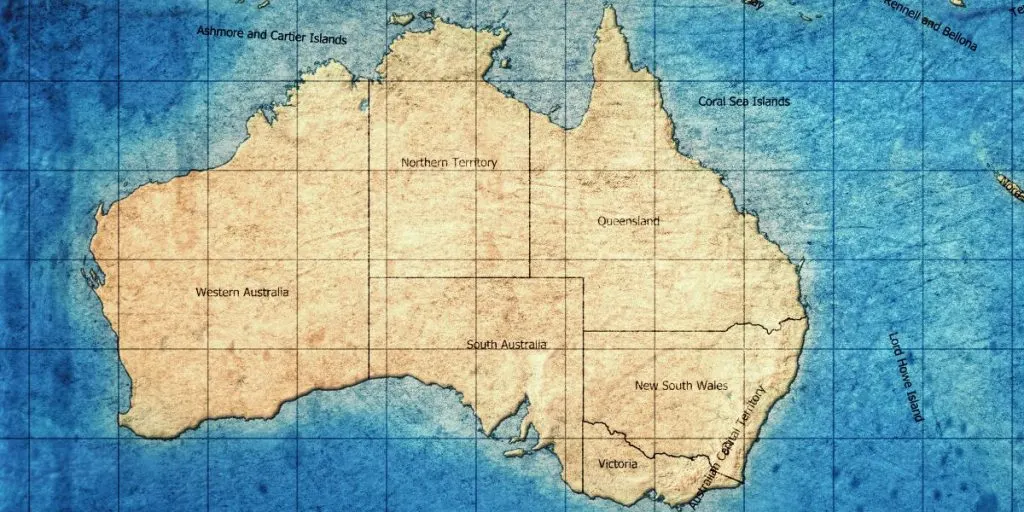
An epidemic caused mass mortality among Aboriginal communities during the opening years of British colonisation. New research tests where the infection began while leaving its exact transmission route unresolved.


Smallpox was recorded around Port Jackson in April 1789, 16 months after the First Fleet established a British colony at Sydney Cove.
A study published in Nature Human Behaviour places the probable start of transmission in Sydney one month earlier.
Researchers led by Flinders University modeller Matthew Cody Nitschke have examined two competing explanations. One connected the disease to the early colony. The other proposed that Makassan fishers from what is now Indonesia introduced it in northern Australia before it moved south.
Model tests distant routes
The team built a stochastic multipatch model, representing separate population regions and the connections through which infection could pass. It compared possible starting points, travel distances, community links and transmission rates.


Even under assumptions designed to favour rapid spread, the simulations could not plausibly carry smallpox from northern Australia to Sydney in time for the documented outbreak. The results instead supported transmission beginning near Sydney and then moving through established Aboriginal networks.
That conclusion does not reveal who first handled the virus or how it entered Aboriginal communities. The authors cites historical evidence suggesting that preserved smallpox material used for variolation may have been available in the colony. Variolation exposed people to infectious material in an attempt to create immunity before vaccination was developed.
No smallpox outbreak was recorded aboard the First Fleet. The researchers nevertheless proposed that supplies of variolation material could have been replenished during stops in Rio de Janeiro or Cape Town, although surviving records do not establish that this occurred.
Death estimate remains conditional
The findings indicate that smallpox spread severely across southeastern Australia, but the modelling does not support the idea that the entire continent was affected by a single epidemic in 1789. According to Nature Human Behaviour, large parts of Australia may not have experienced epidemic-scale transmission during the period covered by the study.
To estimate the possible demographic impact, the researchers used a 60 percent fatality rate based on international evidence from smallpox outbreaks in populations with little or no previous immunity. Under that assumption, the model produced an upper estimate of approximately 220,000 deaths across the regions reached by the disease.
That figure should not be read as a confirmed historical death toll. It is a scenario-based calculation shaped by assumptions about mortality, transmission and the geographical reach of the epidemic. Surviving records do not provide a complete count of those who died.
The researchers also found no direct historical evidence that British colonists deliberately released smallpox. Their results strengthen the case for an outbreak beginning in or near Sydney, but the modelling cannot identify the precise circumstances of the first exposure. It therefore remains unclear whether the virus entered Aboriginal communities through an accident, an unrecorded event or an intentional act.
Sources: Nature Human Behaviour



