
 Kenneth Glad
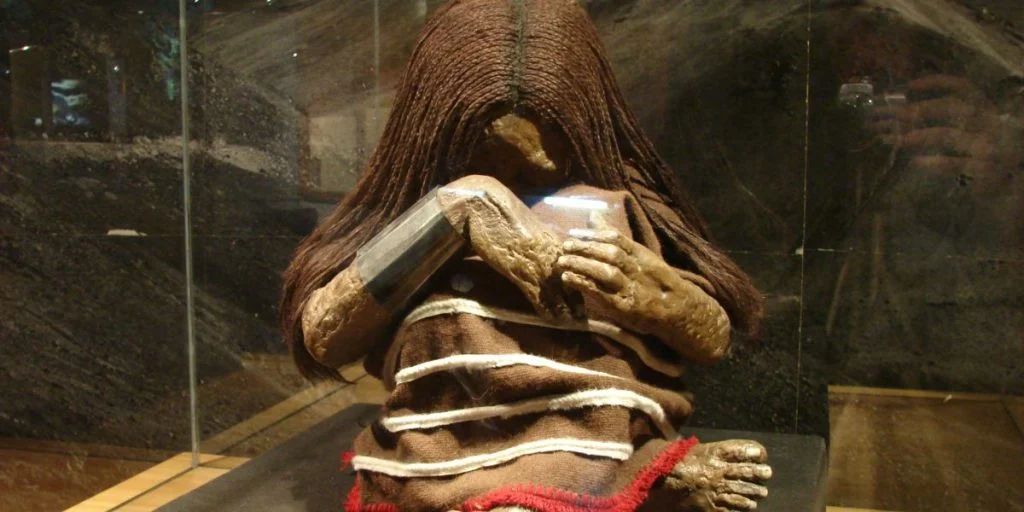
New forensic analysis is reshaping historians’ understanding of one of the Inca Empire’s best-known ceremonial traditions. By combining multiple scientific techniques, researchers have uncovered fresh clues about the final months and deaths of three individuals buried high in the Andes.
A skull injury concealed beneath preserved skin has changed the account of how a child found high in the Andes died more than 500 years ago.
The discovery forms part of a forensic reassessment of three individuals associated with Capacocha, an Inca state ceremony that combined long-distance processions, ritual activity and human sacrifice.
Published in Science Advances, the study examined the El Plomo child, aged about eight or nine, and two female individuals recovered from Cerro Esmeralda in northern Chile.
Scans challenge theories
The El Plomo child had long been thought to have died from hypothermia or exposure. CT images instead revealed a fracture in the frontal bone and separation along parts of the skull.


The research team said a severe impact to the head was the likeliest explanation, while stressing that the precise object used cannot be identified.
Several possible implements were tested through biomechanical simulations. Among them, a blunt-lobed stone mace generated an injury pattern most similar to the child’s fracture, but the modelling does not prove that this exact weapon caused it.
The deaths of the two Cerro Esmeralda individuals remain unresolved. Researchers found no fractures or displacement of the hyoid bones, injuries that can accompany some forms of strangulation.
Marks around their necks appeared more consistent with pressure from clothing or other textiles than with ligatures, although the condition of the remains prevented a definitive conclusion.
Taken together, the results suggest that Capacocha victims were not necessarily killed in one uniform way. They also show how preservation in cold mountain conditions may have shaped earlier assumptions about cause of death.
Across the empire
Hair samples recorded changes in water sources, environment and diet during the victims’ final months.
The El Plomo child may have travelled about 2,600 to 2,800 kilometres, possibly from the Cusco region to central Chile over roughly nine months. The two female individuals may each have covered around 900 to 1,200 kilometres.
Increased maize consumption supports the study’s interpretation that the travellers received provisions and may have taken part in ritual meals along the route. The isotope evidence shows dietary change, but cannot identify who supplied the food.
The findings portray Capacocha as a lengthy, state-organised procession involving travel, food distribution and ceremonial encounters across distant territories. Such journeys helped connect local communities to Inca religious practice and imperial authority before the victims reached the high-altitude sites where their bodies were deposited.
Source: Science Advances



