
 Kenneth Glad
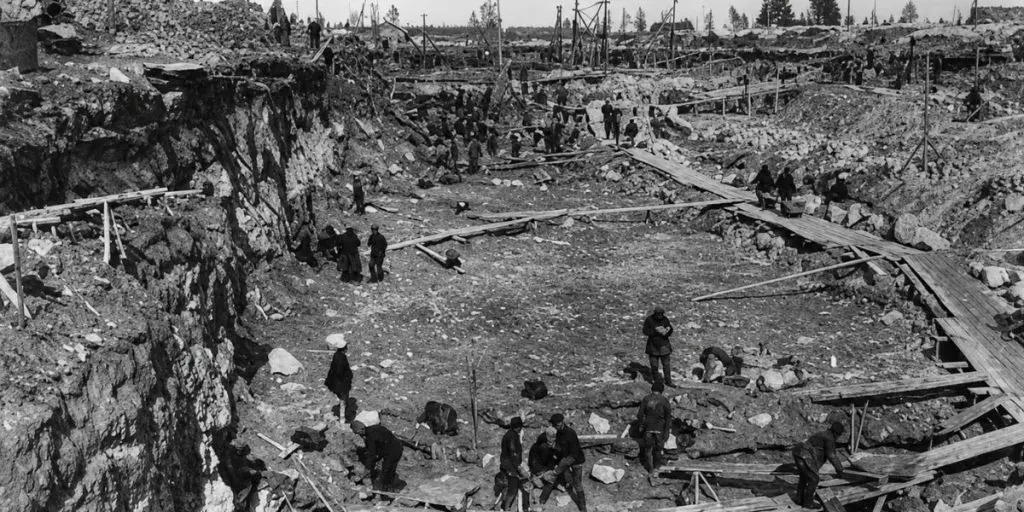
A Soviet infrastructure project has become one of the most widely discussed examples of the human cost of rapid industrialization under authoritarian rule. Historians continue to debate key figures, but its legacy remains central to understanding the early Gulag system.


The White Sea–Baltic Canal was promoted as a triumph of Soviet engineering and political will.
Opened in 1933, it later came to symbolize the human cost of rushed construction under Joseph Stalin and the limits of a prestige project built by prisoners, writes Historienet.
A restricted route
Existing lakes and rivers formed most of the 227-kilometer waterway between Lake Onega and the White Sea. Only about 48 kilometers had to be excavated as entirely new canal sections, according to a historical summary published by EBSCO Research Starters.
The route relied heavily on the region’s natural geography. Engineers connected stretches of open water with locks, dams and artificial channels, creating a continuous passage through Karelia rather than digging a canal along its full length.


From Lake Onega, vessels could continue through other inland waterways toward the Baltic. The canal therefore formed part of a broader internal route linking Russia’s northern waters with the western part of the Soviet Union.
Its military and commercial value was limited from the outset by its shallow design. Although some naval vessels could pass through during the 1930s, the restricted depth became a growing obstacle as Soviet destroyers, submarines and other warships increased in size.
Poor construction methods added to the problem. The canal had been completed under severe time pressure and with limited machinery, leaving parts of the waterway too narrow or shallow for heavier vessels.
Construction was declared complete in 1933, and the canal was formally inaugurated on August 2. Soviet officials celebrated it as a major engineering achievement, but its practical limitations quickly undermined many of the ambitions attached to the project.
Captive labor
The Soviet secret police, known as the OGPU, oversaw the project and forced prisoners to complete it within a 20-month construction schedule. The compressed deadline left little room for delays, even when weather, shortages and difficult terrain slowed the work.
Much of the canal was built with hand tools and basic materials rather than modern construction equipment. Prisoners dug, carried stone and assembled locks, dams and embankments under severe physical strain.
They were also required to construct the infrastructure needed to sustain the labor camps themselves. Barracks, kitchens, bathhouses and medical facilities often had to be built after prisoners had already arrived at the site.
According to Historienet, specialist engineers were imprisoned and assigned to the canal. Their technical knowledge was essential, but they worked under the same coercive system and faced punishment if deadlines were missed.
The history site describes a system in which food and possible sentence reductions were tied to production quotas. Prisoners who met or exceeded their targets could receive larger rations, while those who fell behind risked further deprivation.
The arrangement placed people already weakened by hunger, illness and cold under constant pressure to maintain their output. For many, survival depended not only on enduring the work, but on producing enough to qualify for food.
Disputed figures
Accounts differ over both the size of the workforce and the number of people who died during construction. Approximately 130,000 prisoners took part, according to Historienet, and more than 50,000 lost their lives, a figure substantially higher than many estimates cited elsewhere.
Official Soviet records referenced by historians list roughly 12,000 deaths. Other historical accounts place the toll at about 25,000 or more, suggesting that the official total may not capture the full scale of the losses.
The gap between these figures reflects the difficulty of reconstructing events inside the early Gulag system. Records were incomplete, reporting practices were inconsistent and some prisoners may have been removed from camp statistics after becoming too ill to work.
Estimates of the total workforce also vary. Different sources count prisoners at different stages of the project, making it difficult to determine how many people were involved over the entire construction period.
The precise death toll therefore remains contested. What is less disputed is the severity of the conditions: An extreme deadline, inadequate food and shelter, exhausting manual labor and a ration system tied to output.
Together, those policies showed how the Soviet state could use a captive workforce to complete a major industrial project while placing human survival below speed, production and political prestige.
Sources: HistorieNet, EBSCO Research Starters



