
 Jens Asbjørn Bøgen

The spokesperson insists that Russia “wants peace.”

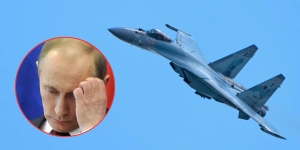
Moscow claims it sees no present opportunity to settle the war in Ukraine at a conference table.
Speaking to Rossiya-1 television, Kremlin spokesman Dmitry Peskov explained that escalation is currently the only available option.
Peskov pointed directly to the ongoing clash. “Of course, we are indeed being drawn further into this spiral. For now, with no opportunity to discuss matters and reach agreements, this is the only way to pursue our interests,” he said according to the Russian news agency TASS.
He added that while Moscow prefers peace, it will fight with full power until agreements are possible. “What did [Russian President Vladimir] Putin say? We want peace, and we would prefer to achieve it through peaceful means. But until that becomes possible, we will fight, and we will fight with full force,” Peskov said.


Clear warning bell
The spokesman also issued stern words to Western strategists hoping to defeat Russian forces. “Those who believe they can make plans to deal Russia a crushing blow will pay the price for it, the price Ukraine is paying now,” he warned.
Peskov held a firm line on Donetsk, insisting that complete territorial control is non-negotiable. “Be it half a percent or one-hundredth of a percent. This is [part of] the Russian Federation. There is nothing to discuss here,” he stated.
Addressing Baltic fears, Peskov rejected claims that Moscow was making reckless threats over Kaliningrad.
“We said that this is a Russian region and that, in the event of any threat – and we have heard many statements from hotheads in Poland and other countries – Russia will use its entire available arsenal of weapons. This is not a threat at all,” he said.
The 2007 Munich speech
He compared the rhetoric to Putin’s landmark 2007 Munich speech.
“This strongly reminds me, perhaps, of the situation with Putin’s Munich speech. It was also perceived as a threat. But it was not a threat; it was a warning bell,” Peskov explained.
Vladimir Putin’s 2007 Munich speech, where he slammed NATO’s eastward expansion, is widely seen as a turning point in Russian foreign policy, as it made it clear that Russia was ready to take a more active role in shaping global politics and challenging what he called the United States’ monopolistic dominance in the world.



