
 Nicolai Haugsted

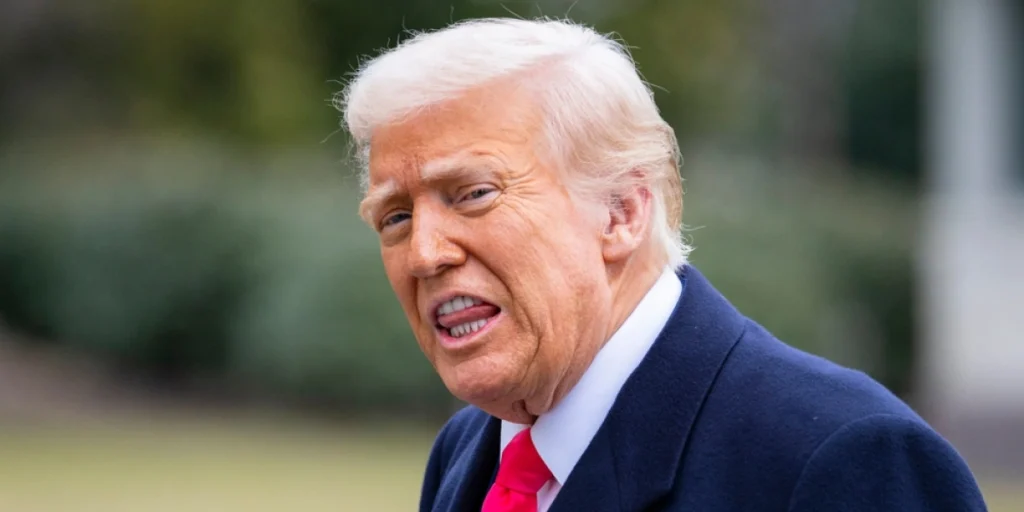
A federal judge warns that Trump’s multibillion-dollar legal battle with the BBC could end before it even reaches trial.


Donald Trump has never been particularly shy about taking his disputes with the media into the courtroom. His long-running battles with news organizations have produced substantial legal claims, public confrontations and demands for compensation that frequently reach extraordinary figures.
But filing a lawsuit is only the beginning of the legal process. Even the president of the United States must comply with court orders, provide relevant evidence and meet deadlines if he wants his case to proceed.
That requirement is now causing problems for one of Trump’s most expensive legal battles, according to The Independent.
The president’s $10 billion defamation lawsuit against the BBC could be dismissed after a federal judge in Florida raised concerns about his failure to provide documents requested during the proceedings.

The judge has issued new deadlines and warned that further noncompliance could result in sanctions, potentially bringing the entire case to an end before its central allegations are decided.
Judge puts Trump on notice
US Magistrate Judge Enjolique Lett has ordered Trump to produce outstanding documents by November 23 as part of the legal discovery process.
His lawyers must also submit a detailed account by November 5 identifying any documents being withheld on grounds of legal privilege.
The dispute concerns whether Trump’s legal team has adequately searched for and disclosed material relevant to the lawsuit.
BBC lawyers have challenged the completeness of the president’s responses, arguing that delays are interfering with their ability to prepare a defense.
The judge has now made clear that the court expects its instructions to be followed.
Failure to comply could lead to sanctions, including dismissal of the lawsuit.
Such an outcome would represent a substantial setback for Trump, who initiated the proceedings and is seeking billions of dollars in damages.
However, the warning does not mean the case has already been dismissed, nor does it establish that the BBC has prevailed on the underlying defamation allegations.
Trump’s testimony is also causing difficulties
The disagreement over documents is not the only procedural issue complicating the case.
Trump must also give sworn testimony as part of the proceedings, with the court setting December 11 as the deadline.
His deposition had previously been scheduled for October 16, but the president canceled the appointment, citing an important matter of national business.
The explanation attracted scrutiny from the BBC’s legal team.
According to The Independent, a lawyer representing the broadcaster pointed out that Trump had been campaigning in Georgia around the time he was supposed to give evidence.
The disagreement adds another complication to a case already involving disputes over document production and the scope of information the president must disclose.
Trump has also resisted demands involving his financial records, although that issue is being handled separately from the latest order concerning outstanding documents.
For the BBC, obtaining relevant evidence is important because the broadcaster must assess the factual and legal basis for the damages Trump is demanding.
The president, meanwhile, faces the challenge of pursuing an unusually large compensation claim while satisfying the procedural obligations that accompany it.
A controversial documentary started the dispute
The lawsuit originates from a BBC Panorama documentary broadcast shortly before the 2024 US presidential election.
The program examined Trump’s political conduct and included footage from his speech to supporters on January 6, 2021, before the attack on the US Capitol.
Controversy followed after it emerged that the documentary had combined separate passages from the speech.
The editing created the impression that Trump had delivered certain remarks consecutively, even though they had originally appeared at different points in his address.
Critics argued that the presentation misleadingly suggested Trump had directly encouraged his supporters to engage in violence.
The BBC subsequently acknowledged that the editing was inappropriate.
BBC chairman Samir Shah apologized over the handling of the footage, while the controversy contributed to a leadership crisis at the broadcaster.
Then-director-general Tim Davie resigned amid the fallout.
Trump subsequently pursued legal action, arguing that the documentary had damaged his reputation.
His lawsuit seeks $10 billion in damages, making the dispute one of the most financially significant legal confrontations between the president and a news organization.
BBC challenges the case on several fronts
The broadcaster has not simply accepted Trump’s interpretation of the documentary or the legal consequences he says should follow.
BBC lawyers have contested the lawsuit and questioned whether the federal court in Florida has jurisdiction to hear the dispute.
Their argument includes the fact that the documentary was not broadcast in the United States.
That question matters because Trump’s legal team must establish an appropriate basis for pursuing the claim in an American court.
The broadcaster’s acknowledgment of an editorial mistake does not automatically establish liability for defamation under US law.
Trump would still need to satisfy the applicable legal requirements, including those concerning the allegedly defamatory material and any resulting harm.
As a public figure, he also faces demanding standards when pursuing defamation claims over reporting about his conduct.
The case therefore involves two separate legal battles: whether the documentary gives Trump a valid claim for damages, and whether his legal team is properly complying with the court’s procedural requirements.
The latest warning concerns the second issue.
A billion-dollar demand meets courtroom deadlines
Trump’s lawsuit has attracted attention partly because of the extraordinary amount of money involved.
Ten billion dollars would be an exceptional damages award in a media defamation case.
But the size of the claim does not change the ordinary rules governing litigation.
Courts require parties to exchange relevant evidence, respond to discovery requests and cooperate with procedures designed to establish the facts.
Judges can impose sanctions when parties fail to meet those obligations.
In serious cases, repeated or unjustified noncompliance can result in claims being dismissed.
The warning from Judge Lett places additional pressure on Trump’s lawyers to demonstrate that they have conducted the necessary searches and provided the requested information.
It also gives the BBC another potential avenue of defense that is separate from the dispute over the documentary itself.
For Trump, that creates an uncomfortable possibility: the case could encounter a decisive procedural obstacle before a court ever determines whether the BBC’s editing amounted to actionable defamation.
Trump’s lawyers must first provide information about documents withheld on privilege grounds by November 5.
The outstanding document production must then be completed by November 23, followed by the president’s sworn testimony no later than December 11.



