
 Nicolai Haugsted


White House insiders reportedly fear that Trump places too much trust in answers generated by artificial intelligence.
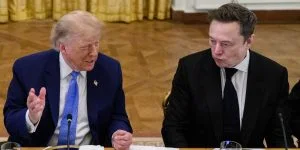

Artificial intelligence has rapidly found its way into some of the world’s most powerful institutions, offering politicians and government officials new ways to gather information, analyze complicated issues and prepare for difficult decisions.
But the technology also presents a question that governments are still struggling to answer: how much influence should an AI chatbot have over decisions involving national security?
For Donald Trump, that question has become considerably more than a theoretical debate.
According to Rawstory, two senior Democrats in the House of Representatives are demanding an explanation after reports suggested that the president consulted an artificial intelligence chatbot before ordering a military operation in Venezuela.


The chatbot in question was Grok, developed by Elon Musk’s artificial intelligence company xAI.
According to reporting by Time magazine, Trump sought the technology’s assessment of how Venezuelans might react to the capture of their president, Nicolás Maduro.
The revelation has prompted concerns among Democratic lawmakers, who argue that the president may have relied on an unpredictable commercial AI system while bypassing Congress.
Democrats want to know what Trump asked the chatbot
Representatives Jamie Raskin of Maryland and Robert Garcia of California have formally requested information about Trump’s use of artificial intelligence while performing his presidential duties.
According to Politico, the lawmakers sent a letter demanding a White House briefing by 5 p.m. on November 11.
Their concerns focus particularly on Trump’s reported consultation with Grok ahead of the American military operation in Venezuela.
The operation resulted in the capture of Maduro after US forces entered the country without prior congressional authorization.
Raskin and Garcia argue that the reported use of AI raises serious questions about how the president reached his decision.
The lawmakers described the situation as “deeply troubling.”
Their letter specifically criticized the possibility that Trump “consulted Grok — but not Congress” before deploying American military forces.
They accused him of “circumventing Congress’s constitutional power to declare war” while introducing a technology they described as “highly manipulable and demonstrably error-prone” into foreign policy decision-making.
The criticism does not establish that Grok determined the president’s decision to launch the operation.
However, the lawmakers want to understand whether the chatbot’s responses influenced Trump’s assessment of the situation.
A private meeting with Elon Musk reportedly started it all
The story behind Trump’s reported AI consultations stretches back to December 2025.
According to Time, Elon Musk visited the Oval Office for a private meeting during which the president spent hours experimenting with Grok.
Trump reportedly asked the chatbot numerous questions, including questions concerning Venezuela and its political leadership.
The technology allegedly characterized Nicolás Maduro as an unpopular and repressive dictator.
The responses appeared to make a considerable impression on Trump.
Officials familiar with the meeting told Time that the president left believing the chatbot was “ingenious.”
The encounter reportedly marked the beginning of Trump’s growing interest in using the system for questions connected to his responsibilities as president.
Although consulting artificial intelligence is not inherently unusual, the reported subject matter has attracted particular attention.
Questions about public opinion in Venezuela might ordinarily involve assessments from intelligence agencies, diplomatic officials and regional specialists.
A chatbot can generate an answer within seconds, but its conclusions depend on the information and processes underlying the system.
Whether Trump used Grok merely as an additional source of information or gave its answers greater significance remains unclear.
Advisers reportedly struggled to change his mind
The concerns are not limited to Democratic lawmakers.
According to Time, some people close to the president have privately expressed alarm about the weight he reportedly places on Grok’s responses.
One aide suggested that Trump sometimes arrives at discussions with his position already established after consulting the chatbot.
The aide said it was “hard to convince him to do anything.”
Such accounts suggest that the technology may have become part of the president’s personal process for forming opinions before speaking with advisers.
However, the reporting does not establish how frequently Trump uses Grok, which decisions it has influenced or whether its recommendations have overridden advice from government officials.
Those distinctions are central to the Democrats’ request for further information.
Consulting a chatbot about a political question is different from allowing its output to determine a military operation.
The lawmakers want to examine the actual exchanges rather than rely solely on accounts from people familiar with the president’s habits.
Congress demands access to Trump’s AI conversations
Raskin and Garcia are seeking more than a general explanation from the White House.
Their letter calls on the administration to preserve records of questions submitted to artificial intelligence systems during the performance of official presidential duties.
The request extends beyond Grok.
The lawmakers specifically named OpenAI’s ChatGPT and Anthropic’s Claude, alongside Musk’s chatbot, as systems whose interactions should be retained if used for government business.
They demanded preservation of “any prompts” entered while “carrying out your constitutional, statutory, or other official or ceremonial duties.”
The request also covers the responses generated by those systems.
Such records could help establish what information Trump sought, what answers he received and whether the exchanges related to decisions subsequently made by his administration.
The lawmakers have not publicly demonstrated that Trump used ChatGPT or Claude in connection with the Venezuela operation.
Their request appears designed to establish a broader record of presidential AI use rather than focus exclusively on a single chatbot.
Lawmakers warn about national security risks
The Democrats’ concerns also extend to the security of information shared with commercial AI services.
Their letter warned that White House use of chatbots “exposes the United States to acute national security risks.”
They further argued that reliance on such systems “exposes the country to malign influence from unknown and unaccountable third parties.”
The potential risks depend on how the technology is used.
Commercial AI systems can produce inaccurate information, misinterpret questions or generate responses that sound authoritative without being reliable.
Security concerns may also arise if users enter sensitive government information into services that have not been approved for handling it.
The lawmakers have not established that Trump disclosed classified information to Grok.
Nevertheless, they argue that presidential use of commercial chatbots warrants greater scrutiny because the consequences of unreliable information could be particularly serious in matters involving military operations.
The constitutional dispute is equally important.
Congress holds the authority to declare war under the US Constitution, although presidents have historically exercised substantial powers to order military operations without formal declarations of war.
Raskin and Garcia contend that the Venezuela operation raises questions about those limits independently of the reported AI consultations.
The White House responds to questions about records
The White House has not provided a detailed public account of the reported conversations between Trump and Grok.
However, an administration official addressed the question of recordkeeping.
“The White House preserves all required records in accordance with the law,” the official said in a statement.
The response did not specify whether transcripts of Trump’s reported interactions with Grok exist or whether they would be provided to lawmakers.
Musk, whose company developed the chatbot, did not immediately respond to a request for comment.
The controversy also arrives as Democrats prepare for the possibility of gaining greater investigative authority after the midterm elections.
Raskin and Garcia are positioned to lead the House Judiciary and Oversight committees, respectively, if Democrats regain control of the chamber.
Such positions would give them additional opportunities to investigate the administration’s practices.
For now, their immediate demand is a briefing and the preservation of relevant records.



