
 Nicolai Haugsted

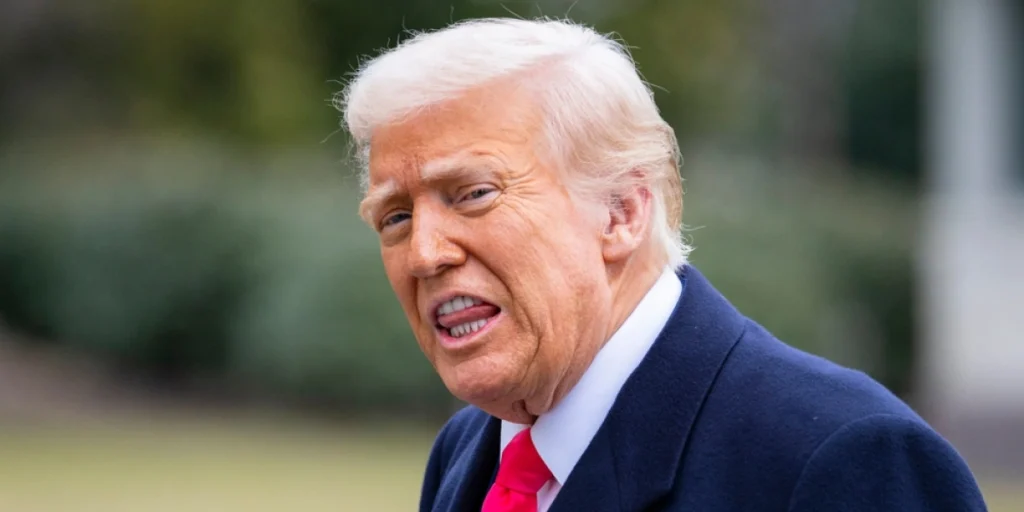
Trump’s last-minute attempt to block thousands of votes is rejected by the Supreme Court.


Americans are heading to the polls on Tuesday for a midterm election that could significantly reshape the balance of power in Washington and determine how much political freedom Donald Trump enjoys during the remainder of his presidency.
Republicans are fighting to maintain control of Congress, while Democrats hope to capitalize on voter dissatisfaction and regain the majority in the House of Representatives.
Meanwhile, the Trump administration has intensified its campaign against alleged illegal voting, particularly targeting registered voters whose citizenship status federal officials have questioned, according to Reuters.
California, the nation’s most populous state and a longtime Democratic stronghold, has become a particularly contentious battleground in that effort.


However, the administration’s latest attempt to interfere with the state’s ballot-counting procedures has now been rejected by the country’s highest court.
On Monday, the US Supreme Court refused an emergency request from Trump’s Justice Department to prevent California from counting mail-in ballots cast by more than 20,000 registered voters.
The decision came just hours after the administration submitted its request, delivering another legal setback to the president on the eve of the election.
Supreme Court rejects Trump’s request without explanation
The administration wanted California to separate the disputed ballots from other votes while federal officials investigated whether the individuals who cast them were legally entitled to participate.
According to the Justice Department, more than 20,000 registered voters had been identified as potentially lacking US citizenship.
Federal law prohibits noncitizens from voting in federal elections, but California argued that the administration had failed to provide reliable evidence establishing that the individuals in question were ineligible.
The Supreme Court ultimately declined to intervene.
Its decision consisted of a brief, one-sentence order offering no explanation, a common practice when the justices handle emergency applications.
No justice publicly dissented.
Notably, the court did not even request a response from California before rejecting the administration’s application.
Such requests are often made when the justices are seriously considering emergency intervention.
The ruling allows California to proceed with its established election procedures rather than adopting the special restrictions demanded by the federal government.
California governor celebrates the decision
Democratic Governor Gavin Newsom welcomed the ruling, portraying it as an important victory for voters and the integrity of the electoral process.
Newsom has repeatedly criticized the Trump administration’s efforts to challenge California’s election procedures.
Following Monday’s decision, he described the outcome as “a welcome sight for all Americans given the disgusting and dangerous attacks on our democracy by the federal government.”
He also sought to reassure voters ahead of Tuesday’s election.
“Tomorrow (Tuesday), Californians can feel secure in knowing the state will carry out a free and fair election — just as we’ve always done,” Newsom added.
The timing is particularly significant because California holds considerable influence over the composition of Congress.
The state has 52 seats in the House of Representatives, more than any other state.
Democrats need a net gain of just four seats nationwide to secure a majority in the chamber.
With control of Congress potentially resting on relatively narrow margins, legal disputes involving thousands of ballots have attracted considerable attention.
Justice Department warns about disputed ballots
The administration has maintained that its legal action is intended to protect election integrity and ensure compliance with federal voting laws.
Its central argument was that California could make it impossible to identify the disputed ballots later if they were mixed with legitimate votes.
“Once California commingles the challenged ballots with lawful ones, there is no way to get the challenged ballots back,” the Justice Department argued in its emergency application.
The list of more than 20,000 voters was compiled by the Department of Homeland Security and subsequently provided to California officials and authorities in Los Angeles County.
On October 15, the Justice Department filed a federal lawsuit accusing California of obstructing enforcement of a 1996 law that criminalizes noncitizen voting in federal elections.
Government lawyers argued that California’s conduct violated the Constitution’s Supremacy Clause, which generally gives federal law precedence over conflicting state legislation.
The administration also made clear that it intended to continue pursuing legal action.
“We will continue pursuing every available legal avenue to protect the integrity of our elections and ensure federal law is enforced,” acting Deputy Attorney General Trent McCotter wrote on social media following the filing.
However, the courts have repeatedly questioned whether the administration’s evidence justifies interfering with the voting process.
Federal judge delivers extraordinary criticism
Monday’s Supreme Court ruling followed two earlier defeats for the administration.
On October 28, US District Judge David Carter rejected the government’s request to restrict the counting of the disputed ballots.
His decision included unusually forceful criticism of the federal government’s attempt to influence state election procedures.
“Never before in American history has the federal government, on the eve of an election, sought to coerce a state and local government to abandon their own constitutional elections procedures and bend to the will of the executive branch,” Carter wrote.
The judge also questioned the reliability of the administration’s voter data.
He noted that people identified by federal authorities as possible noncitizens on voter rolls in other states had repeatedly turned out to be naturalized American citizens.
That raised concerns about whether eligible voters could lose their rights because of inaccurate government records.
Carter warned that allowing federal officials to challenge votes without sufficient evidence could have serious consequences for American democracy.
“If the executive can discount votes and threaten an ongoing election due to unproven allegations, then our democracy is in danger,” he wrote.
The administration appealed, but the San Francisco-based 9th US Circuit Court of Appeals also refused to intervene on Friday.
The appeals court emphasized California’s authority over its own election procedures and pointed to the state’s “comprehensive statutory scheme to ensure the integrity of its elections.”
That framework includes procedures for removing individuals from voter rolls when authorities establish that they are ineligible.
Trump’s election fraud claims face another setback
Trump has spent years alleging widespread fraud in American elections, particularly following his defeat to Joe Biden in the 2020 presidential race.
Those claims have repeatedly failed to produce evidence of widespread wrongdoing.
Multiple studies and state election audits have found that illegal voting, including ballots cast by noncitizens, is rare.
Nevertheless, the administration has made alleged noncitizen voting a central focus of its election-related legal efforts.
California has argued that its existing safeguards are sufficient to identify and address unlawful voting.
State officials also contend that the administration’s method for identifying suspected noncitizens is flawed and potentially filled with errors.
According to California, the federal government’s approach risks preventing thousands of legally registered voters from having their ballots counted based on allegations that have not been substantiated.
The dispute has also raised broader constitutional questions.
Under the US Constitution, states bear primary responsibility for administering elections, although the federal government retains certain oversight powers.
The administration’s attempt to intervene directly in California’s ballot-counting process therefore represents an unusually aggressive use of federal authority.
Critics have warned that such interventions could create uncertainty over election results, particularly in closely contested races.
Trump suffers another defeat before the polls open
The California case is not the administration’s only recent legal setback involving election procedures.
In September, the Supreme Court rejected an attempt to impose restrictions on mail-in voting through the US Postal Service.
Mail voting is particularly popular among Democratic-leaning voters, making proposed restrictions politically contentious.
On Sunday, a federal judge also dismissed an administration lawsuit concerning the US Senate race in Alaska.
Monday’s Supreme Court decision therefore adds to a growing series of unsuccessful attempts by the administration to secure last-minute changes to election procedures.
The political stakes could hardly be higher. Republicans are fighting to preserve their congressional majority, while Democrats are hoping to gain enough seats to place significant obstacles in the president’s legislative path.
Losing control of the House would make it considerably harder for Trump to advance major elements of his domestic agenda.
For California, however, the immediate consequence is more straightforward.
The state can continue counting ballots under its existing rules without being forced to segregate the votes of more than 20,000 registered individuals based on the administration’s allegations.



