
 Nicolai Haugsted

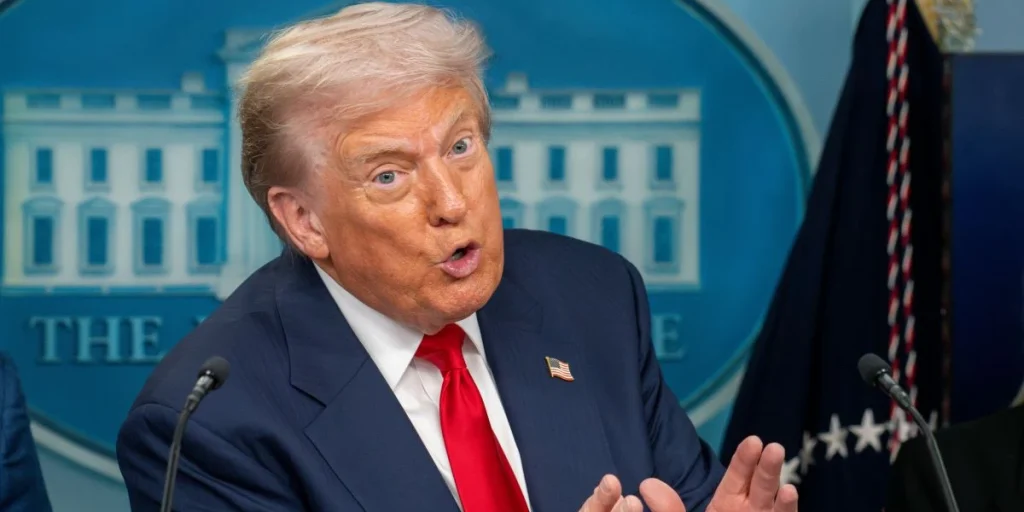
Donald Trump faces devastating poll numbers just hours before the crucial midterm elections.


American voters are preparing to decide who controls Congress, with the outcome potentially reshaping the political landscape for the remainder of Donald Trump’s presidency.
Although the president himself is not on Tuesday’s ballot, his policies, leadership and handling of the economy have become major issues in congressional races across the country. Republicans are fighting to defend their majorities in both chambers, while Democrats see an opportunity to weaken Trump’s influence in Washington.
The campaign has been particularly difficult for the president’s party following months of economic uncertainty and rising fuel prices linked to the war against Iran, which began in February.
Now, a new Reuters/Ipsos poll suggests that Trump’s political troubles extend well beyond individual congressional races.


The survey, completed Monday, shows the president’s approval rating hovering near its lowest recorded level, while a significant proportion of Americans view the midterm elections as an opportunity to express their opposition to him.
And with polling stations opening Tuesday, the figures offer Republicans little reason to celebrate.
Trump’s approval rating remains dangerously low
According to the latest Reuters/Ipsos survey, just 32 percent of American adults approve of Trump’s performance as president.
The figure is unchanged from the previous week and sits only one percentage point above the record low of 31 percent recorded two weeks earlier.
For a president whose political appeal has long depended on his ability to energize supporters, the numbers present a considerable challenge.
Trump has continued to campaign aggressively for Republican candidates, but his personal popularity appears to be offering limited assistance to his party.
The survey also indicates that dissatisfaction with the president is influencing how Americans intend to vote.
Among registered independent voters, half said they viewed their congressional ballot as a vote against Trump.
By comparison, only 13 percent described their vote as an expression of support for the president.
Another 33 percent said Trump was not a factor in their decision.
Those figures are particularly important because independent voters often play a decisive role in competitive congressional districts.
While Trump’s most loyal supporters remain an important part of the Republican electorate, the latest findings suggest his presidency may be motivating a substantial number of voters in the opposite direction.
Democrats hold an eight-point advantage
The survey also offers encouraging news for Democrats hoping to regain control of Congress.
Asked which party they would prefer to represent them in congressional elections, 46 percent of respondents chose Democrats, compared with 38 percent who favored Republicans.
That gives Democrats an eight-percentage-point advantage in the national generic ballot.
However, the latest figures also contain a small consolation for Republicans.
Just one week earlier, Democrats held an 11-point lead in the same Reuters/Ipsos polling series.
Their advantage has therefore narrowed by three percentage points as Election Day approaches.
The national figures should not be interpreted as a direct prediction of how many seats either party will win.
Congressional elections are decided through individual contests across states and districts, meaning a nationwide polling lead does not automatically translate into control of either chamber.
Nevertheless, the results suggest Democrats enter Election Day with a meaningful advantage in overall voter preference.
Rising living costs are becoming a major problem for Republicans
Although Trump has spent considerable time promoting his administration’s policies, the economy appears to be dominating voters’ concerns.
The war against Iran has contributed to a sharp increase in fuel prices since February, adding pressure to household budgets already strained by everyday expenses.
According to the survey, 78 percent of respondents described the rising cost of living as either very important or the single most important issue influencing their vote.
That places economic concerns firmly at the forefront of the election.
More troubling for Republicans is the finding that voters currently trust Democrats more to address the problem.
Asked which party would do a better job handling living costs, 43 percent chose Democrats, while 32 percent selected Republicans.
The 11-point difference suggests that the party traditionally associated with promises of economic strength is struggling to convince voters that it has the answers to their financial difficulties.
For households dealing with expensive fuel, groceries and other necessities, political messaging may be taking a back seat to the amount of money disappearing from their bank accounts.
And that could prove costly for Republican candidates seeking another term in Congress.
Democratic voters appear more eager to cast their ballots
Beyond party preferences and presidential approval, the survey highlights another potentially significant advantage for Democrats.
Their supporters appear considerably more enthusiastic about participating in the election.
Among Democratic voters, 49 percent said they were very enthusiastic about voting this year.
Only 33 percent of Republican voters expressed the same level of enthusiasm.
That 16-point gap could become important if it translates into higher turnout on Election Day.
Political parties can enjoy favorable polling numbers without necessarily converting that support into actual votes.
Enthusiasm matters because highly motivated voters are generally more likely to make the effort to participate.
Democrats are hoping dissatisfaction with Trump’s presidency will encourage their supporters to turn out in large numbers.
Republicans, meanwhile, must rely on their own voters showing up despite the president’s weak approval ratings and the economic frustrations reflected in the survey.
The difference between the two parties’ enthusiasm levels could be particularly consequential in closely contested districts where relatively small numbers of votes determine the winner.
The battle for Congress remains far from settled
Despite the favorable national polling figures, Democrats still face significant obstacles.
All 435 seats in the House of Representatives are being contested, giving the party an opportunity to secure a majority.
Political strategists from both parties believe the House represents Democrats’ strongest chance of victory.
The Senate presents a considerably more difficult challenge.
Democrats have faced increasing pressure in states including Alaska and Michigan, complicating their efforts to overturn the Republican majority.
The different electoral landscapes mean the two chambers could produce very different outcomes.
Democrats could potentially win control of the House while Republicans retain the Senate, creating a divided Congress and a more complicated political environment for the White House.
Such an outcome would give Democrats greater power to investigate the administration and challenge its legislative priorities.
For Trump, losing the House would also make it considerably harder to advance major elements of his domestic agenda during the remaining years of his presidency.
Trump could become the election’s biggest liability
The latest survey underlines an uncomfortable reality for Republicans.
Even without appearing on the ballot, Trump remains a defining figure in the election.
His approval rating is close to a record low, independent voters are more likely to describe their ballots as opposition to him than support for him, and Democrats currently hold the advantage on the issue Americans consider most important.
At the same time, Democratic voters appear more motivated to participate.
Republicans can point to the narrowing national polling gap as evidence that the race is tightening, but the broader picture remains challenging.
The Reuters/Ipsos survey was conducted online among 1,765 American adults and has a margin of error of approximately two percentage points.
Like all opinion polls, it represents a snapshot of public sentiment rather than a guaranteed election result.



