
 Nicolai Haugsted

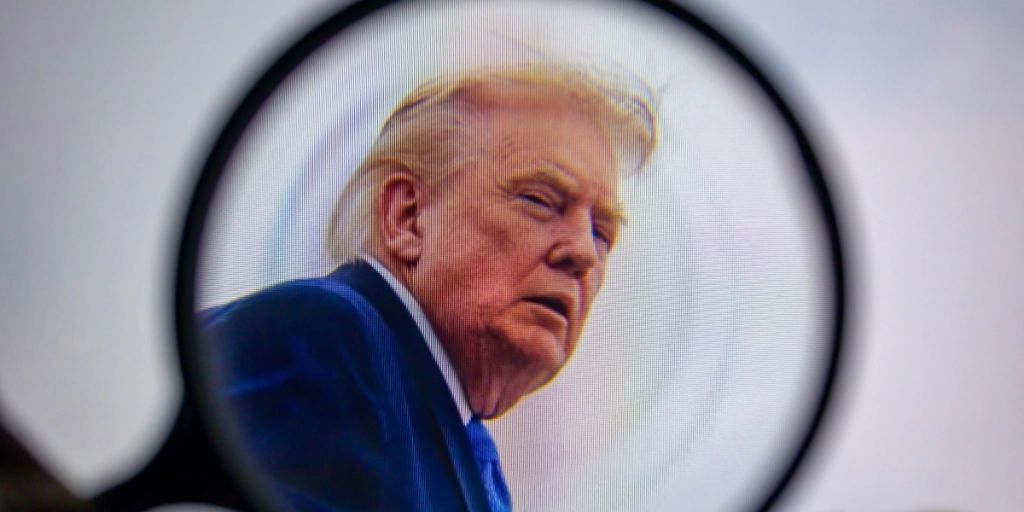
Donald Trump returns to court in desperate bid to overturn the criminal verdict that made history.

Donald Trump’s return to the White House has given him considerable political power, but it has not resolved every legal problem from his years outside the presidency.
More than two years after a New York jury found him guilty in a historic criminal trial, the president is still fighting to overturn the verdict that made him the first former US president convicted of a crime, according to The Independent.
His legal team has repeatedly challenged the case, arguing that prosecutors relied on questionable legal reasoning and evidence that should never have reached the jury.
Now, just days after Republicans suffered major losses in the midterm elections, Trump is preparing for another important confrontation in court.


According to The Independent, a New York appeals court is scheduled to hear arguments on Thursday over whether his 34 felony convictions for falsifying business records should be overturned.
The president is not expected to attend the hearing personally, but the outcome could have significant implications for one of the most controversial legal chapters of his political career.
And although the convictions did not prevent him from winning the 2024 presidential election, Trump has made it clear that he has no intention of simply accepting the verdict.
Trump wants his historic criminal conviction overturned
The case dates back to May 2024, when a Manhattan jury found Trump guilty on 34 counts of falsifying business records.
The verdict followed a trial examining payments connected to adult film performer Stormy Daniels in the final weeks of the 2016 presidential campaign.
Trump became the first former American president to receive a criminal conviction.
His subsequent victory in the 2024 election also made him the first sitting president to hold that distinction.
Despite the historic verdict, the case ultimately resulted in no criminal punishment.
The court imposed an unconditional discharge, meaning Trump received neither a prison sentence nor a fine.
However, the convictions remained on his record.
Trump has consistently denied wrongdoing and maintained that the prosecution was politically motivated.
His attorneys are now asking the appeals court to invalidate the convictions, arguing that serious legal errors undermined the original proceedings.
The timing places another legal dispute on the president’s agenda as his administration faces the consequences of the Republican Party’s midterm defeat.
The appeal itself, however, concerns legal arguments developed over several months rather than any new charges arising from the election.
The Stormy Daniels payment remains at the heart of the case
The criminal prosecution revolved around a $130,000 payment made to Stormy Daniels shortly before the 2016 presidential election.
Daniels has alleged that she had a sexual encounter with Trump approximately a decade earlier.
Trump has repeatedly denied that any sexual encounter took place.
His former attorney and longtime fixer, Michael Cohen, arranged the payment to Daniels in exchange for her silence about the alleged encounter.
Prosecutors argued that the arrangement was intended to prevent potentially damaging information from reaching voters before the election.
Trump’s company subsequently reimbursed Cohen in 2017.
Those reimbursements were recorded as legal expenses, a classification prosecutors maintained was deliberately misleading.
According to the prosecution, the transactions formed part of a broader effort to conceal information that could have affected the presidential campaign.
The district attorney’s office argued that Trump “orchestrated a conspiracy” involving violations of election-related laws.
His defense team offered a very different interpretation.
Trump’s attorneys maintained that Cohen’s payments were legitimate legal expenses and that the original arrangement was intended to protect Trump’s family from embarrassment rather than influence voters.
They also questioned whether prosecutors had adequately established that Trump knew the details of Cohen’s arrangements at the time.
That disagreement remains central to the appeal.
Under New York law, falsifying business records generally becomes a felony when the conduct is carried out with the intent to commit, assist or conceal another crime.
Trump’s lawyers argue that prosecutors failed to establish the necessary legal foundation for treating the records as felony offenses.
Trump’s lawyers attack the prosecution’s legal arguments
The president’s legal team has challenged both the evidence presented at trial and the instructions given to jurors.
In court filings, his attorneys described the prosecution’s theory as “a house of cards.”
They argued that the case depended on an unstable combination of alleged state and federal offenses.
The defense also characterized the evidence as “clearly insufficient.”
According to the filings, jurors were improperly guided through a complicated legal theory that should not have supported the convictions.
Trump’s lawyers have additionally argued that the prosecution arose from “immense political pressure” on Manhattan District Attorney Alvin Bragg, a Democrat.
The allegation reflects Trump’s longstanding public argument that the case was driven by political considerations.
Bragg’s office rejects the defense’s position.
Prosecutors maintain that the legal theory was valid, the jury instructions were appropriate and the evidence supported the guilty verdicts.
The appeals court must now assess those competing arguments rather than reconsider the political popularity of either side.
Presidential immunity becomes another major battleground
A particularly important part of Trump’s appeal concerns the constitutional protections afforded to presidents.
His attorneys argue that jurors were allowed to consider evidence involving activities connected to Trump’s first presidency that should have been protected by presidential immunity.
The disputed material included testimony about White House conversations, administrative practices and social media posts made while Trump was in office.
The defense maintains that some of those activities constituted official presidential conduct.
Trump’s lawyer Robert Giuffra Jr. outlined that argument in an October filing.
“When a president addresses the nation to defend himself from allegations of personal misconduct (as all presidents do), or discusses such communications with his aides, he is carrying out his constitutional duties and is protected by immunity,” Giuffra wrote.
The argument seeks to extend presidential immunity protections to certain communications surrounding the Daniels controversy after it became public in 2018.
Prosecutors strongly disagree.
Manhattan District Attorney Alvin Bragg’s office maintains that discussing a personal controversy does not automatically transform the subject into official presidential business.
Steven Wu, the office’s appeals chief, addressed that distinction in a July filing.
“A president’s discussions about a purely private matter, even with a White House advisor, do not constitute ‘official acts for which the president is immune,'” Wu wrote.
Prosecutors also argue that some disputed material was already publicly available, while other evidence concerned ordinary workplace procedures or unofficial conversations.
Wu maintained that the prosecution had “a mountain” of additional evidence supporting the convictions.
The disagreement could prove particularly significant because the Supreme Court has established broad immunity protections for presidents concerning official acts.
The New York appeals court must consider how those protections apply to the evidence used in Trump’s criminal trial.
Trump is fighting the conviction in two different courts
Thursday’s state appeal is not the president’s only attempt to overturn the verdict.
His lawyers have also pursued a separate strategy through the federal court system.
Trump has sought to transfer the New York criminal case into federal jurisdiction, where his attorneys hope to secure its dismissal on presidential immunity grounds.
However, those efforts have repeatedly encountered resistance.
According to The Independent, a federal judge rejected Trump’s attempt for the third time in August.
The president’s legal team has appealed that ruling as well.
Arguments in the separate federal proceedings are scheduled for November 16.
The parallel challenges mean Trump is pursuing multiple legal avenues to remove the convictions from his record.
Success in either proceeding would represent an important legal development, although the courts are examining different procedural and constitutional questions.
For now, the original verdict remains in place.



