
 Lauge Risom Koch

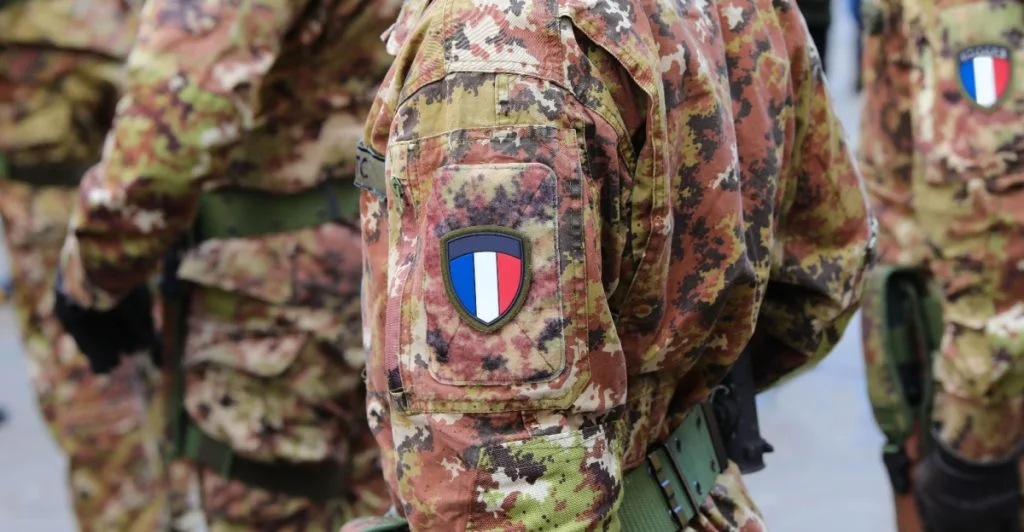
Britain and France will lead a multinational military exercise in Poland to prepare an 11-nation coalition force for a potential post-ceasefire deployment to Ukraine.

Britain and France are set to lead a multinational military exercise preparing a coalition force for potential deployment to Ukraine following a ceasefire. According to the Kyiv Post, the drill, named Exercise Koalicja, will take place from November 9 to November 22 near Nowa Dęba in southeastern Poland. The maneuvers will test the logistical and command capabilities of 2,800 troops from 11 participating nations.
The operation represents the first major practical test for the Multinational Force Ukraine, an initiative established by London and Paris in 2025. The exercises aim to evaluate how efficiently allied units can mobilize from their respective bases, cross international borders, and integrate under a unified command structure. British Lieutenant General Tom Bateman and French General Armel Dirou will oversee the coordinated deployment.
While no ceasefire agreement currently exists, the exercise reflects concrete preparations for post-conflict stabilization. “This isn’t a hypothetical plan, it’s a real force, ready to help Ukraine once the fighting stops,” stated British Defense Secretary Wes Streeting. Britain and France previously signed a declaration of intent to establish military hubs on Ukrainian soil, provided Kyiv officially requests assistance.
Tactical drills across ground, air, and sea
The ground component of the exercise will focus on deploying units into staging areas, establishing localized security, and maintaining continuous supply lines. France will contribute approximately 1,100 soldiers to the maneuvers, while Britain plans to send 300 personnel, including members of the 7th Brigade. Poland will host the participating contingents but has explicitly ruled out sending its own combat forces into Ukraine.


Beyond land maneuvers, the exercise incorporates comprehensive air and maritime planning operations. Royal Air Force Typhoon fighter jets and Voyager refueling aircraft will conduct simulated missions designed to protect civilian aviation in the event that Ukraine reopens its airspace. These aerial drills aim to establish operational protocols for securing commercial flight corridors during a postwar transition period.
Simultaneously, maritime coordination efforts will be directed from a naval command center located in Istanbul. Turkish military officers will lead a planning exercise focused on clearing naval mines from the approaches to major Ukrainian ports. This maritime component is designed to ensure safe passage for commercial merchant vessels operating in the Black Sea following the cessation of hostilities.
Coalition commitments and operational scope
The broader political commitments regarding actual deployment vary significantly among the 11 participating allied nations. The roster of involved countries includes Belgium, Estonia, Germany, Lithuania, the Netherlands, Spain, Sweden, and Turkey. Warsaw plans to coordinate the movement of allied troops and equipment through its territory to the Ukrainian border, while Germany has indicated it could contribute support forces stationed on neighboring NATO territory.
Under the framework agreed upon with Kyiv, the multinational force is designed primarily for institutional rebuilding rather than frontline combat. The coalition’s mandate focuses on training Ukrainian military personnel, replenishing depleted equipment stocks, and assisting in the reconstruction of military units. Planners have explicitly clarified that both ceasefire monitoring and offensive combat operations fall entirely outside the force’s intended operational scope.
The multinational coalition requires distinct domestic political approvals before executing any cross-border deployment. Britain has pledged to hold a parliamentary vote before committing its troops to staff the proposed logistics and training hubs inside Ukraine. The upcoming exercise in Poland serves as the foundational test to ensure the coalition possesses the necessary readiness to execute the mission if those political conditions are eventually met.



