
 Kenneth Glad

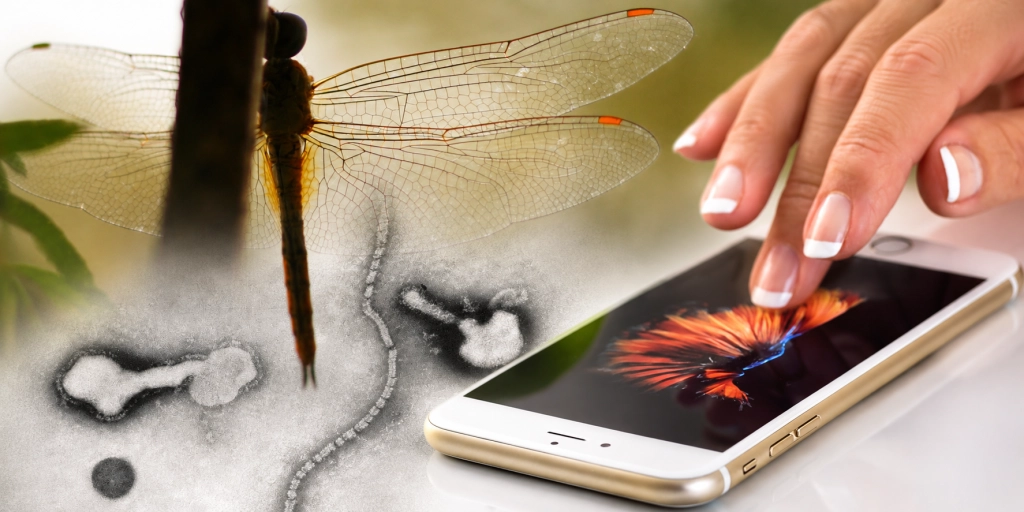
Every day begins with a trail of touched surfaces. From a morning train handrail to an office desk, people navigate public life through constant physical contact. Yet invisible threats linger in these ordinary places, quietly waiting for the next fingertip.


Scientists trying to curb infections have turned to biology for answers. In a study published in Advanced Science, researchers revealed a plastic film designed to destroy viral invaders on contact.
The concept came directly from insect wings. Researchers examined how cicadas and dragonflies keep clean, discovering that tiny physical pillars on their wings rupture bacterial walls without chemical agents.
Writing in The Conversation, study co-author Elena Ivanova explained that physical architecture does the killing, not chemistry. Tiny pillars snare passing microbes, stretching the outer layer until it bursts.
Moving past chemicals
Common sanitation relies heavily on liquid disinfectants to control bugs on high-traffic furniture. Yet chemical sprays must stay wet for extended periods to work, an impractical rule inside packed clinics and bustling subway cars.


Standard cleaning agents also bring environmental and safety drawbacks. Over time, constant chemical exposure can damage equipment, wash toxins into waterways, and encourage bugs to build resistance.
Brute mechanical force sidesteps those problems entirely. By shredding infectious bodies with physical pressure alone, the acrylic surface requires zero chemical additives to neutralize germs.
A long journey
Creating this flexible shield took years of trial and error. Reflecting on the long path to the breakthrough, Ivanova wrote: “Our journey toward a virus-bursting surface started more than a decade ago.”
Initially, the team tried building an ultra-slick surface where bacteria would simply lose their footing. Surprisingly, tests revealed the opposite, showing that bacteria cling stubbornly to glass-smooth areas.
The team shifted toward microscopic textures. During laboratory trials, researchers observed that the patterned acrylic reduced parainfluenza infectivity by roughly 94 percent after one hour of contact.
Ready for production
Spacing proved decisive during fabrication. Pillars set roughly 60 nanometers apart inflicted heavy damage on viral envelopes, while wider gaps allowed particles to survive unharmed.
Rigid silicon came first. That brittle substance could never wrap around curved handles, so researchers turned to flexible acrylic shaped with ultraviolet light.
Questions remain about how well the delicate texture withstands daily scuffs. Even so, if it survives real-world wear, it could turn ordinary public fixtures into continuous infection shields.



