
 Jens Asbjørn Bøgen
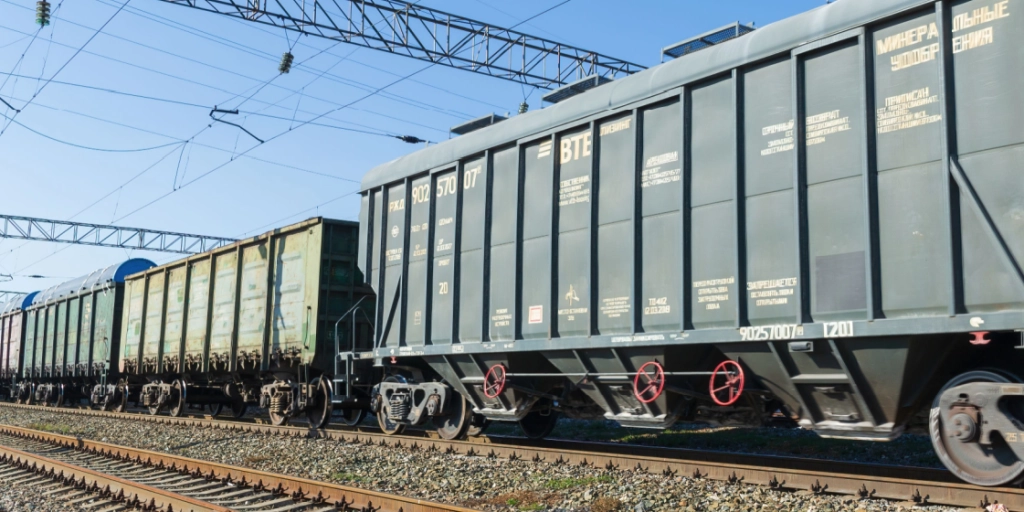
The state-owned monopoly is planning on cutting spending by 20% in 2026 alone.


The trains still run across vast distances, linking cities, factories, and remote regions.
For decades, the network has been a backbone of daily life and commerce.
Now, mounting pressures are testing how long that system can hold.
Russian Railways, the state-owned monopoly that operates the country’s rail network, is facing a severe financial crisis that has raised fears of bankruptcy.


Mounting pressure
According to Radio Liberty, the Russian government has stepped in to prevent wider fallout.
Among the emergency measures was the forced sale of a modern Moscow skyscraper worth about $2 billion, purchased only two years ago at a cost estimated at one-eighth of the firm’s annual budget.
Analysts point to a combination of war-related disruption and long-standing financial strain. Russian Railways is burdened with debt estimated at around $51 billion, a problem made worse by high interest rates imposed as the Central Bank battles inflation.
With the war in Ukraine approaching its fifth year, the company’s difficulties mirror broader weaknesses in Russia’s economy.
Economic warning signs
“This crisis at Russian Railways is one of the factors [resulting from] accelerating inflation in the Russian economy,” said Igor Lipsits, a Russian economist now living abroad to Current Time.
This, according to him, means that the prices are rising and inflation accelarating because of lower revenues and higher tariffs.
Russian Railways was created in 2003 from much of the former Soviet rail system and granted near-monopoly control over passenger and freight traffic. It expanded rapidly and accumulated heavy debt, even after longtime chief Vladimir Yakunin was removed in 2015.
War’s impact
After the full-scale invasion of Ukraine, Western sanctions disrupted trade flows and forced costly rerouting of cargo. In 2024, authorities ordered military shipments to take priority on the network.
In late December 2025, Reuters reported that the Russian railway was planning to cut spending by 20% in 2026.
The company employs about 700,000 people and runs roughly 85,000 kilometers of track spanning 11 time zones.
Sources: Current Time, Novaya Gazeta Europe, Harvard University Davis Center, Radio Liberty, Railway Pro, Reuters



