
 Kathrine Frich

After decades in power and years of war, Russia’s political future is again under scrutiny.

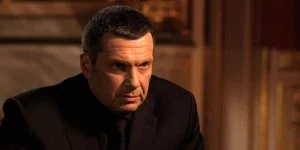
An expert assessment suggests that the end of Vladimir Putin’s rule may come in a way few openly discuss.
Rather than a dramatic overthrow, the analysis points to a slower, more personal conclusion, followed by an uncertain struggle behind the scenes.
Age and power
At 73, Russian President Vladimir Putin has reached the average lifespan of past Russian leaders.
Speaking on a programme cited by the Daily Mail, Russia analyst John Kennedy said this factor alone is reshaping expectations about how Putin’s rule might end.


Kennedy, who heads the Russia and Eurasia Program at the RAND Europe think tank, argues that despite mounting pressure from the war in Ukraine, Putin is unlikely to be forced out of office.
He added that reports suggesting Putin is seeking alternative treatments for health issues may indicate that time is working against the Kremlin leader.
No clear challengers
Russia’s economy is in decline and the war has cost the country nearly a million men, according to Kennedy.
Still, he believes a palace coup or popular uprising remains improbable under current conditions.
“Putin has gathered around him a loyal circle of cadres, friends and former colleagues, and power is concentrated in his hands. This process was further intensified after the full-scale invasion of Ukraine,” explains Kennedy.
He also pointed to the absence of mass protest following the death of opposition figure Alexei Navalny.
“After Navalny’s death, we have not seen any popular movement, neither in the parties nor in the regions. His overthrow seems unlikely unless circumstances change significantly. The most realistic scenario is that Putin dies in office. Then a power struggle would begin among those closest to him,” he explains.
A darker possibility
While unlikely, Kennedy does not entirely dismiss the risk of assassination.
He suggests that if such an attempt occurred, it would more likely come from Russia’s regions rather than the Kremlin elite.
Many Russian soldiers are conscripts from poor, rural areas that have long harboured resentment toward Moscow, including places such as Chechnya.
“There is a significant difference between life in Moscow and the regions,” says Kennedy.
“There is poverty and pessimism about the future. More and more resources are being diverted to the war, and this creates tension.”
Security and uncertainty
Kennedy notes that Putin’s heavy security and reduced public appearances may reflect both health concerns and deepening paranoia.
“He is still very well guarded, but the killings are still happening. If he visits the regions, the opportunity may arise. Is that possible? Yes. It is entirely possible that someone would want to kill him. especially given the situation in Ukraine,” he says.
Kennedy concludes that Putin’s time is limited and warns Western governments to prepare for instability.
“Change is brewing in Russia. It could come through internal elites, a democratic uprising, or a military coup, but we must prepare for all scenarios.”
Sources: LA.LV, Daily Mail, RAND Europe



