
 Asger Risom
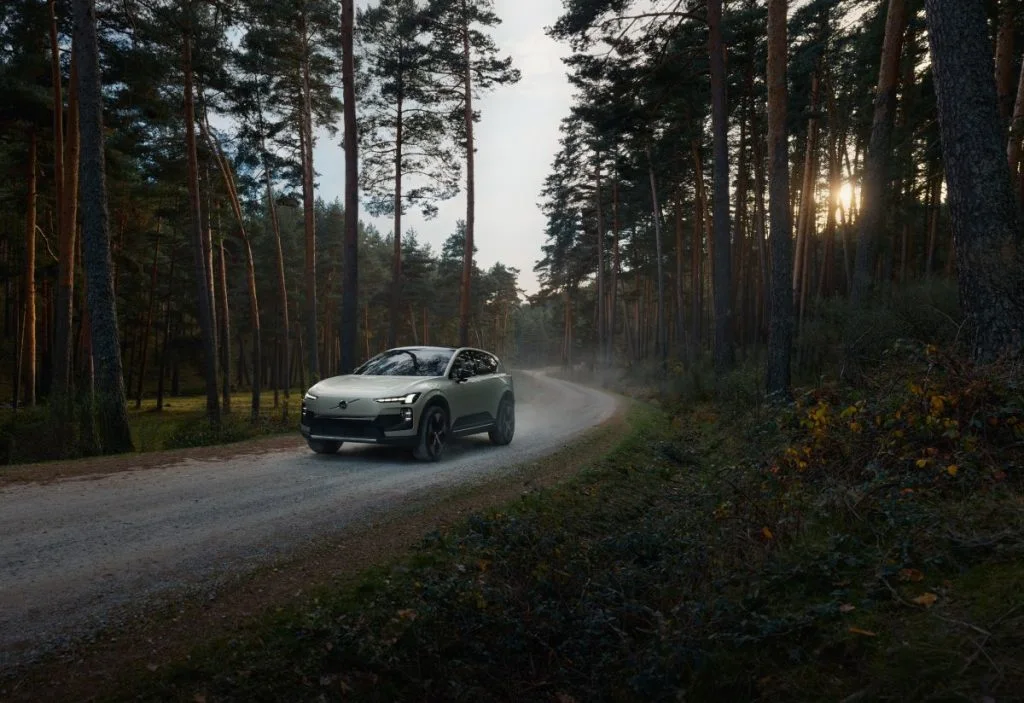
The premium electric SUV segment is about to get even more crowded.
A new Volvo model is arriving just as German rivals race to redefine what midsize luxury EVs can deliver.
Others are reading now

The Volvo EX60 enters the midsize electric crossover class at a moment of rapid change. With Tesla’s Model Y losing momentum in several markets, established European brands see an opening to challenge its dominance.
Volvo is positioning the EX60 directly against BMW and Mercedes-Benz, promising class-leading numbers in range, charging and performance. Early specifications suggest it is not just competitive, but potentially ahead in several key areas.
A shifting segment
Electric crossovers in this size class have evolved quickly. BMW’s new iX3 focuses heavily on efficiency, while Mercedes-Benz is leaning into familiarity and luxury with its electric GLC.
Audi’s Q6 E-Tron, which shares its platform with the Porsche Macan EV, highlights how fast progress is being made. What looked cutting-edge a year ago is now under pressure from newer designs.


Against that backdrop, Volvo is betting that a clean-sheet, software-defined EV architecture will give the EX60 an edge.
Battery and range
Volvo plans to offer the EX60 with multiple battery options. The flagship version uses a 117 kWh pack, delivering a WLTP range of 503 miles, with Volvo expecting an EPA figure close to 400 miles.
BMW’s iX3 follows closely, rated at 500 miles WLTP from a 108.7 kWh battery, with BMW also projecting up to 400 miles on the EPA cycle. Mercedes’ electric GLC uses a smaller 94 kWh battery but still achieves up to 443 miles WLTP.
The Audi Q6 E-Tron trails the group, with up to 392 miles WLTP and a U.S. EPA estimate of 307 miles for its dual-motor version.
Charging and pace
All four models ride on 800-volt platforms, enabling rapid charging. Each can add roughly 186 miles of range in about 10 minutes under ideal conditions.
Volvo claims the fastest charging time, reaching 10% to 80% in 19 minutes, compared with around 21 minutes for the BMW and Audi, and 22 minutes for the Mercedes. Both Volvo and BMW support charging speeds of up to 400 kW.
In performance terms, the EX60 currently leads with 670 horsepower and a 0–62 mph time of 3.9 seconds, though German rivals are expected to introduce more powerful variants.
No clear loser
While the Volvo tops the charts today for acceleration, charging and range, it lacks the higher top speeds of its German competitors. Future AMG, M or RS versions are likely to shift the balance again.
What stands out is how competitive the entire segment has become. None of these vehicles looks like a compromise, and all offer long range and fast charging.
For now, the numbers put the EX60 slightly ahead. But the real winner is the buyer, with more capable electric SUVs than ever before.
Sources: InsideEVs, manufacturer specifications



