Jens Asbjørn Bøgen
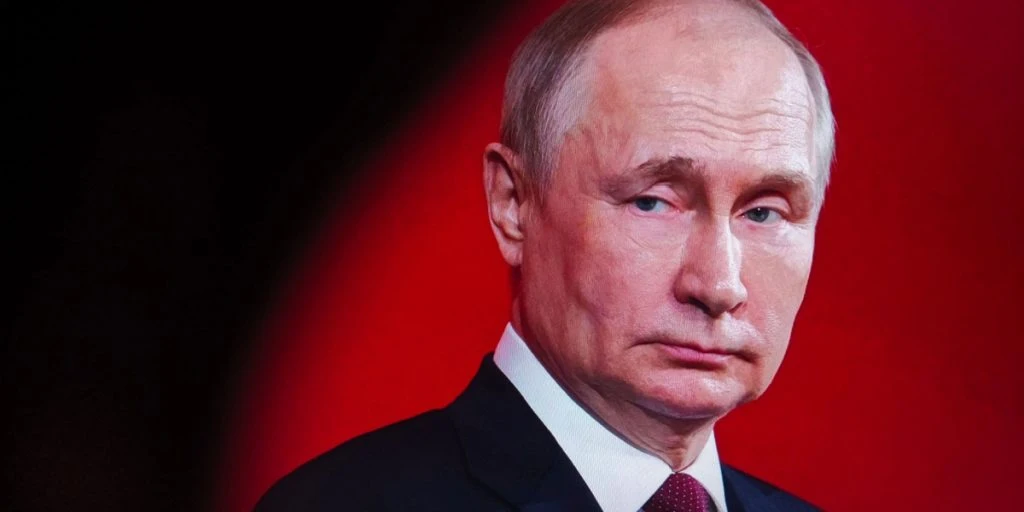
The returns would be hard for an investment banker to sell to his clients …


As the war in Ukraine moves into another year, new analysis is shedding light on the enormous economic strain tied to Moscow’s campaign.
Researchers and defense analysts say the financial consequences now reach far beyond the battlefield, affecting Russia’s economy, population, and long-term growth.
The numbers suggest a cost measured not just in territory or military hardware, but in trillions of dollars.
The cost of lives
In an opinion in Defense News on March 3, research fellow with Stanford University’s Hoover Institution David R. Henderson and associate professor of economics at the Naval Postgraduate School Ryan Sullivan break down the numbers, first referring to a January report from the Center for Strategic and International Studies (CSIS).


The report estimated that Russia’s full-scale invasion has generated an economic burden of about $2.5 trillion.
Figures cited by Henderson and Sullivan indicate the cost now surpasses Russia’s annual GDP, which is roughly $2.2 trillion.
Citing data from CSIS, Henderson and Sullivan write that Russian losses by January 2026 include around 325,000 killed and 875,000 wounded or missing.
To measure the economic impact of these casualties, the authors cite estimates based on the “Value of a Statistical Life” model. Adjusted for Russian income levels, a single life is estimated at about $2.6 million and a severe injury at roughly $270,000.
Human capital losses
Based on those cited calculations, fatalities alone represent about $845 billion in lost human capital.
When serious injuries are included, the combined economic loss linked to casualties rises above $1 trillion, according to the opinion in Defense News.
The opinion piece also discusses military equipment losses. Drawing on data from Russia’s Ministry of Finance, Henderson and Sullivan cite estimates that roughly 12,000 tanks, 24,000 armored vehicles, and 400 aircraft have been destroyed.
Defense News reports the total value of lost hardware at approximately $125 billion.
Growth and reserves
Operational expenses have also mounted. Citing figures from the RAND Corporation, Henderson and Sullivan write that fuel, munitions, and logistics have cost roughly $149 billion since the start of the war.
However, the largest economic blow comes from reduced growth. Referencing research from the University of California, Berkeley, the authors say Russia’s cumulative GDP loss since 2022 totals about $1.124 trillion.
The World Bank attributes the downturn to several factors, including the departure of more than 650,000 citizens, around $340 billion in frozen foreign assets, and rising inflation of about 9.5 percent alongside interest rates near 20 percent.
Territory versus price
Henderson and Sullivan compared those losses with Russia’s territorial gains. Data from the Institute for the Study of War indicates that roughly 28,000 square miles of Ukrainian land are currently occupied.
For context, that area equals about one-tenth of Texas.
“Conquering a territory of this size has come at a cost of approximately $90 million per square mile in blood and treasure,” Henderson and Sullivan wrote in Defense News.
The researchers argue the financial burden ultimately falls on Russian society through lower living standards, even as political leadership continues the war.
Sources: Defense News, CSIS, RAND Corporation, University of California Berkeley, World Bank, ISW