
 Kenneth Glad
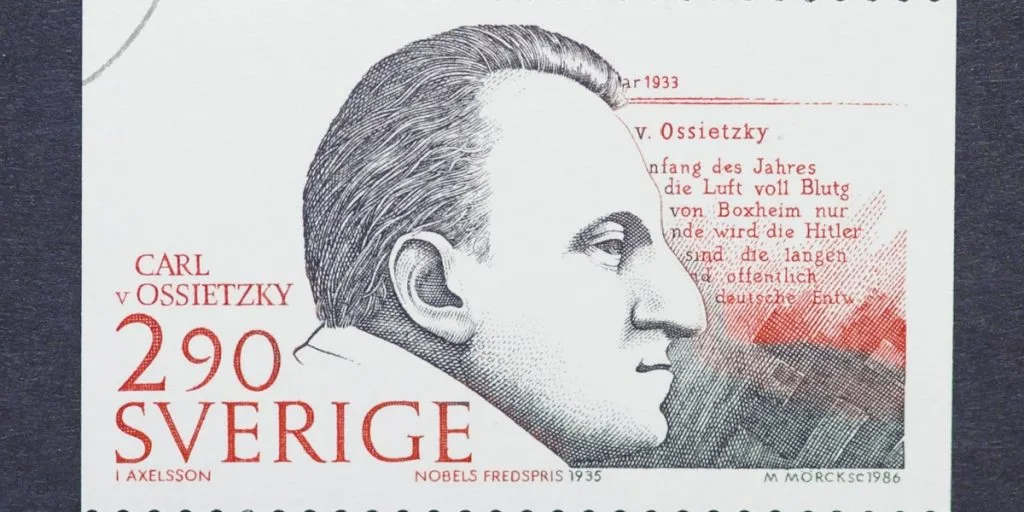
A Nobel Peace Prize was awarded to a man in Nazi custody. He had spent years warning about forces reshaping Germany. By the time the world recognised him, he was under guard and too ill to travel.


In 1936, Carl von Ossietzky was named the 1935 Nobel Peace Prize laureate while detained by the Nazi regime. NobelPrize.org states that authorities denied him permission to leave Germany, preventing him from attending the ceremony in Oslo.
From a hospital bed under constant supervision, he chose to accept the award despite official pressure to refuse it. He wrote: “The Nobel Peace Prize is not a sign of an internal political struggle, but of understanding between peoples.”
The decision drew widespread attention beyond Germany. Campaigns supporting his nomination had already circulated internationally, reflecting growing alarm over political repression.
Inside Germany, coverage of the award was banned, and citizens were later prohibited from accepting Nobel Prizes.


Trials and warnings
Ossietzky had long been under scrutiny for his reporting. Die Weltbühne exposed efforts to rebuild German air power in violation of post-World War I limits on its military.
That work led to the reporter’s 1931 conviction for treason. According to NobelPrize.org, he was sentenced to 18 months in prison after publishing material authorities deemed secret.
The case did more than silence a critic for a time, however: It sharpened international debate about how far a state can go in punishing journalists.
After his release, he continued writing, increasingly focused on the political climate. In one article addressing the rise of extremism, he warned: “Today there is a strong smell of blood in the air.” It was a stark line, written as nationalist and anti-Semitic rhetoric intensified.
A silenced voice
Ossietzky’s career had begun in Hamburg, where he moved from civil service into journalism. His experience during World War I left him firmly committed to pacifism.
By the early 1930s, he was among the few public figures openly criticising both militarism and authoritarian politics.
After the Reichstag fire in 1933, he was arrested and moved through prisons and concentration camps. Fellow detainees later described beatings, forced labour and a visible physical decline. He died in 1938 in Berlin under Nazi supervision.
A lasting legacy
Ossietzky’s case continues to resonate far beyond his lifetime. Historians and press freedom organisations frequently cite him as an example of a journalist punished for exposing state wrongdoing, and as a warning of how quickly repression can escalate.
That legacy is not only historical. In recent years, debates about press freedom have taken on new forms, with political leaders in several countries, including U.S. President Donald Trump, openly and repeatedly attacking the credibility of journalists, often labelling critical coverage as “fake news.” While the circumstances differ sharply from those faced by Ossietzky, media watchdogs argue that such rhetoric can contribute to a broader climate of pressure on independent reporting.
Carl von Ossietzky’s influence is also embedded in modern institutions. PEN Norway, the Norwegian branch of the international writers’ organisation, awards the annual Ossietzky Prize to individuals or institutions that have made outstanding contributions to freedom of expression. Named in his honour, the prize recognises efforts to defend open debate and hold power to account, values closely associated with his work.
Together, these strands show how Ossietzky’s story has evolved from a specific historical case into a lasting reference point in global discussions about journalism, whistleblowing and the protection of free speech.
Sources: NobelPrize.org, PEN Norway, Die Weltbühne



