
 Kenneth Glad
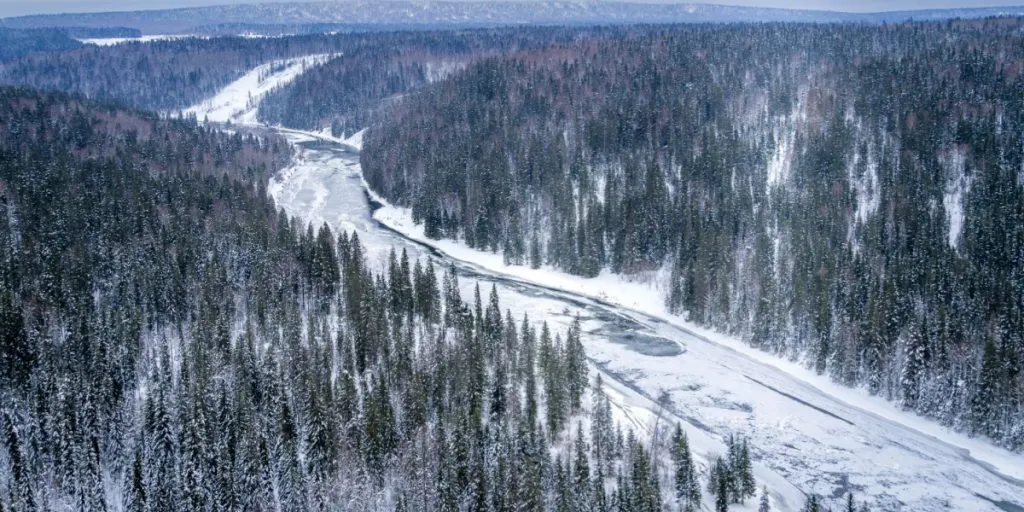
As nuclear deterrence again shapes global security debates, attention is returning to the hidden systems built for catastrophe. These are the places designed not for warfighting, but for survival after it. One of the most discussed lies beneath Mount Yamantau in Russia’s southern Urals, a remote peak long tied to secrecy and speculation.


During the Cold War, both superpowers poured resources into hardened command centers. The U.S. carved out Cheyenne Mountain; the Soviet Union pursued its own network of protected sites, often far from major cities.
Yamantau is widely seen through that lens. Reporting by The New York Times, drawing on U.S. intelligence assessments from the 1990s, described extensive underground construction beneath the mountain, at one point labeled a potential “backup capital.”
Estimates at the time described a decades-long effort on a massive scale, beginning in the Soviet era.
That kind of investment suggests something more ambitious than a simple military shelter. Not just protection, but endurance.


Systems of survival
To understand why such a place might exist, analysts often point to how nuclear command systems are structured. Redundancy is everything. If one layer fails, another must hold.
This is where the so-called “Dead Hand” system enters the conversation. Designed as an automatic retaliation mechanism, it reflects a doctrine built on ensuring response capability under any circumstances.
No confirmed evidence ties Yamantau directly to it, writes WP Tech, but the association persists in expert discussions.
Nearby sits the closed town of Mezhgorye. Satellite images show a quiet, isolated settlement ringed by forested terrain, with restricted access that has only deepened suspicions about the area’s role.
A deliberate mystery
Details remain scarce, and that appears intentional. Russian officials have acknowledged facilities in the region without offering specifics.
According to statements cited by The New York Times, former U.S. Strategic Command chief General Eugene E. Habiger described the complex as enormous, spanning millions of square meters, while making clear its purpose was still unknown.
Moscow has long taken a consistent line. As former defense minister Igor Rodionov said in the 1990s, sensitive security projects are not something Russia discusses with foreign media.
That silence does more than conceal facts. It reinforces the point. Whether Yamantau functions as a command hub, a refuge, or something more layered, its role is inseparable from uncertainty itself.
Sources: The New York Times, WP Tech



