
 Kenneth Glad
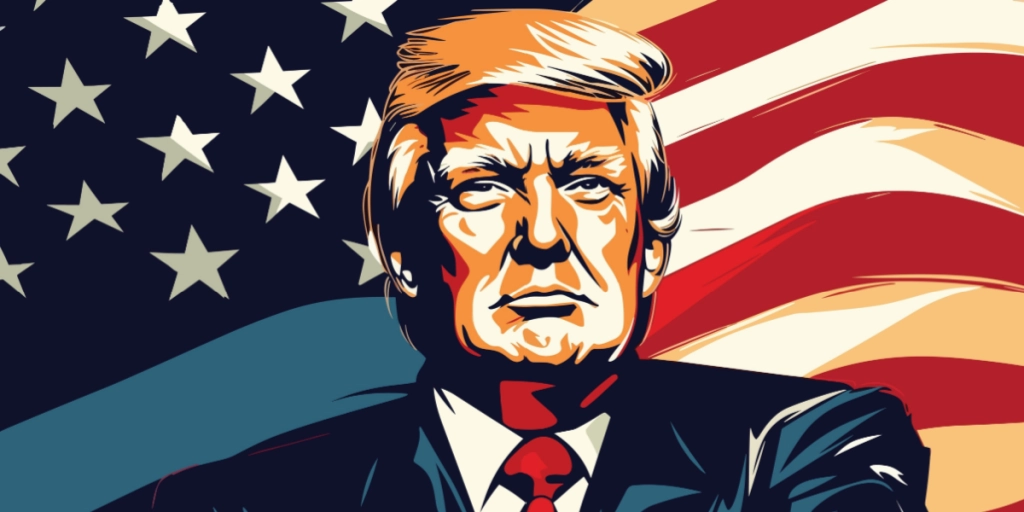
With midterm elections approaching, the president delivers his annual address under mounting political and legal pressure. Fresh polling, a Supreme Court setback and rising tensions overseas have sharpened the stakes for a prime-time appeal to the nation.

President Donald Trump will walk into the House chamber Tuesday night to a familiar scene: Lawmakers crowding the aisles, cameras hunting for reactions, and applause that rises sharply from one side of the room and thins out on the other.
This year, that theater lands differently. The speech comes days after a Supreme Court loss on tariffs, amid a military buildup near Iran, and with midterms ahead that could decide whether Trump governs with a friendly Congress or a hostile one.
The newest warning sign is political, not procedural.
An ABC News/Washington Post/Ipsos poll released Sunday puts Trump’s job approval at 39%, with 60% disapproving. The survey shows dissatisfaction spanning multiple issues, from inflation to immigration.


That is not just a rough news cycle. The weakness is broad, not confined to a single controversy.
Midterm gravity
Trump’s advisers know history is not on their side.
According to a Brookings Institution analysis of modern congressional elections, the president’s party has lost House seats in 20 of the past 22 midterms dating back to 1938. The pattern is one of the most durable in American politics.
Data compiled by the American Presidency Project at the University of California, Santa Barbara, show the same trend numerically: Seat losses for the president’s party are the norm, sometimes modest, sometimes sweeping.
Low approval ratings tend to make those losses worse. That’s the math hovering over this speech.
Immigration meets prices
Trump is expected to highlight border enforcement as a signature achievement.
ABC News reported that the Department of Homeland Security said in December that 2.5 million undocumented migrants were removed from the United States and that unlawful crossings declined. The White House argues that those figures validate its approach.
But immigration enforcement has also drawn scrutiny, particularly after the deaths of Renee Nicole Good and Alex Pretti in Minnesota during federal operations.
At the same time, economic concerns bleed into everything else.
Consumer Price Index data show inflation running at about 2.4% annually, down from roughly 3% when Trump took office, according to figures cited by ABC News. Some household staples have become cheaper. Others have not.
The ABC News/Washington Post/Ipsos poll indicates that negative views of Trump’s handling of inflation significantly outnumber positive ones. On the broader economy, support remains under 40%.
Tariffs and the court
Last week added another complication.
ABC News writes that the Supreme Court struck down major portions of Trump’s tariff program in a 6-3 ruling, concluding that the administration exceeded its authority under federal trade law. The decision cut into a policy Trump has described as central to protecting American industry.
Trump responded sharply, calling the justices who ruled against him “very unpatriotic and disloyal to the Constitution” and accusing them of foreign influence.
Several justices are expected to attend the speech and sit in front of the president. Asked whether they were invited, Trump said, “Yeah, they are invited. Barely … barely.” He added: “I couldn’t care less if they come.” Under long-standing tradition, Congress formally invites the president to deliver the address.
The optics — a president criticizing the court while its members sit mere yards away — will be hard to miss.
Iran in the background
Foreign policy may loom even larger.
ABC News has reported that the United States has moved roughly half of its deployable airpower into the Persian Gulf region as tensions with Iran continue. The buildup includes carrier strike groups and destroyers equipped with long-range missiles.
Negotiations over Iran’s nuclear program are expected to proceed, but Trump has left open the possibility of military action. The aforementioned poll shows a majority of Americans oppose using U.S. military force to drive political change abroad.
That caution adds another layer to an already complicated night.
Political scientists who study presidential addresses have long argued that State of the Union speeches can briefly shape the news cycle but rarely transform entrenched public opinion.
Trump will still have the stage, the cameras and the applause of his allies.
Whether that’s enough to shift a 39% approval rating — and the midterm trajectory that comes with it — is far less certain.
Sources: ABC News; Washington Post; Brookings Institution; American Presidency Project (UC Santa Barbara).



