Noah Romsdal Hallundbæk Sørensen
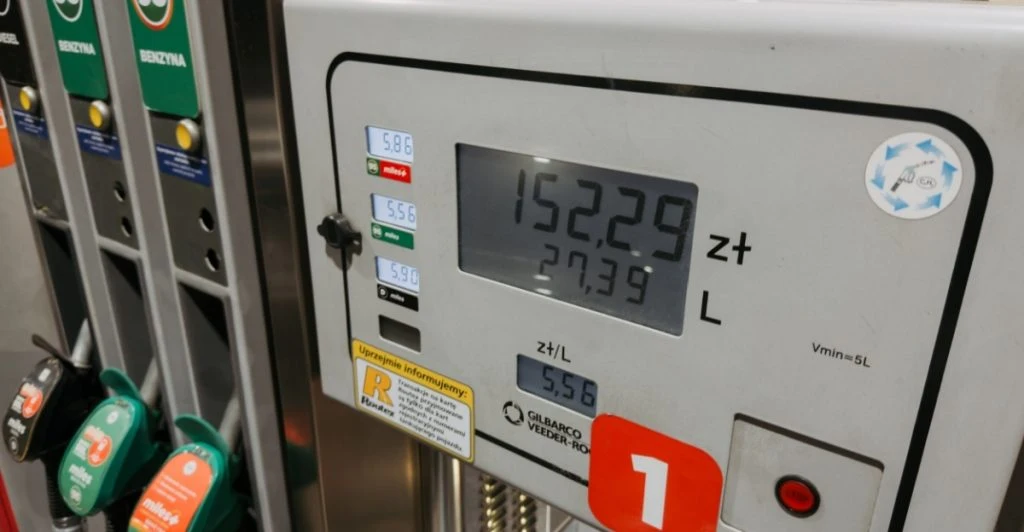
Rising tensions in the Middle East are beginning to ripple through Europe’s fuel markets.


Rising tensions in the Middle East are beginning to ripple through global energy markets.
Early signs are already appearing in Europe, where fuel prices are starting to move.
Analysts warn that if the situation escalates further, motorists could soon feel a sharper financial impact.
Early market reaction
Wholesale fuel prices have already risen following U.S. and Israeli strikes on Iran.


According to reports cited by the Czech news agency ČTK, the changes are visible on the European market.
At the Rotterdam exchange, the price of diesel climbed by more than two Czech crowns per litre, while petrol rose by roughly 70 halers.
“Diesel is up more, it is a strategic raw material,” said Ivan Indráček, chairman of the Czech Association of Independent Petroleum Workers.
He noted that transport and public transit rely heavily on diesel, while in parts of Western Europe the fuel is also used for heating.
Prices at pumps
Higher wholesale costs are expected to gradually show up at filling stations as retailers replenish supplies at more expensive rates.
Demand is also being influenced by drivers who fear a repeat of the energy shock that followed Russia’s invasion of Ukraine in 2022.
According to ČTK, Brent crude from the North Sea briefly jumped from about $73 per barrel on Friday to $82 after the conflict intensified, before easing to around $78.
Energy analysts say the next moves could happen quickly, particularly if oil supplies from the Gulf region are disrupted. The International Energy Agency estimates the region accounts for about 27 percent of global oil production.
Worst-case scenario
If oil prices remain close to $80 per barrel for at least two weeks, experts say fuel prices in the Czech Republic could rise by roughly two Czech crowns per litre.
However, a deeper and longer escalation could trigger a much sharper increase, ČTK reported.
The most severe scenario would involve restrictions on oil shipments through the Strait of Hormuz. In that case, oil prices could rapidly approach $100 per barrel.
For Czech drivers, that could mean petrol and diesel becoming four to five and a half Czech crowns more expensive per litre within days to two weeks.
Analysts also warn that rising fuel costs would likely feed into transport and logistics expenses, pushing up prices across the economy and adding to inflation.
Soruces: Seznamzpravy