
 Kenneth Glad
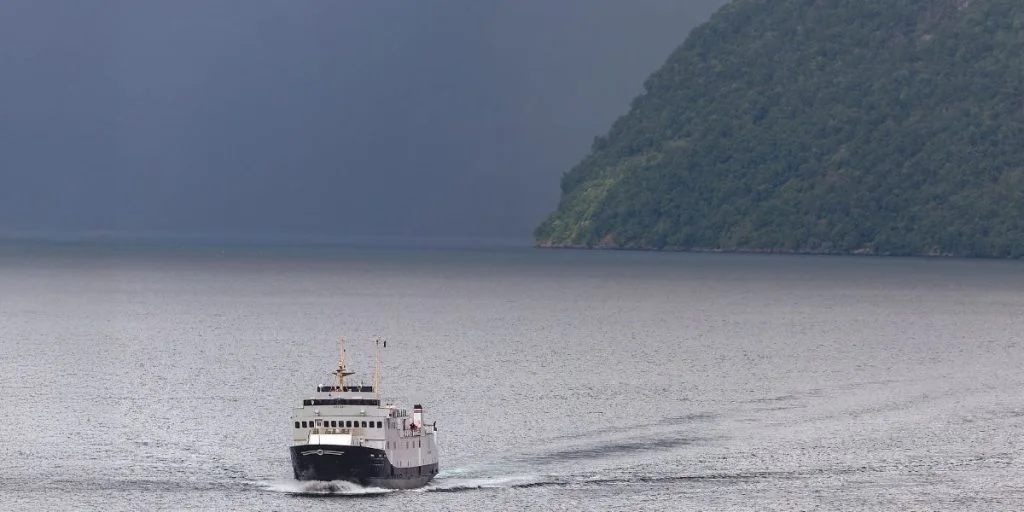
New environmental laws usually point toward a cleaner future. Local businesses spend massive sums to meet those tough goals. But sometimes, a bold climate vision quietly collapses under the weight of everyday practicalities.


A brand new factory sits in the Norwegian village of Hellesylt. Built with one specific goal in mind, the facility produces zero-emission hydrogen to clean up the nearby Geirangerfjord.
By 2026, Norway planned to ban fossil fuels in its heritage fjords completely. And that looming deadline is exactly what pushed local investors to fund the new clean energy plant.
The crisp air will soon fill with exhaust smoke anyway, writes broadcaster NRK. The Norwegian Maritime Authority recently granted special exemptions, so eight tourist boats can keep running on regular diesel.
Shipping companies claim they cannot find enough electricity to charge their new battery ferries. Officials simply gave them a pass.


German executive Gabor Beyer, director of Ryze Power GmbH, recently toured the new facility at Hellesylt alongside representatives from clean energy firm Vireon. His own company works closely with green hydrogen back home in Germany, where the fuel powers everything from city buses and heavy trucks to airports and emergency backup systems.
Looking over the Norwegian operation, Beyer noted that Norway is sitting on a massive opportunity to build a highly profitable green export business across the European continent.
Mockery of green solutions
“That the ferries get to run on diesel, even though they have this fantastic facility here, I am completely speechless,” Beyer told NRK. “It is quite foolish.”
Factory leaders are furious about the sudden reversal. Jens Berge, the chief executive of Norwegian Hydrogen, noted his fuel could easily act as a temporary charging solution for the ferries right now.
Shipping companies had eight full years to prepare. Berge believes the technology is ready and waiting for those willing to use it.
“It is a huge provocation for us who have believed the politicians, and take the zero-emission requirement from 2018 seriously,” Berge said to NRK.
He wants officials to step up and admit their mistake: “The authorities’ handling so far is a mockery of us and other actors who have believed in green solutions.”
State officials quickly defended the delay. Astrid Hoem is a government state secretary, and she told the broadcaster that the shift to clean shipping simply takes time.
Millions spent in vain
“In anticipation of that, it was necessary to give actors an opportunity to maintain operations,” Hoem told NRK. “So that we actually get zero-emission vessels on the fjord eventually.”
The government noted that these special exemptions only apply to shipping companies that can show a clear, concrete plan for reaching zero emissions.
But experts warn that pausing environmental rules slows down progress. Nils Anders Røkke works as a sustainability researcher at Sintef, which is one of the largest independent research groups in Norway. He told NRK that strict rules are exactly what drive new technology. Without that firm pressure, the push for green innovation simply stalls out.
Røkke confirmed the local hydrogen plant could easily solve the power shortage. He noted that another Norwegian ferry has successfully run on liquid hydrogen for three full years.
Local investors feel completely abandoned by the state. Knut Flakk helped pour 120 million Norwegian kroner into the hydrogen project, relying heavily on the 2026 deadline.
He confirmed his group only chose that exact location to serve the fjord: “Had it not been for that, we probably would have built the factory somewhere else.” He concluded: “It is simply madness and a waste of public funds.”
Source: NRK



