
 Kenneth Glad
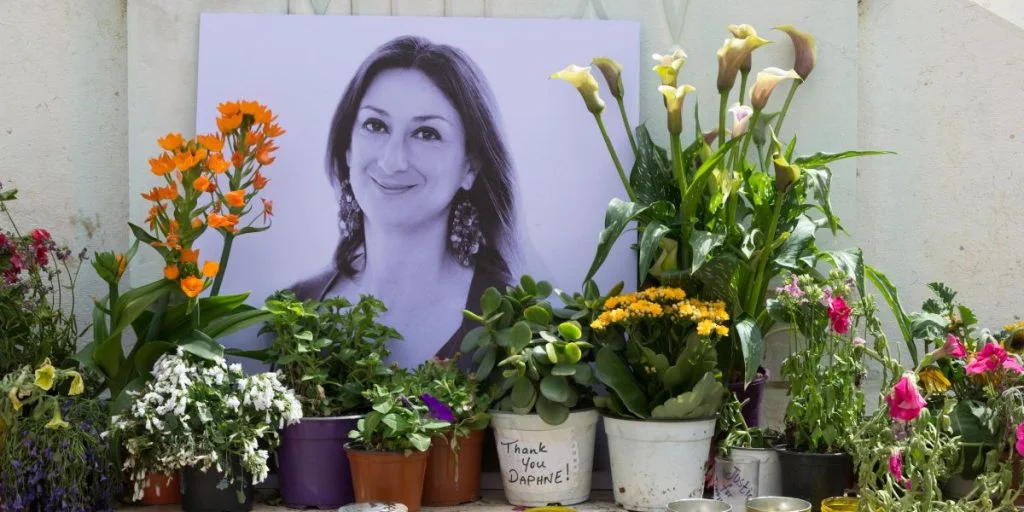
Jurors heard how leaked corporate records were being prepared for wider examination before a Maltese journalist was killed. The testimony also traced how earlier offshore disclosures brought mother and son into the same reporting effort.

Matthew Caruana Galizia, a software engineer and the son of murdered Maltese journalist Daphne Caruana Galizia, told a court in Malta that his mother was still examining internal Electrogas emails on the day she was killed by a car bomb in October 2017.
According to The Guardian, Maltese businessman Yorgen Fenech is accused of commissioning and financing her murder. Fenech, an heir to one of Malta’s wealthiest business families and a former part-owner of Electrogas, denies the charge and any involvement in the killing.
Electrogas had secured a major contract connected to Malta’s electricity infrastructure after the 2013 general election. The project became one of the most closely scrutinised commercial deals of the period because of its links to senior political figures and powerful private interests.
Matthew said his technical background allowed him to assist his mother with the large volume of leaked material. He organised thousands of company emails in a searchable database, making it easier to trace names, discussions and connections across the correspondence.


During his testimony, Matthew said Fenech appeared repeatedly throughout the emails. The defence objected when he went further and offered his interpretation of what the material suggested. The judge then reminded him that his assessment represented an opinion and should not be treated as an established fact unless supported by documentary evidence presented in court.
Plans for wider reporting
Questioning was later restricted to matters that could be supported by documents shown in court, narrowing the evidence to material the jury could examine directly.
Caruana Galizia had hoped to bring together a cross-border team of journalists to analyse the Electrogas leak. Matthew had already approached The Guardian about taking part, but the proposed collaboration had not formally started when she was killed.
The idea followed the model used during the Panama Papers investigation, when reporters from different countries worked together on a vast collection of leaked financial records. Matthew had been involved in processing those documents and making them easier for journalists to search.
While reviewing material concerning offshore companies and financial arrangements, he identified records connected to Malta and passed them to his mother. That work marked the beginning of a closer professional partnership between them.
Her reporting later examined companies associated with Konrad Mizzi, who served as Malta’s energy minister, and Keith Schembri, a senior government official who was chief of staff to then-prime minister Joseph Muscat. Muscat led Malta’s Labour government during the period when the Electrogas project became one of the administration’s most prominent energy initiatives.
Matthew testified that an accountancy firm had assisted with opening bank accounts for the companies linked to Mizzi and Schembri. The evidence formed part of wider reporting into offshore structures, political influence and the handling of major public contracts.
Fenech, Mizzi and Schembri have all rejected allegations of corruption.
Reporting continued afterward
The Guardian reports that Matthew ran from the family home after hearing the explosion and followed the smoke toward the road, where he found his mother’s car in flames.
The killing transformed the direction of his life and work. He later left his job, ended the career path he had been following and returned to Malta, where he committed himself to efforts aimed at holding those responsible to account.
Matthew told the court that this decision came at “enormous personal cost,” reflecting the effect the case had on both his professional life and his family.
According to Forbidden Stories, he later became involved in the Daphne Project, a cross-border reporting collaboration created to continue investigations connected to his mother’s work. The initiative brought together journalists from several international news organisations and allowed them to share documents, findings and reporting resources.
The project examined Electrogas as well as other subjects Caruana Galizia had been investigating before her death. Its reporting increased scrutiny of the power concession and of allegations that corruption had influenced the deal.
The collaboration also ensured that the unfinished reporting did not disappear after the killing. Instead, journalists in several countries continued examining the records and publishing findings connected to the case.
Fenech remains on trial over his alleged role in Caruana Galizia’s murder. He denies involvement in the killing.
Sources: The Guardian, Forbidden Stories



