Kenneth Glad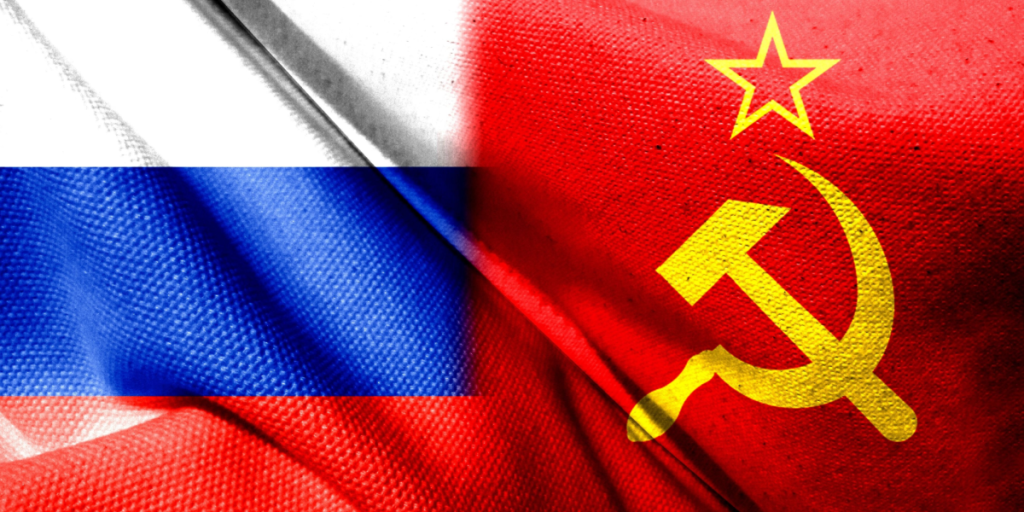
In a corner of Russia’s publishing market, speculative fiction is revisiting old battles and redrawing global borders. A recent analysis explores how these imagined histories reflect deeper debates about power, identity and the country’s place in the world.

Russian popular science fiction has a recurring habit: It refuses to leave history alone. Empires return, wars end differently, and the map is redrawn in Mother Russia’s favor.
A Feb. 17, 2026 report by United24Media argues that these stories, sold as page-turning pulp, also function as a kind of cultural wish list, especially in the decades after the Soviet Union’s collapse.
It focuses on a booming time-travel subgenre called popadantsy, literally “those who end up somewhere,” where a modern mind lands in an earlier body and uses present-day knowledge as a lever.
The outlet notes that the device is older than Russia’s current wave, pointing to Mark Twain’s A Connecticut Yankee in King Arthur’s Court and later Western examples by writers such as L. Sprague de Camp, Edgar Rice Burroughs, and Ray Bradbury.

West as target
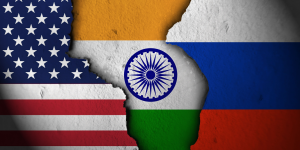
In the novels highlighted by the report, Britain and the United States are not just rivals, they are the recurring end bosses. One plot places a 21st-century man inside Emperor Peter III and sends him into a globe-spanning war, from India to the British Isles.
The final payoff is a new world order. Looking at a map back in his own time, the protagonist exults: “We really gave it to the Brits! Not only did we destroy the States, but we turned their parts against each other. Now that’s the kind of world I like – a multipolar setup is way better than a two-superpower standoff or, worse yet, American global dominance!”
The publication also points to tsarist-era do-overs that turn imperial nostalgia into logistical fantasy. One scenario begins with Catherine II’s 1786 round-the-world expedition, then swaps in a modern consciousness inside her fleet commander.
The novel’s closing inventory is blunt: “Russia gained the lands north of the Great Lakes – meaning all of future Canada – the isthmus between North and South America, the Bosporus and Dardanelles, the Philippines, and the Arabian Peninsula.”
The same ending warns the job is not finished, even after “Russia has gained the key to world domination.”
War and fallout
World War II becomes even more elastic. In the Comrade Führer books, the report says, a protagonist ends up in Hitler’s body and partners with Stalin, asking: “Will they manage to hang Churchill for war crimes against humanity? Can Comrade Hitler and Comrade Stalin together defeat the United States and build an atomic bomb before the Americans?”
Other titles escalate to nuclear showdowns, including a 1982 scenario tied to Poland and Reagan, and a time-splintered Russian fleet sailing to Syria in 2012.
Whether these stories shape opinion or simply echo it is hard to measure. But, as the report suggests, repetition matters: across different eras, force is the solution and victory is the ending.
Source: United24Media