
 Edith Hejberg

Researchers discovered that participants with the greatest variety in physical activity had the best survival rates.
Others are reading now


Sticking to the same workout every day may not be the best path to long-term health. New research suggests that regularly switching between activities such as walking, swimming, yoga, gardening and pickleball could significantly improve longevity.
Scientists found that people who mixed up their movement routines had a much lower risk of dying from any cause compared with those who relied on just one form of exercise.
A major drop in mortality risk

The findings, published in BMJ Medicine, were based on two large studies involving more than 110,000 people tracked over three decades.
Researchers discovered that participants with the greatest variety in physical activity had the best survival rates. In fact, varying exercise routines was linked to a striking 19% reduction in the risk of death from all causes.


Experts say that level of improvement is difficult to ignore.
Why experts are paying attention

“A 19% decrease is a big deal,” said Dr. James Voos, chief of orthopedics at University Hospitals in Cleveland.
“When you look at the literature, anything that has that significant of a response should encourage us to take a look at our habits.”
Voos was not involved in the study, but said the results strongly support the idea that the human body benefits from diverse movement patterns.
Variety may matter more than volume

One of the study’s most surprising conclusions was that exercise variety may be even more valuable than simply increasing workout time.
Researchers found that doing many different kinds of movement could offer greater benefits than spending longer periods doing the same activity repeatedly.
“That was the most surprising part of the study,” said Dr. Han Han of the Harvard T.H. Chan School of Public Health.
The current exercise guidelines

US health guidelines already recommend that adults get at least 150 minutes of moderate exercise each week.
The advice also includes muscle-strengthening activities at least twice weekly and encourages people to vary their workouts to avoid overuse injuries.
The new findings add another reason to diversify exercise routines: longer life expectancy.
Your body needs different kinds of movement

“Engaging in a variety of exercises is definitely beneficial,” Voos said.
“Your body needs different ranges of motion, strength and stability, and cross-training lets your body see all of those different movements each week.”
Different activities challenge muscles, joints and balance systems in unique ways, helping the body stay more adaptable and resilient over time.
Kids have long benefited from cross-training

Sports medicine experts have encouraged children for years to play multiple sports rather than specializing too early.
Research shows that children who focus on only one sport at a young age face a greater risk of injury and burnout. Those who play a range of sports tend to stay healthier and often perform better later in life.
Experts now say adults may benefit from the same approach.
Even elite athletes constantly switch routines

Professional athletes rarely train the same way every day.
Voos, who also serves as head team physician for the Cleveland Browns, explained that NFL players regularly rotate between conditioning, flexibility, balance and strength work alongside football practice.
“So even at the highest levels, our athletes are exposing their bodies to different motions,” he said.
Avoiding the dreaded fitness plateau

Changing workouts can also help prevent the “plateau effect,” where progress slows because the body becomes highly efficient at repeated movements.
When the body adapts too completely to one routine, improvements in strength, endurance or performance can stall.
Adding new movements forces muscles and energy systems to work differently, helping people continue to improve.
You don’t need an expensive gym routine

Experts say variety does not require complicated fitness plans or endless gym sessions.
If you enjoy walking, adding trekking poles can engage the upper body. Cycling can be alternated with gardening or home projects that involve lifting and digging.
Even short movement breaks during the workday can make a difference.
Small movements still count
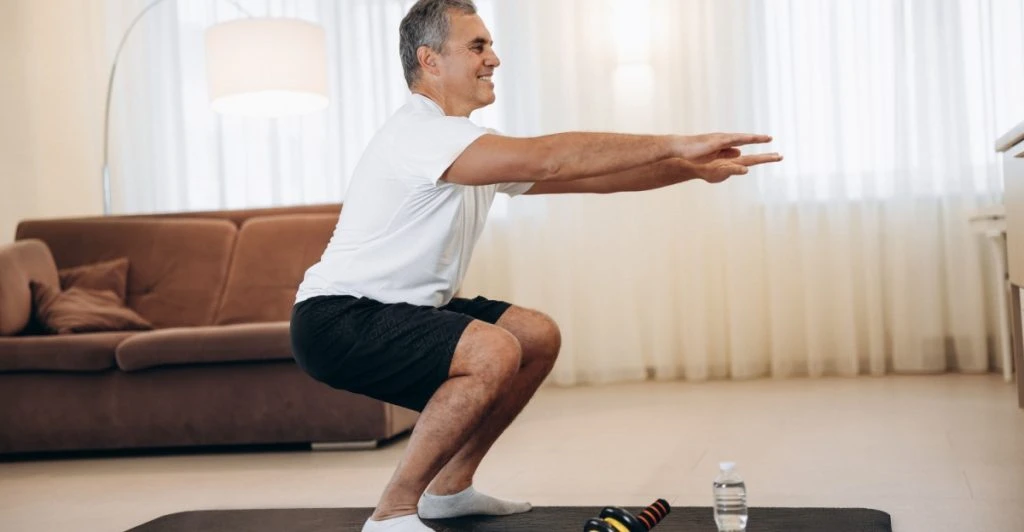
“Do squats at your desk or push-ups on the wall,” Voos said.
“Take a break and walk around the parking lot. Contract your abs while sitting to improve your core strength.”
He stressed that simple movement throughout the day still supports health, balance and mobility.
“It doesn’t have to be the most sophisticated thing,” he added.
Rest days are part of the process

Experts also warn against exercising nonstop.
Rest days help the body repair tissue, restore energy and recover from physical stress. Without recovery time, the risk of fatigue and injury can rise.
Still, rest days should include gentle activity when possible, such as stretching or light walking.
Keep your body moving

The overall message from researchers and doctors is simple: movement matters, but varied movement may matter even more.
Whether it’s walking, biking, gardening, swimming or stretching, changing how you move could help protect your body and extend your life.
“Just keep your body moving,” Voos said.



