Kenneth Glad
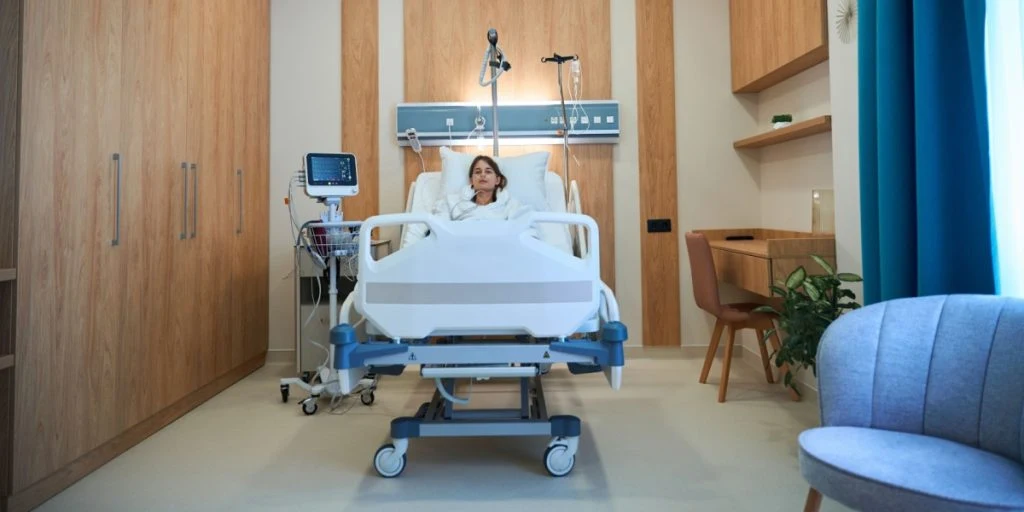
A young woman has shared an unusual account following a life-threatening medical event. Her experience adds to ongoing discussions about how people perceive consciousness during critical moments.


Near-death experiences are often described as brief but intense. In a case reported by The Mirror, one woman says hers felt like something far longer – what she remembers as years, not minutes.
Rubi Rolgue, 24, spoke to the outlet about a medical emergency that left her clinically dead for more than ten minutes.
Experiences like these remain medically unexplained, though patients frequently describe them as vivid and deeply real.
A medical emergency with slim odds
According to the British newspaper, Rolgue’s condition deteriorated suddenly in April 2025. Earlier that day, she had been following her usual routine – recently married and close to completing her medical degree – before her health rapidly declined.


She began struggling to breathe and lost movement in her legs. At the hospital, doctors diagnosed a bilateral pulmonary embolism, a life-threatening blockage affecting both lungs.
“I was suffocating from within,” she told The Mirror, explaining how the clots prevented oxygen from circulating.
That night, she suffered two cardiac arrests. During the second, she showed no response to light or external stimuli, and her condition was considered critical.
Doctors told her family there was little chance of recovery.
A Different Sense of Time
Here’s where her account takes an unusual turn.
Rather than recalling nothing, Rolgue suggests she experienced an extended stretch of time – something she interpreted as life continuing beyond 2025.
She remembered everyday routines, interactions with family, and the sense that time was passing normally.
In conversations with The Mirror, she portrayed that setting as quieter and less dominated by constant phone use, with more focus on relationships.
Not everything she remembers was positive, though. She also recounted a violent incident, which she felt mirrored the severity of her physical state.
Medical researchers have long documented time distortion in near-death experiences. Still, there is no evidence to suggest such episodes involve literal movement through time – only that the brain can construct remarkably detailed perceptions under extreme stress.
Waking up – and adjusting back
Then, abruptly, it ended.
Rolgue described moving through an intense, fear-filled space before regaining awareness in hospital. The transition back was jarring:
“That was my real hell – waking up in this life.”
She had been in a coma for about a month. Recovery was slow, and doctors warned of potential long-term effects, including impaired mobility.
At first, she struggled to process the difference between what she remembered and what had actually happened – especially when seeing family members who appeared younger than in her memories.
Eventually, she came to understand that the “years” she experienced had passed while she was unconscious. Even so, she continues to reflect on it in spiritual terms.
“Death is not a wall – but a doorway to a life that never truly ends,” she said.
Cases like hers continue to sit at the intersection of medicine, psychology and belief – raising questions that science has yet to fully answer.
Source: The Mirror