
 Kenneth Glad
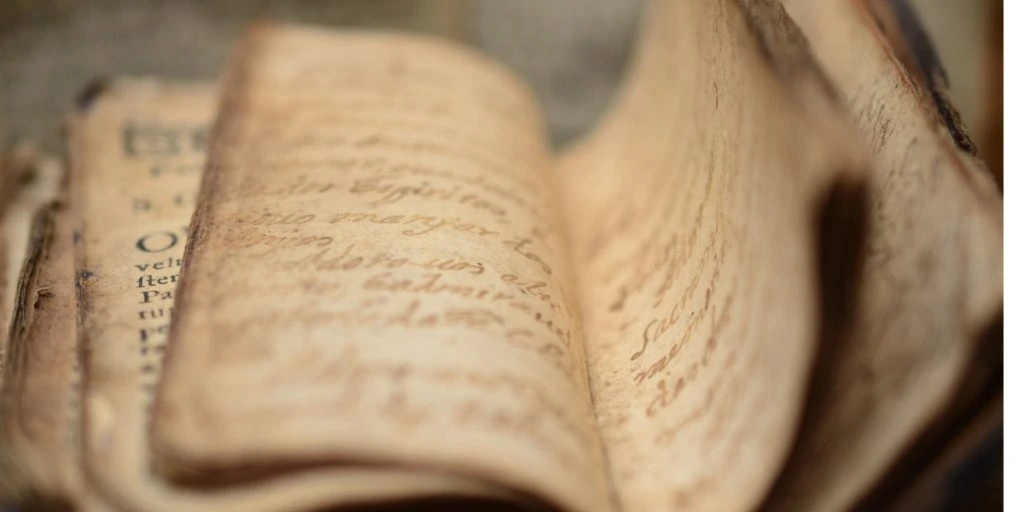
New technology is helping researchers uncover details hidden in ancient documents for centuries. Scholars say such discoveries can reveal new insights into how early religious texts were copied and transmitted across different regions.


Long before biblical texts settled into the forms familiar to modern readers, they circulated in several languages and in slightly different versions.
Among the most important witnesses to that early period are Syriac gospel manuscripts, including the Curetonian and Sinaitic traditions, which preserve some of the oldest translations of the New Testament.
A newly deciphered fragment now adds to that picture, after scholars uncovered a hidden passage from the Gospel of Matthew beneath the writing of an ancient manuscript in the Vatican.
Early text layers
According to WP Tech and Live Science, the discovery was made by Grigory Kessel of the Austrian Academy of Sciences while studying ultraviolet images supplied by the Vatican Apostolic Library. The results were later discussed in New Testament Studies.


Live Science reported that the manuscript contains several overwritten layers, with later texts masking older ones beneath. Rather than discard expensive writing material, scribes often reworked parchment by clearing older script and using the surface again, a practice that has left many ancient texts partially buried.
In this case, ultraviolet imaging exposed four layers of writing. One of them turned out to be a previously unknown Old Syriac passage from Matthew, hidden below Greek text and later Georgian writing.
WP Tech reported that Kessel dates the surviving copy to the sixth century, while the translation tradition behind it may go back as far as the third century. That makes it part of the earliest known phase of gospel transmission outside Greek.
“This fragment is so far the only known trace of a fourth manuscript testifying to the Old Syriac version,” Kessel wrote in New Testament Studies.
Why it matters
The recovered passage corresponds to Matthew 12:1, where Jesus and his disciples move through grain fields on the Sabbath. In many modern versions, the disciples simply pick grain and eat it.
The newly revealed Syriac wording adds another action, saying they “began to pick the heads of grain, rub them in their hands, and eat them.” Live Science also cited Sebastian Brock, a retired Syriac scholar at the University of Oxford, who called it “an exciting discovery, and a brilliant piece of decipherment.”
That difference may appear minor, but textual variants like this help scholars track how the gospels were copied, translated and interpreted across early Christian communities.
Kessel has also suggested the fragment may once have belonged to a larger codex, raising the possibility that more pieces of the same manuscript still survive.
Sources: WP Tech, Live Science, New Testament Studies



