
 Edith Hejberg
The tool, created by German newspaper Die Zeit, has drawn millions of users since its release.


A newly launched search engine is giving people the chance to explore a difficult question: did their relatives belong to the Nazi Party?
The tool, created by German newspaper Die Zeit, has drawn millions of users since its release.
It allows individuals to search historical membership records quickly and easily.
For many, it opens a door to family histories long left unexamined.
Breaking A Culture Of Silence
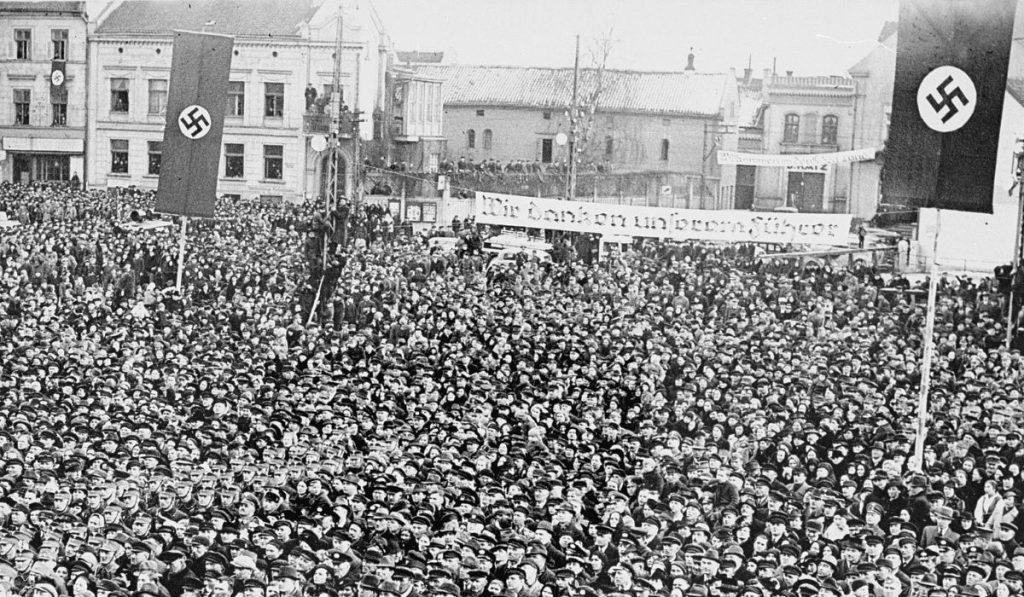
Die Zeit says the project aims to “end the silence born of misplaced shame.”
For decades, many families avoided discussing ties to the Nazi era.
This tool encourages a more open and honest reckoning with the past.
It reflects a broader shift toward confronting uncomfortable historical truths.
Built On International Archives

The database is the result of collaboration with archives in both Germany and the United States.
It draws on preserved Nazi Party membership records spanning decades.
These records were digitized and organized to make them accessible to the public.
The result is a powerful, searchable historical resource.
How The Nazi Party Grew

Founded after World War I, the Nazi Party initially struggled to gain traction.
Its popularity surged during the economic turmoil of the Great Depression.
By the early 1930s, support had grown dramatically.
When Adolf Hitler came to power in 1933, he banned all other political parties.


A Nation Under One Party

Once in control, the Nazi regime reshaped every aspect of German life.
Political opposition was eliminated, and loyalty to the state became central.
By the late 1930s, most Germans supported Hitler and his government.
The party became a dominant force across society.
Millions Joined The Movement

According to Die Zeit, around 10.2 million Germans joined the Nazi Party between 1925 and 1945.
At its peak, membership reached roughly 9 million.
People joined for many reasons, from ideology to social pressure.
These figures highlight how widespread involvement became.
Records Nearly Lost Forever

In the final days of World War II, Nazi officials tried to destroy membership records.
The documents were saved at the last moment and later seized by American forces.
They were initially housed in the Berlin Document Center.
Today, they are preserved in the German Federal Archives, with copies in the US National Archives.
Turning Data Into Access

Die Zeit used artificial intelligence to transform these records into a user-friendly tool.
The search engine simplifies what was once a complex archival process.
Previously, about 75,000 people requested such information each year.
Now, anyone can explore the data in seconds.
A Surge Of Public Interest

The response has been overwhelming, with millions visiting the site.
Demand for similar records has previously caused online archives to crash.
This surge suggests growing curiosity about personal and national history.
It also reflects changing attitudes toward confronting the past.
Personal Discoveries And Emotional Reactions

Users have shared deeply emotional responses after searching the database.
“My feelings are all over the place right now,” wrote one user.
They questioned whether joining early or later in the regime was worse.
Such discoveries often raise more questions than answers.
Painful Family Histories Revealed

Another user described decades of uncertainty about a great-grandfather’s past.
“Question answered. Thank you, ZEIT. Even though it hurts terribly,” they wrote.
Others uncovered complex and tragic family stories tied to the Holocaust.
These findings can be both clarifying and deeply unsettling.
A Tool For Historical Understanding

Experts say the database is a major step forward for research on the Nazi era.
It provides direct access to original documentation.
This helps counter misinformation and denial about the Holocaust.
It also supports a more honest understanding of how ordinary people were involved.
Facing History With Evidence

Historians note that many Germans believe their families opposed the regime.
But the scale of membership suggests a different reality.
The search engine may help correct these assumptions.
By confronting evidence, individuals and societies can better understand the pa



