
 Kenneth Glad
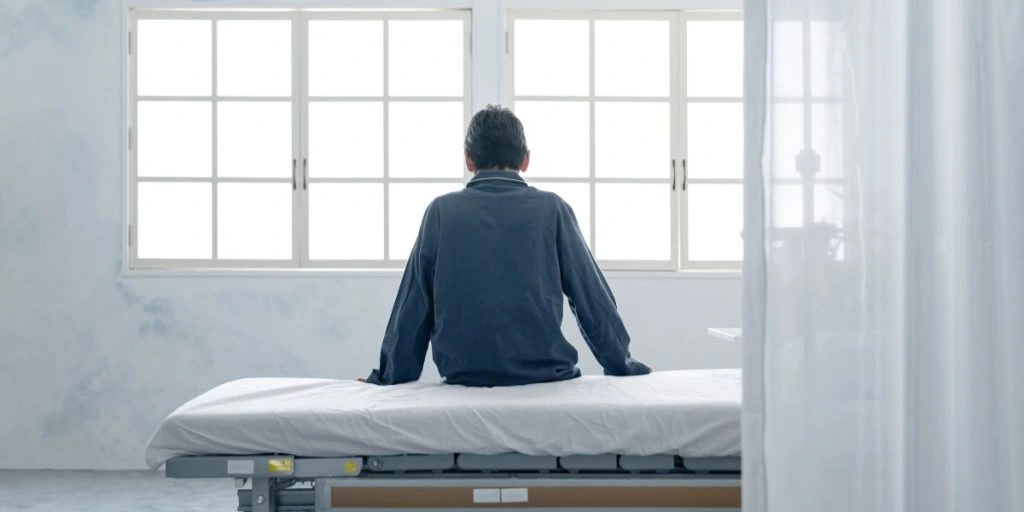
An influential study challenged trust in psychiatric judgment and hospital care. Later research raised serious questions about whether its celebrated findings could be verified.


In 1973, psychologist David Rosenhan, according to history site Historienet, reported that psychiatric hospitals had admitted people he described as having no diagnosed mental illness. His paper became a landmark criticism of institutional psychiatry.
Journalist Susannah Cahalan later examined surviving records for her 2019 book, The Great Pretender. She wrote that she could confidently identify only two of Rosenhan’s eight reported participants.
Cahalan also found that Rosenhan’s hospital file mentioned symptoms, including suicidal thoughts, that did not appear in his published account.
Because most participants and institutions were not clearly identified, the experiment cannot now be fully reconstructed.


False symptoms secured admission
Rosenhan’s report, Being Sane in Insane Places, says that eight pseudopatients generated 12 hospital admissions because some repeated the procedure. They used false names and claimed to hear voices while otherwise giving truthful personal information.
Seven were diagnosed with schizophrenia, while one received what was then called a diagnosis of manic-depressive psychosis.
Once admitted, the participants stopped reporting symptoms. They said the voices had disappeared, answered questions honestly and behaved as they normally would. Even so, none was recognised by hospital staff as having been healthy from the outset.
Instead, the original diagnosis shaped how almost everything they did was understood. Writing notes could be recorded as pathological behaviour, while ordinary caution, frustration or requests for information could be interpreted as further evidence of illness.
The label also followed them when they left. The pseudopatients were not discharged as people who had been wrongly diagnosed. Most were released with schizophrenia described as being “in remission”, meaning the illness was considered inactive rather than absent.
That distinction was central to Rosenhan’s criticism. The participants could stop displaying symptoms, behave normally and repeatedly say they felt well, but they could not persuade staff that the diagnosis itself had been mistaken.
The study did not prove that clinicians could never distinguish mental illness from health. The fabricated hallucinations were serious symptoms that reasonably required assessment. Its stronger argument was that, once a psychiatric label had entered the record, later evidence was interpreted in ways that preserved it rather than called it into question.
The warning still matters
Rosenhan also described psychiatric wards where patients had very little meaningful contact with doctors, nurses or other staff. Daily life was tightly controlled, privacy was limited and many patients spent long periods waiting with little to do. In his account, the institutions often seemed more focused on supervision, routine and compliance than on listening closely to the people in their care.
His paper appeared during a broader period of criticism aimed at overcrowded hospitals, inconsistent diagnostic practices and the loss of patient dignity inside large institutions. Rosenhan’s findings added force to concerns that people could be reduced to symptoms and records, while their own explanations carried little weight.
In the years that followed, psychiatry moved towards more detailed, symptom-based diagnostic criteria. Community-based treatment also expanded as many large state hospitals were reduced, reorganised or closed. Those developments had many political, medical and social causes, and Rosenhan’s study was only one contribution to a much wider debate.
Later criticism of the experiment has weakened the strongest claims made on its behalf. Questions about the participants, the surviving records and the accuracy of Rosenhan’s account mean the study cannot be treated as conclusive proof that psychiatric diagnosis was fundamentally unreliable.
Its most durable lesson is more limited and more practical: professionals should remain prepared to reconsider an early judgment when later evidence no longer supports it. A diagnosis should guide further assessment, not become a fixed explanation that makes every new behaviour appear to confirm the original conclusion.
Sources: Historienet, David Rosenhan – “On Being Sane in Insane Places”, Susannah Cahalan – “The Great Pretender”



