
 Camilla Jessen
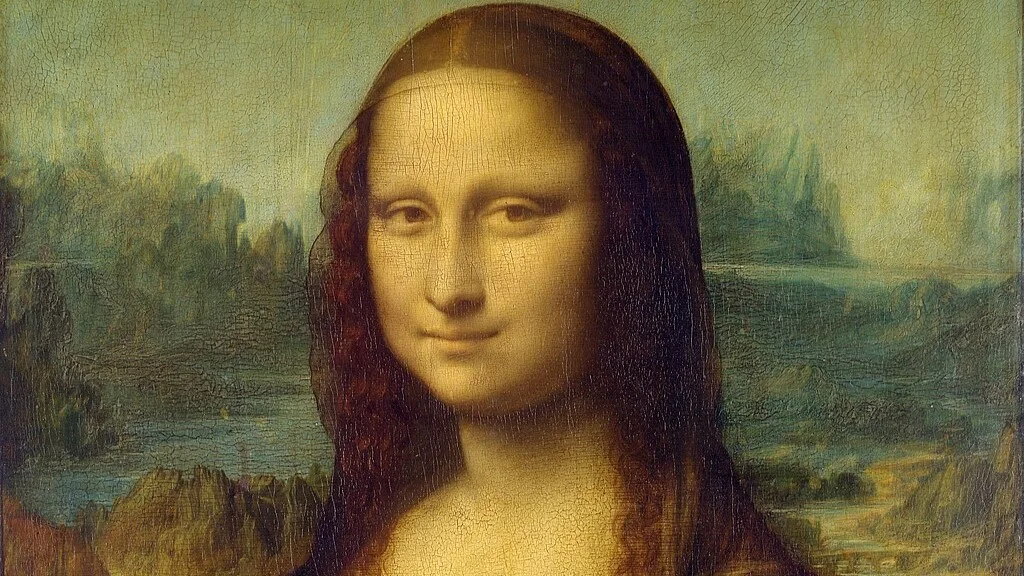
Researchers say Mona Lisa smile was no accident.


For centuries, viewers have debated whether the Mona Lisa is smiling at all. Now, British researchers say the famous expression was carefully engineered by Leonardo da Vinci.
Their findings suggest the effect was deliberate, based on techniques the artist also used in another little-known work.
A familiar effect
Scientists say clues to the Mona Lisa’s smile lie in Leonardo’s drawing La Bella Principessa. The portrait of a young woman appears to show a similar visual trick.
Observers report that both figures seem to smile only when viewed from certain angles or distances. When the focus shifts, the smile fades or disappears entirely.


Researchers believe this shared effect reveals intentional design rather than coincidence.
Studying the smile
A team from Sheffield Hallam University examined both works and published their findings in the journal Vision Research. They focused on how the mouth appears to change depending on viewing conditions.
“The woman’s mouth in La Bella Principessa appears to change angle depending on the viewing distance,” the researchers wrote, adding that blur levels also alter the perception of expression.
They found that small visual changes could dramatically affect how content or neutral the face appears.
The ‘elusive smile’
The team named the phenomenon the “elusive smile.” According to their paper, it arises from Leonardo’s use of sfumato, a technique involving soft transitions between light and shadow.
“In a series of psychophysical experiments, it was discovered that a perceptible change in the angle of La Bella Principessa‘s mouth influenced her expression of contentment,” the researchers said.
They argued that the smile exists in a space between what is clearly seen and what the brain fills in.
Testing perception
Volunteers took part in experiments where researchers altered images using Photoshop. Parts of the face were blurred or sharpened to simulate how human vision works at different focal points.
“When we look at the eyes from a distance, a subtle smile appears,” the team explained. “At close range, when focusing on the mouth, the impression disappears.”
“The results support the hypothesis that there is a gaze-dependent illusion in La Bella Principessa,” said Alessandro Soranzo of the psychology department.
Leonardo’s intention
Soranzo said the ambiguity was likely intentional. He noted Leonardo’s belief that portraits should convey the “inner turmoil of the mind.”
By using sfumato around the mouth, Leonardo may have created expressions that shift with the viewer’s attention, enhancing emotional depth.
La Bella Principessa, now attributed to Leonardo, depicts Bianca Sforza. Once thought to be a 19th-century work, it was later identified as a Renaissance portrait commissioned for a wedding in 1496.
Sources: Vision Research, Sheffield Hallam University, WP Tech



