
 August M
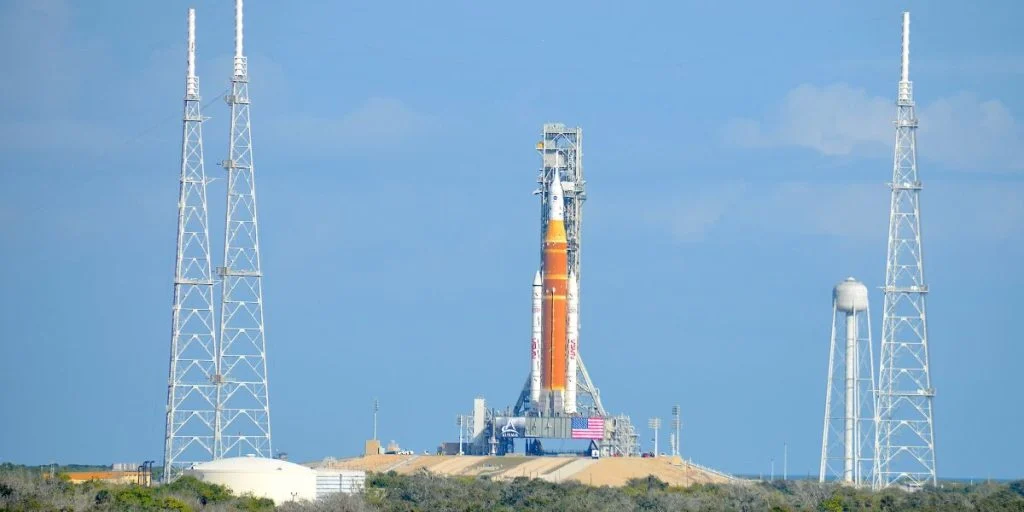
A successful mission to the Moon has reignited debate over who is truly leading the new space race. While private billionaires continue to outline ambitious plans, recent developments suggest public space agencies may still be setting the pace.


According to elEconomista.es, NASA’s Artemis II mission has reinforced the agency’s position at the forefront of lunar exploration.
Mission milestone
The crewed test flight saw four astronauts travel around the Moon and return safely, marking a major step in renewed efforts to establish a sustained human presence beyond Earth.
The mission also highlighted a strategy built on long-term planning and gradual progress rather than rapid expansion.
NASA has already begun preparing Artemis III, currently scheduled for 2027.


Private delays
In contrast, projects led by Elon Musk and Jeff Bezos have faced technical setbacks and shifting timelines.
SpaceX’s Starship, intended to support future lunar missions, has yet to complete a stable orbital flight, with repeated test issues slowing progress.
As a result, NASA has adjusted its approach, focusing first on testing key systems in orbit rather than immediate landings.
Changing approach
The agency is now avoiding reliance on a single private partner, instead referring broadly to multiple “lunar landers.”
This leaves room for both SpaceX and Blue Origin, though neither has yet demonstrated a fully operational system for human missions.
Blue Origin has made progress with rocket launches but has not confirmed a clear timeline for a crew-ready lander.
Strategy shift
Both billionaires are also rethinking priorities.
Bezos is reportedly pausing his space tourism efforts to concentrate on technologies needed for lunar missions.
Musk continues to promote long-term plans for a self-sustaining settlement on the Moon, though these remain in early stages.
Race continues
Despite depending on private contractors for key components, NASA’s steady progress underscores a more structured and cautious approach.
The Orion spacecraft has already proven its ability to carry astronauts to lunar orbit, though it still requires separate landing systems.
For now, NASA appears to hold the advantage, even as the broader race to the Moon continues.
Sources: elEconomista.es



