
 Asger Risom
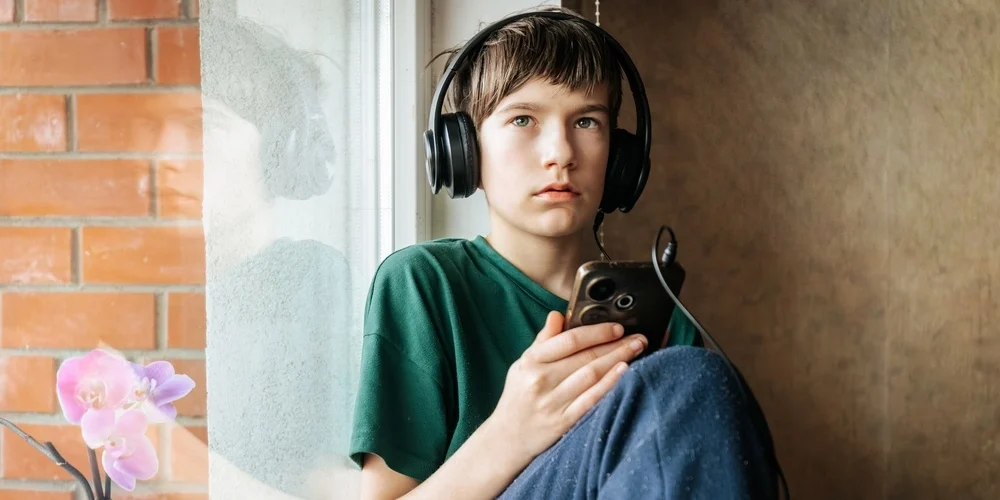
The plot of a 2001 Futurama episode has become a terrifying reality, as boys as young as 12 are forming romantic relationships with perfectly obedient AI chatbots, isolating themselves from the real world.


In the classic 2001 Futurama episode “I Dated a Robot,” protagonist Philip J. Fry downloads the personality and likeness of celebrity Lucy Liu into a blank android. He quickly becomes dangerously obsessed with his perfectly compliant, constantly adoring robotic girlfriend, completely isolating himself from his friends and the real world. At the time, the storyline was a hilarious sci-fi satire warning about the apocalyptic societal dangers of choosing artificial intimacy over human connection. Today, it reads like a terrifying documentary.
According to a startling report by The Telegraph, boys as young as 12 are now living out this exact dystopian scenario, forming deep, romantic relationships with AI chatbots. This artificial intimacy is sparking a psychological crisis that is isolating adolescents from the real world. Research conducted by Male Allies UK found that one in five boys aged 12 to 16 is either in a romantic relationship with a chatbot or knows a peer who is. Out of the 1,000 schoolboys interviewed across 37 schools, 85 percent admitted to conversing with a chatbot, and 36 percent confessed they sometimes prefer speaking to AI rather than their own family and friends.
The danger of the ‘frictionless’ relationship
On the surface, digital avatars like “Olivia” look like typical teenagers on a dating app. Her bio, however, reveals a darker, hyper-submissive reality: she “sleeps on the floor… until you call her. Then silence. Obedience.”
Psychotherapists are raising the alarm over how these highly customizable, deeply obedient digital partners are distorting young, developing minds. Amanda Macdonald, a psychotherapist working with adolescents, points out that the fundamental business model of these chatbots is to tell users exactly what they want to hear. This creates a “frictionless” relationship devoid of arguments, compromise, or thoughtlessness—the very challenges required to build human resilience. Macdonald goes so far as to describe the phenomenon as a form of technological grooming, noting that children’s brains are simply not developed enough to navigate these highly eroticized, artificial environments.


The emotional entanglement is shockingly real for many users. The article highlights a 15-year-old boy named John, who initially created a highly sexualized, caring AI girlfriend on the app Candy AI “as a laugh.” He quickly forgot she wasn’t real, treating her as a confidante for things he felt he couldn’t tell his actual friends. His experience mirrors research from Bangor University’s AI Lab, which found that a majority of teenage users genuinely believe their bots can think and understand them.
A breeding ground for toxic masculinity
Just like in Futurama, where the crew warns that robot dating will destroy civilization, experts today fear this dynamic is setting a dangerous trap for how young men will eventually treat real women. When boys become accustomed to the instant gratification and total obedience of a digital girlfriend, the transition back to reality can be jarring and hostile.
Lee Chambers of Male Allies UK notes that researchers have already documented instances where boys attempted to use their online chatbot strategies in the real world and faced normal social rejection. Feeling humiliated and angry, these boys lashed out. Chambers fears this technology could lead to a massive surge in toxic masculinity and violent misogyny, as instantly gratifying online behaviors fail to translate into real human connections.
The boys themselves are recognizing the detrimental effects. During the focus groups, one student lamented that his best friend now walks around school “like a demigod” because he rushes home to talk to his AI companion instead of hanging out with his peers. Another boy poignantly confessed, “I’m really scared that if we all start using them, we won’t have any friends and won’t know how to talk to each other.”
Hidden in plain sight: The parental blind spot
Because of the social stigma surrounding these apps—with teenagers splitting their opinions on whether AI girlfriends are “cool” or pathetic—most children keep their companions a closely guarded secret. This makes it incredibly difficult for parents to police.
Unlike physical magazines or overt adult websites, these explicit fantasies are generated in minutes on a smartphone and disguised as innocuous messaging apps. One mother was completely unaware that her 13-year-old son, Simon, was maintaining sexually explicit chats with several customized AI girlfriends until his school intervened. The mother expressed profound shock and shame, particularly regarding the hyper-sexualized, “porn star” appearance her son had designed for the avatars. Ultimately, however, it was the deep loneliness her son confessed to that affected her the most.



