
 Kenneth Glad

Rising geopolitical tensions are prompting renewed concern among policymakers and analysts. Attention is increasingly turning to how interconnected crises could shape global stability in the months ahead.
Tensions surrounding the Iran conflict in the Gulf are beginning to redraw diplomatic lines far beyond the region.
For European leaders, the concern is no longer confined to one conflict but how multiple crises are starting to intersect and reinforce each other.
Finland’s President Alexander Stubb, who has maintained a direct relationship with Donald Trump, is among those warning that the geopolitical balance is shifting in real time.
Cracks in alliances
Stubb argues in an interview with Politico that the transatlantic alliance is entering a more uncertain phase as Washington leans toward a more transactional foreign policy.


“We are probably seeing not a rupture, but a rift in the transatlantic partnership,” he said.
That shift could leave European countries taking on a greater share of responsibility for security and diplomacy.
While Stubb has previously had easy access to Trump, he indicates that contact has become less frequent as the U.S. president concentrates on the Gulf.
The shift in focus is already influencing how other conflicts are handled.
Ukraine pushed aside
The war in Ukraine, now in its fourth year since Russia’s full-scale invasion in 2022, risks losing diplomatic urgency. Stubb suggests in the interview that negotiations have stalled, with no immediate follow-up talks expected.
Part of the reason, he indicates, is that Washington’s attention has been absorbed by the Iran conflict in the Gulf, leaving less room for sustained mediation efforts in Europe.
There is also a growing operational connection between the conflicts. Russia has relied on Iranian-designed drones in Ukraine, while cooperation between Moscow and Tehran has deepened, tying the two theaters together in practical terms.
Stubb emphasized that, from a European perspective, Ukraine remains the central security priority, even as attention shifts elsewhere.
Economic pressure builds
Beyond security concerns, Stubb warns that the Iran conflict could quickly feed into the global economy. He described the risk as a “self-inflicted global recession,” pointing to how fragile supply chains remain.
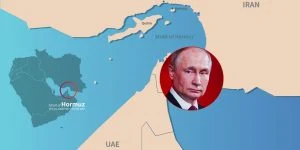
Oil markets are particularly exposed. Any disruption in the Strait of Hormuz, through which a significant share of global energy supplies passes, could push fuel prices sharply higher.
Recent volatility in crude markets already reflects how sensitive traders are to escalation in the Gulf.
Stubb also cautions that sidelining international cooperation in favor of short-term deals risks compounding instability.
The convergence of military tensions and economic pressure, he suggests to Politico, could leave governments facing simultaneous crises with limited room to respond.
Sources: Politico



